
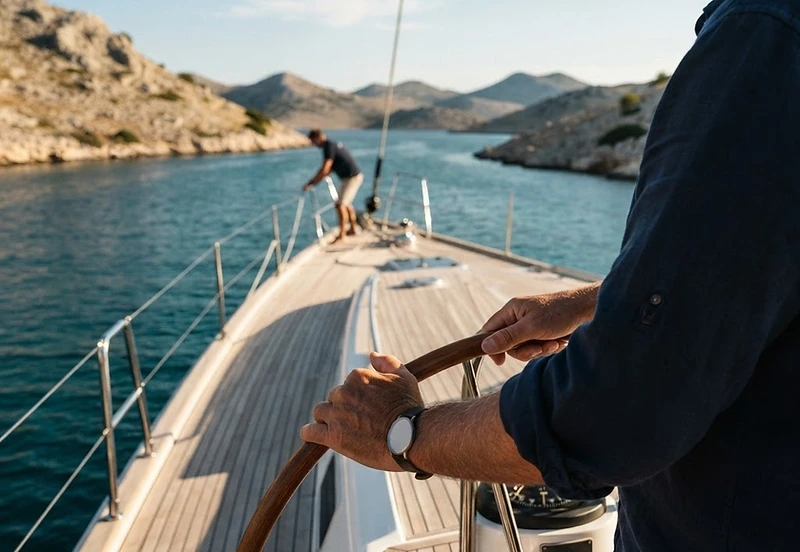
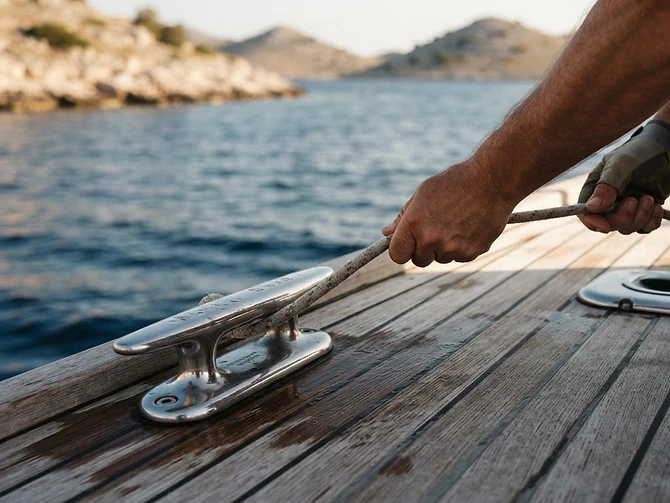
The approach to Lavdara in the Kornati National Park is a masterclass in navigation by eye, a practice that demands absolute deference to the chart and the sea. Aboard a Nautor’s Swan, the helm feels alive, responding to the subtle, restless shifts in the Adriatic thermal as we weave through the labyrinthine maze of limestone islets that define this archipelago. The water here is a study in impossible depth, transitioning from a bruised, oceanic indigo to a piercing, translucent turquoise as we narrow the distance to our chosen cove. Dropping anchor off the eastern shore, the metallic clatter of the galvanized chain is the only sound that disturbs the stillness of the afternoon, echoing briefly against the parched, scrub-covered hillsides that have stood watch over these treacherous channels for centuries.
The Rhythm of the Aft Deck
Life aboard a vessel of this caliber is defined by the transition from the labor of passage to the stillness of arrival. Once the fenders are deployed and the lines secured to a stern-tie, the vessel ceases to be a machine of transit and becomes a private, floating sanctuary. The afternoon dissolves into a state of suspended animation. On the aft deck, the ritual of the midday cooling begins with the preparation of local fare: bowls of salt-cured anchovies brought up from the markets of Murter, fresh sourdough, and plates of thinly sliced, sun-warmed tomatoes drizzled with sharp, local oil. There is no urgency here, only the tactile pleasure of moving between the shade of the bimini and the sudden, bracing shock of a dive into the cool, clear deep. The salt dries on the skin in a fine, crystalline map of the day, a hallmark of time well spent away from the reach of the shore.
The Evening Vigil and the Star-Stitched Horizon
As the sun begins its slow, measured descent behind the jagged, bone-white silhouettes of the Kornati, the atmosphere on board shifts in cadence with the light. The harsh, brilliant glare of midday softens into a bruised gold, bathing the varnished teak decking in a warm, honeyed hue that seems to emanate from the wood itself. We sit on the transom, listening to the gentle, rhythmic slap of water against the hull—a sound that synchronizes with the slower, deeper breathing of those on board. "The wind has forgotten its way home," a voice says, barely rising above the low hum of the vessel’s cooling systems. We watch as the stars begin to puncture the twilight, their light trembling in the wake of a distant, solitary fisherman’s skiff. This is the true, unvarnished luxury of the archipelago: not the provenance of the craft, but the way it facilitates a total, quiet surrender to the elements. As the evening deepens, the internal lights of the salon offer a soft, inviting glow against the rising dark, marking the end of our vigil in this limestone-guarded sanctuary.
By the time the anchor light flickers to life, the world beyond the cove has effectively ceased to exist. There is only the faint, bracing scent of sea spray on the cooling air, the distant cry of a gull, and the steady, rhythmic pulse of a boat resting in the heart of the Adriatic. We remain tethered to the island, held by the gravity of the quiet, content in the knowledge that tomorrow, when the morning wind shifts, we will simply weigh anchor and continue our slow, intentional drift through these ancient, sun-bleached islands.






