The Practical Gateway
Steering a deep-keel vessel toward the Palawan coast requires a firm grasp of the local bathymetry and a respectful eye on the horizon. Puerto Princesa, while far from the frantic, high-gloss pace of the Mediterranean or the Caribbean's manicured superyacht hubs, offers a profoundly reliable, sheltered arrival for those intrepid enough to be traversing the Sulu Sea. As we made our final approach in the low light of dawn, the morning sun caught the crystalline spray off our bow, revealing the protective, dramatic embrace of the bay. The holding here is largely consistent, characterized by a soft, silty seabed that demands a well-set anchor for those not taking a quay berth. For the skipper, the primary consideration remains the tidal range; however, the approach channels are well-marked and deep enough to accommodate most mid-sized exploration yachts with confidence, offering a rare sense of tranquility before the push into more remote northern territories.
Infrastructure and the Rhythms of Maintenance
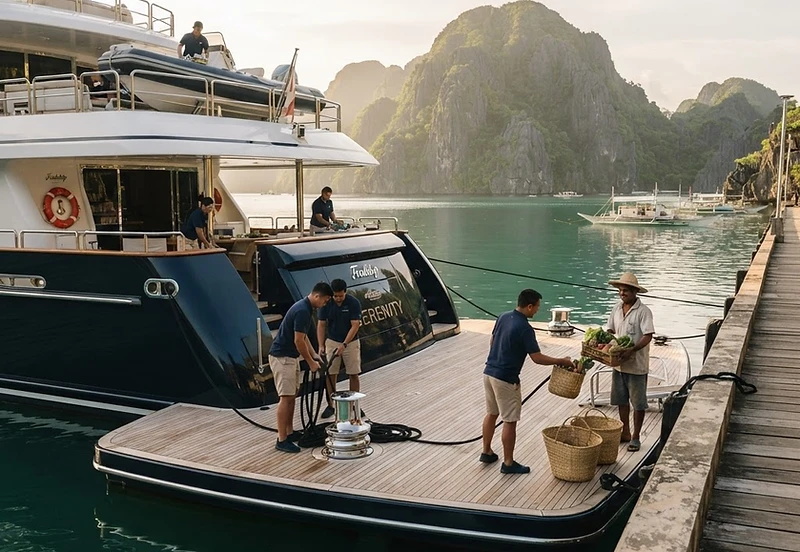
Once alongside the concrete piers, the operational focus naturally shifts to the quiet, essential rhythms of replenishment and maintenance. The facility, managed by the local Port Authority, provides the fundamental utility grid that keeps a yacht in a state of operational readiness. We found the freshwater connections to be accessible, though a high-quality, multi-stage filtration system remains a non-negotiable standard for any vessel taking on local supplies. While shore power is available, fluctuations are a recurring reality of the region, necessitating a robust power management system or a reliance on a well-tuned bank of generators during the intake process. For minor mechanical interventions, the proximity of local workshops and shipwrights in the city offers a practical, if informal, resource for quick fixes. It is a place where ingenuity is often favored over factory-certified parts; however, complex systems work on a high-spec Lürssen or Feadship is better handled via long-distance coordination with regional service centres in Singapore, where technical diagnostics can be managed with the precision required of such vessels.
Security and the Shore-Side Ritual
Security is maintained through a combination of thoughtful perimeter oversight and the steady, polite presence of local port staff, ensuring that the vessel is safeguarded while the crew transitions to the necessary rituals of life in port. We spent our final evening before the passage north at an unassuming spot overlooking the harbour, enjoying a plate of grilled lapu-lapu seasoned only with sea salt and the sharp, bright acidity of local calamansi. The sensory transition—from the low, mechanical hum of the engine room and the persistent, saline air of the bridge to the scent of charcoal smoke and the gentle night breeze—is the true, unspoken rhythm of the cruising life. Provisioning is an honest, rewarding endeavor here, with local markets offering vibrant, earth-grown produce that demands a creative approach to the galley, turning a routine market run into a genuine culinary exercise. The lack of excessive, stifling formality in the port allows the crew to breathe, trade stories with neighbouring sailors, and focus entirely on the singular objective: the next long reach toward the limestone cathedrals of the Bacuit Archipelago. As the tide turned under a velvet sky, the decision to push north felt not just like a navigational choice, but a spiritual one.