
The First Light on the Seychelles Banks
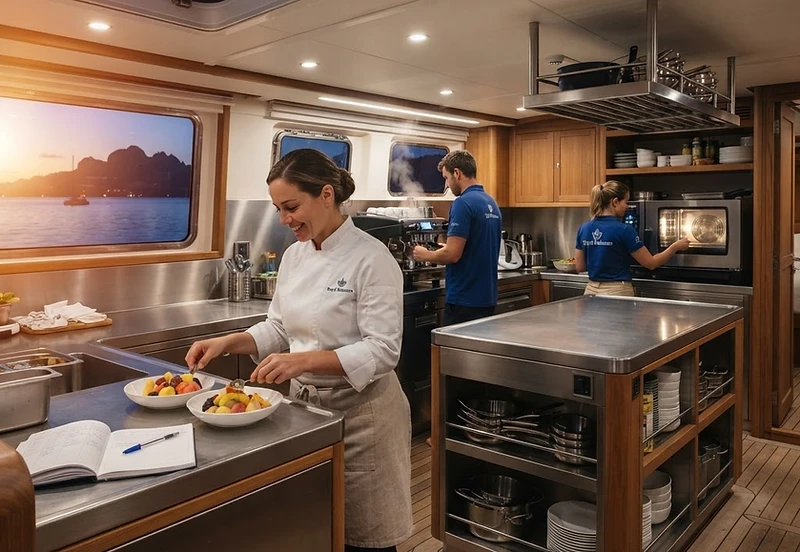
The sky off the coast of Curieuse Island does not so much brighten as it does surrender its bruised, indigo velvet to a pale, clinical silver. On board the Royal Huisman currently moored in these shallow, sheltered waters, the day begins not with the chime of a bell but with the low, steady hum of the galley’s ventilation fan. At 05:00, the galley is the only temperature-controlled sanctuary before the equatorial heat fully asserts itself. Here, the rhythm of a charter starts with the precise, rhythmic percussion of a chef’s knife against a bamboo board, a sound that carries through the companionways long before the guests emerge from their staterooms. The silence of the anchorage is profound; it is a world defined by the absence of engines, leaving only the soft slap of water against the teak hull.
The Ritual of the Galleys
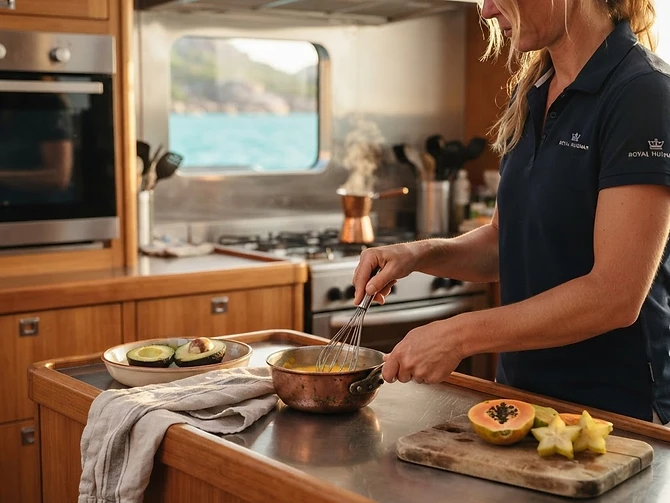
Breakfast aboard is a study in calculated motion. The sous-chef pulls fresh mangos and dragon fruit, procured only hours earlier from the market stalls in Victoria on Mahé, and segments them with a focus that borders on the monastic. There is a distinct, sharp aroma of freshly roasted coffee beans—a signature blend sourced from a roastery in St. Anne—that cuts through the saline tang of the Indian Ocean drifting through the open scuttles. The stewards move with a soft-footed grace, polishing crystal and checking the alignment of the breakfast service on the aft deck, where the morning breeze is already beginning to temper the humidity. One steward notes that the ice buckets require an extra layer of insulation today, given the intensity of the morning glare against the granite formations. Every gesture is deliberate, a silent language shared among a crew that has worked this route for years.
The ocean is the final arbiter of our timing. When the current shifts around the granite boulders of the Curieuse Marine National Park, the entire boat seems to sigh and recalibrate, and we adjust our service pace to match that silent, tectonic heave.
The Quiet Transition to Sea
By the time the sun clears the horizon, gilding the palm-fringed coast of Praslin to the east, the coffee is steaming in the insulated carafes and the scent of warm, crusty bread permeates the bridge deck. It is a moment of profound composure before the chaotic demands of a day at sea—the tenders must be readied, the snorkeling gear for the reefs off Île Saint-Pierre checked, and the flight plan for the drone confirmed. The crew pauses for a brief, shared moment of caffeine and conversation, huddled around the galley counter. It is a quiet, necessary punctuation mark in the charter cycle, a tethering of the team to the ship before the ship itself begins its day of navigation across these turquoise, shallow banks.
The navigation team monitors the depth sounders with hawk-like intensity; these waters, while breathtaking, are treacherous with coral heads that appear suddenly in the chart plotter. There is an unspoken understanding that the yacht is a guest in this ecosystem. As the anchor chain rattles through the hawsehole, a sound like distant thunder, the transition from slumber to activity is complete. The engines rumble to life, a deep vibration that moves through the deck plates beneath one's feet, signaling that the vessel is ready to seek the next hidden cove.
As the guests finally stir and the first voices murmur from the main salon, the galley shifts from a place of private preparation to the engine of the morning. The plates are taken up the stairs, the hatch is closed, and the ship begins its slow, deliberate swing toward the day’s first anchorage. The crew stands ready, their expressions neutral and welcoming, concealing the immense labor of the past four hours beneath a veneer of effortless, quiet hospitality as the Seychelles dawn unfolds in earnest.






