
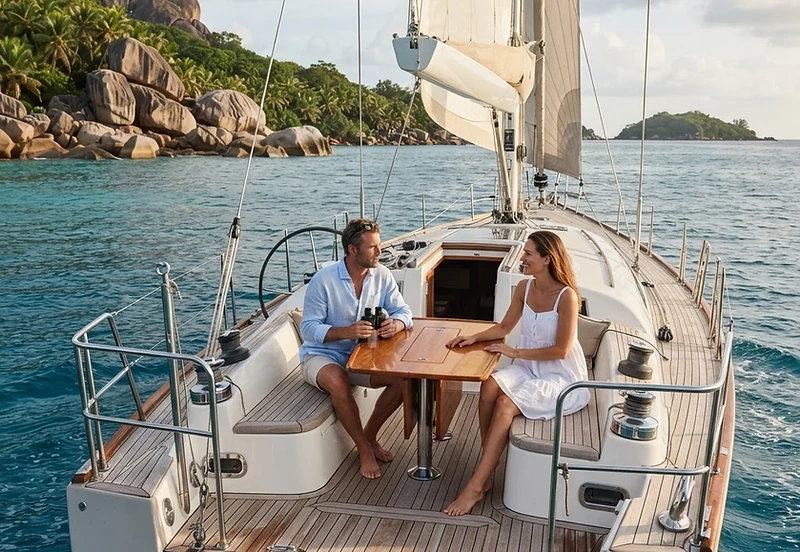
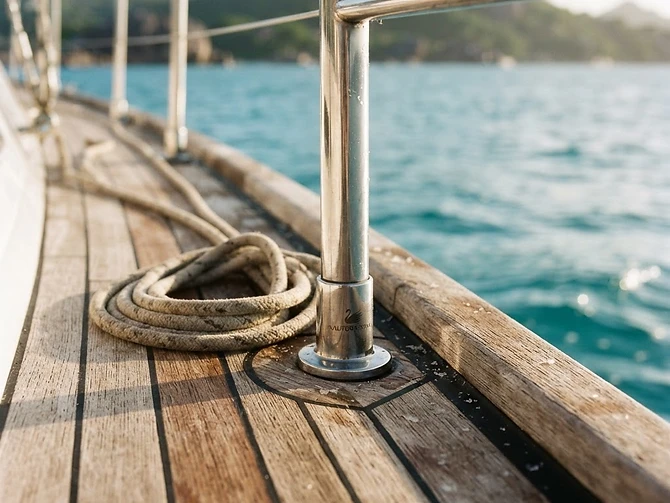
There is a specific temperature to the morning air when anchored off the granite boulders of Curieuse Island, a humidity that feels less like weight and more like an invitation to slow down. Our Nautor’s Swan, a vessel designed for both competitive edge and deep-sea composure, sat low in the turquoise chop, her teak decks cooling under the first light of a Seychelles dawn. The navigation plan for these two weeks was simple: an iterative transit through the Inner Islands, moving from the protected, verdant coves of Praslin to the outer, more jagged edges of La Digue, where the Indian Ocean dictates its own leisurely velocity.
The Geometry of the Anchorage
Life aboard a sailing yacht in these latitudes is governed by the erratic shift of the monsoon winds and the peculiar, dramatic geography of the seabed. Entering the anchorage at Anse Lazio, we found the water so crystalline that the shadow of the keel was etched with clinical precision into the white sand bottom, visible from the spreaders. The ritual of dropping anchor here is not merely a mechanical task; it is an act of alignment with the ancient geology of the region. As the chain rattled through the gypsy, silence returned to the cockpit, broken only by the rhythmic, percussive lap of water against the hull. We spent the better part of three days here, transitioning into a lifestyle defined entirely by the boat’s motion—breakfasts of fresh mango and cold-pressed coffee served on the aft deck as the sun climbed behind the palms, and the tactile pleasure of moving barefoot across oiled timber that had been scrubbed to a pale, silver-grey finish.
The Rhythms of the Indian Ocean
Our evenings were dictated by the shift from high-noon glare to the bruised, violet hues of dusk. After a day spent exploring the hidden coves of Saint Pierre by tender—navigating through coral heads with the caution of a seasoned mariner—the return to the mother ship felt like a profound homecoming. We avoided the urgency of schedules, choosing instead to let the swell dictate our heading. Dinner became a meditation on local sourcing; a simple, charred red snapper purchased from a passing pirogue in Praslin, seasoned with local chilies and ginger, served on the aft deck. Dining under the open sky, with only the distant, rhythmic navigation lights of an Oceanco motor yacht providing a solitary counterpoint to the sprawl of the Southern Cross, the true essence of the charter emerged: the removal of artifice. There were no demands, only the hum of the rigging and the gentle, persistent current pulling us softly against our mooring lines.
A Departure from the Tide
As we eventually turned the bow toward the Eden Island Marina to conclude our transit, the transition back to the mainland felt jarring. The harbor, usually a welcome sight for replenishment, seemed to vibrate with a frantic energy we had long since abandoned. We had spent fourteen days tethered to the tide, learning that the most profound yachting experiences are those where the boat serves as a quiet vessel for genuine observation rather than a mere means of transport. Stepping off the passerelle at Victoria, we carried with us the enduring stillness of the granite coves and the steady, unhurried pulse of the open sea, an internal rhythm that lingered long after the engines were silenced.






