
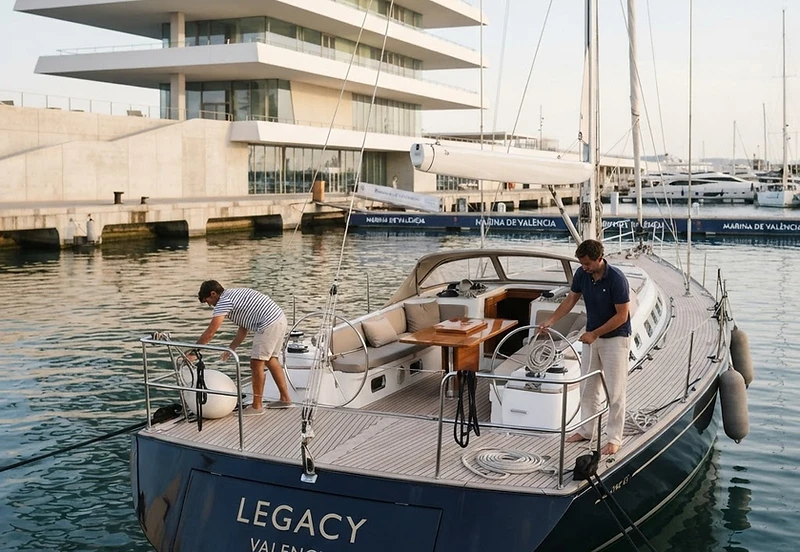
The light in Valencia has a peculiar, almost structural quality. As we eased our 45-meter displacement hull into the Marina de València, the morning sun caught the iconic Veles e Vents building—a cantilevered masterpiece of white concrete that feels as much like a ship as the vessels moored beneath it. Navigating the channel requires a measured hand, but once inside the America's Cup basin, the transition from the open sea to this sheltered, vast expanse of glass-calm water is absolute. It is a place that feels built for purpose, yet it retains a lingering sense of theater from the regattas that once defined it.
Engineering the Quietude
For a skipper, the primary concern in any large-scale port is the nature of the protection and the sheer volume of space. The Marina de València offers exceptional shelter, protected by expansive breakwaters that dissipate even the most agitated swells from the Balearic Sea. The basin is cavernous, providing generous turning circles that accommodate deep-keel yachts and superyachts alike without the claustrophobia found in older, constrained harbors. We drew 4.2 meters and found the depths consistent throughout the main transit lanes. Berthing is handled with high-tensile efficiency; the pontoons are robust, concrete structures fitted with modern fendering systems that give one confidence even when the evening gusts pick up from the southeast.
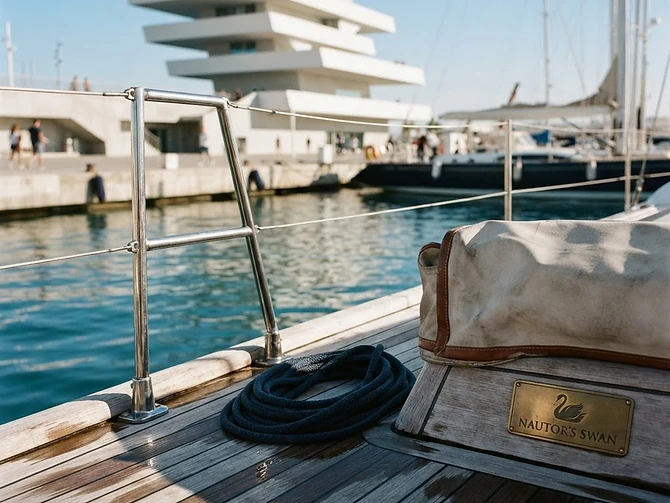
Life aboard, however, is where the port truly reveals its rhythm. By late afternoon, the quay transforms. One moment you are finalizing logs or checking the hydraulic tension on the passerelle; the next, you are leaning against the teak railing, watching the locals gather near the old dockside sheds. The ritual of the early evening aperitivo here is unhurried. We opted for a simple terrace table nearby, far from the frantic tourist tracks, to enjoy a glass of local horchata and some salted almonds. It is in these moments, watching the sun dip behind the sleek carbon masts of a Nautor’s Swan, that the sheer scale of the port fades, leaving only the sound of halyards slapping against aluminium masts—the metronome of the sea.
Systems and Shore-side Certainty
Operational reliability is the unsung virtue of this marina. Shore power is robust, with high-ampacity connections that handled our onboard systems without a flicker. Fresh water quality is high, and the delivery points are logically placed along the pontoons, reducing the need for snaking miles of hose across the deck. For maintenance, the proximity to professional shipyards and the availability of specialized marine mechanics makes this an ideal stopover for larger vessels. Security is handled with a discreet, professional hand; access control to the piers is strictly managed via card systems, and the patrol presence provides a necessary layer of quiet assurance.
Provisioning is similarly straightforward. Whether one relies on local suppliers for fresh Mediterranean produce or requires specialized chandlery items, the proximity of the city to the port edge is a logistical benefit. There is a distinct lack of the friction that often accompanies international port visits. Whether you are prepping for a crossing to the Balearics or settling in for a season of maintenance, the Marina de València serves as a seamless bridge between the discipline of the voyage and the necessary stillness of life in port.
As the stars emerged over the Mediterranean, reflecting in the dark, oily surface of the basin, the harbour settled into a profound silence. Valencia does not merely offer a place to dock; it offers a space to recalibrate, where the complexities of maritime engineering are matched by the ease of a well-lived evening on the quay.






