
The Geometry of the Latitude
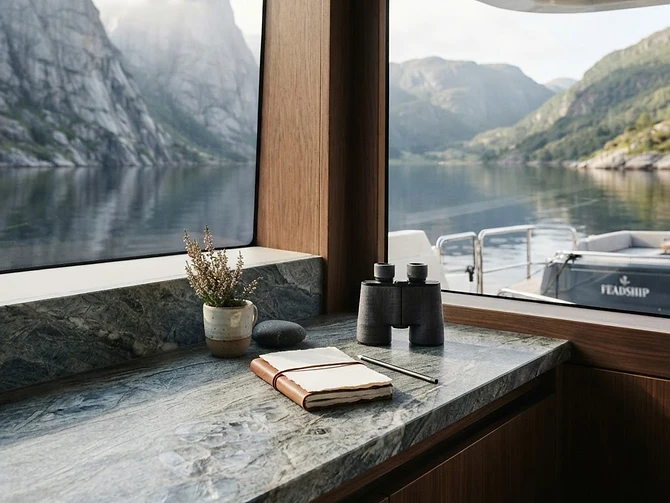
The dawn air off the Helgeland coast carries a bite that no amount of southern insulation can entirely mitigate. As I stepped onto the aft deck of the Feadship, the smell was unmistakable: cold, ancient stone and the sharp, clean ozone of the Norwegian Sea. We were anchored in the lee of Lovund, where the mountains rise like dark, jagged teeth from the slate-gray water. Behind me, the interior spaces, crafted by the architect-designer Laura Sessa, seemed to inhale the landscape. Sessa has a particular talent for refusing the heavy, ornate clutter that often defines superyacht interiors. Instead, she treats the vessel as a house afloat, where the joinery mirrors the structural integrity of a waterfront villa carved directly into the cliffside. The hull does not merely traverse the water; it anchors a domestic existence within the shifting currents of the north.
Tactile Landscapes and Built Environments
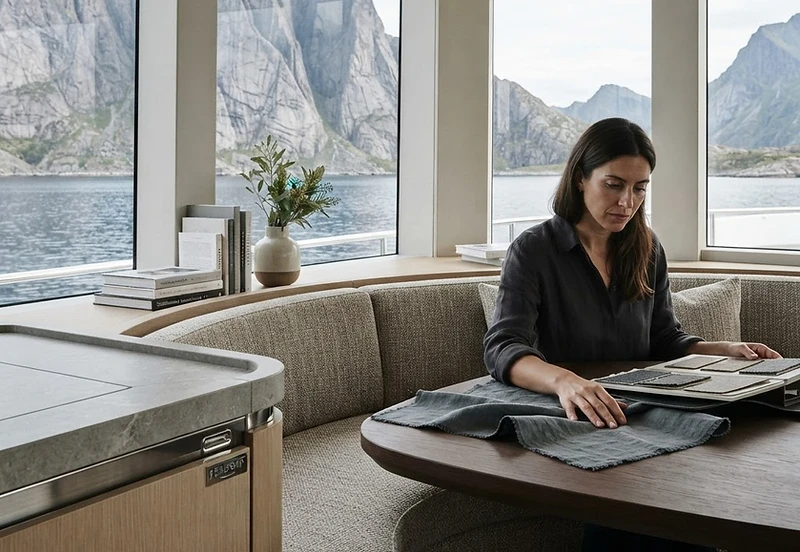
Stepping into the main saloon, the transition from the chaotic, wind-whipped deck to the interior is remarkably seamless. Sessa’s design philosophy here relies on the deliberate play of light against bleached white oak and muted, textural linens that evoke the pale grasses of the local salt marshes. We sat for coffee—a strong, black roast from a small-batch roastery in Bodø—while watching the fog cling to the base of the Seven Sisters peaks. The furniture is grounded with a deliberate weight that recalls the permanence of a shore-side retreat tucked into a granite hollow. It is here that the concept of the superyacht as a home succeeds; you do not feel as though you are inside a machine, but rather within a floating architecture that respects the gravity and the geology of the northern horizon. The rounded corners of the bulkheads soften the interior lines, a subtle nod to the polished, ice-scoured stones found in the nearby tidal pools of Træna.
The Tender to the Shoreline
By midday, the wind had died enough for us to launch the tender. We made for a small, unnamed beach tucked behind a granite headland, a place of crushed shell and white sand that looked starkly incongruous against the dark, monolithic backdrop of the Arctic landscape. Returning to the yacht in the late afternoon, the contrast was profound. The interior of the yacht had become a refuge of warmth and low-angle golden light, the soft fabric of the lounge chairs providing a necessary relief after the day's exposure to the biting spray. I watched the crew secure the lines, their movements practiced and quiet, while Sessa’s design held its own against the immense, indifferent scale of the fjord outside. As the sun dipped, turning the basalt cliffs into ink-dark silhouettes, the yacht didn't feel like a vessel in transit, but a fixed, architectural point on a map that had barely changed for centuries.
As the final light faded behind the peaks of the Helgeland, the interior glow spilled out onto the water, a golden amber square reflecting off the dark, mirror-still surface of the fjord. We finished the evening in the bridge deck lounge, the only sound the faint, rhythmic lap of water against the steel hull, anchored by the knowledge that outside, the tide was doing exactly what it had done since the mountains were born.






