
The Darkening of Isabela
The anchor chain of the Nautor’s Swan had long since ceased its rhythmic grinding against the volcanic shelf of Caleta Tagus. As the sun slipped behind the jagged, arid peaks of Isabela Island, the transition was not merely a change in light, but a fundamental shift in the vessel’s utility. We spent the late afternoon in the cockpit, the air thick with the scent of salt spray and the residual heat of the equatorial sun, preparing for the evening's descent. The life aboard had slowed to a deliberate pace; a simple dinner of grilled snapper and plantains served on the aft deck had been cleared away, leaving only the soft hum of the generator and the occasional slap of water against the fiberglass hull.
Descending the Transom
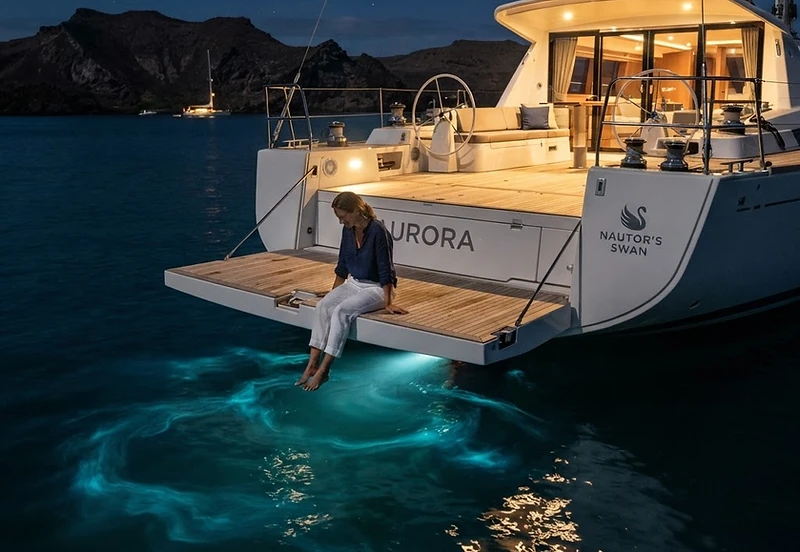
Stepping onto the extended hydraulic swim platform, the temperature contrast was sharp against the humid island air. This platform, usually a staging ground for sun-drenched dives to look for green sea turtles, now felt like a threshold into an entirely different ecosystem. The water here, deep and obsidian-black, held the promise of the Humboldt Current’s influence. As we adjusted our dive lights, the beam revealed only the dense, swirling suspended life of the Pacific, a stark reminder that this yacht was merely a transient guest in a protected marine reserve. There is a specific vulnerability in hovering beneath the hull of a vessel in the dark, watching the lights from the cockpit glow through the surface of the water like a distant, domestic star.
The Rhythm of the Deep
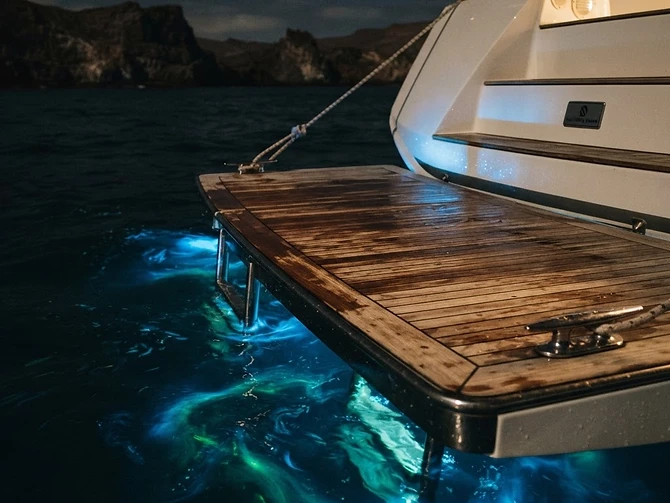
Once submerged, the silence of the anchorage was replaced by the mechanical, rhythmic intake of the regulator. The yacht’s underwater lights, usually intended to enhance the aesthetic of a port stay, transformed the water into a theater of plankton and hunting reef fish. A school of salema swirled in the beam, their scales reflecting the light with a metallic brilliance that felt unnervingly synchronized. Life aboard a vessel in the Galápagos demands a heightened awareness of these quiet, nocturnal shifts; there is a ceremony to the return, climbing the stainless steel ladder back onto the teak decking, the cold water dripping onto the warm wood, as the vessel gently swayed in the dark anchorage. Back in the main saloon, the transition from the wild, dark water to the soft, recessed lighting of the interior felt abrupt, a reminder of the refined cocoon we had created for ourselves in the middle of a volcanic wilderness.
As the final dive light was switched off and the vessel settled into the quiet current, the reality of the anchorage returned. The distant silhouette of the cliffs loomed, and the only sound remaining was the soft creak of the halyards against the mast. We concluded the night with a glass of chilled, crisp mineral water, observing the dark, indifferent expanse of the Pacific, knowing that beneath our feet, the rhythm of the currents would continue long after we retreated to our cabins, untethered from the day’s exploration.






