
The Weight of the Western Isles
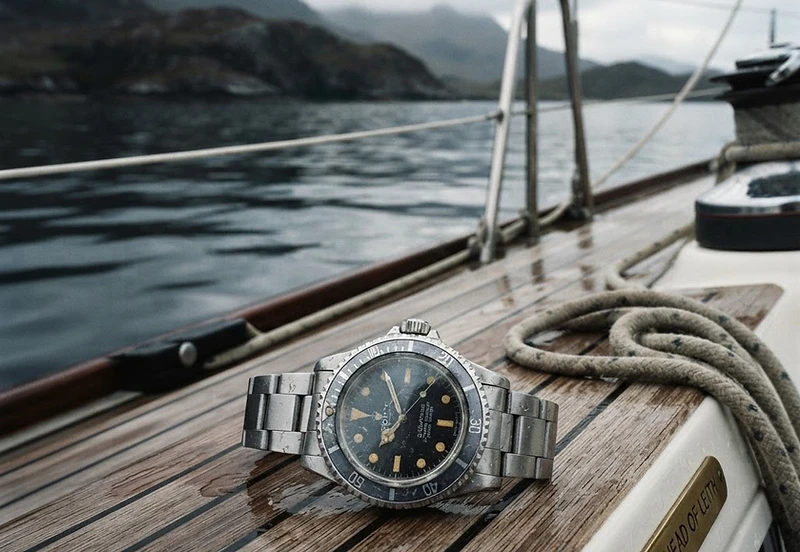
The morning light in Loch Scavaig is not so much a sunrise as a slow, pearlescent surrender of the night. On the aft deck of a Nautor’s Swan, the air is thick with the scent of damp basalt and cold Atlantic brine. As the crew prepares the rigging for a passage toward the Shiant Isles, I catch the flash of steel against the teak rail—my own dive watch, a survivor of two decades of service. The bezel is no longer the sharp, aggressive circle it was when it left the factory; its edges have been softened by the rough salt of the North Atlantic and the occasional, careless collision with a winch handle in the middle of a squall.
A History Written in Patina
To wear a watch on deck is to subject it to a relentless, low-grade assault. Over the years, the luminous indices on the dial have shifted from a stark, synthetic white to a warm, sun-warmed cream—a color that reminds me of the bleached driftwood we gathered on the shore of Rum last summer. This patina is the watch’s personal ledger. It remembers the corrosive spray of the Minch and the sudden, bracing chill of diving into the water off the coast of Jura to clear a fouled anchor line. Each microscopic scratch on the sapphire crystal is a ghost of a moment: a frantic adjustment of a halyard, the scramble up a ladder in a swell, or the simple, quiet act of checking the time against the sun while drifting in the lee of a sea stack.
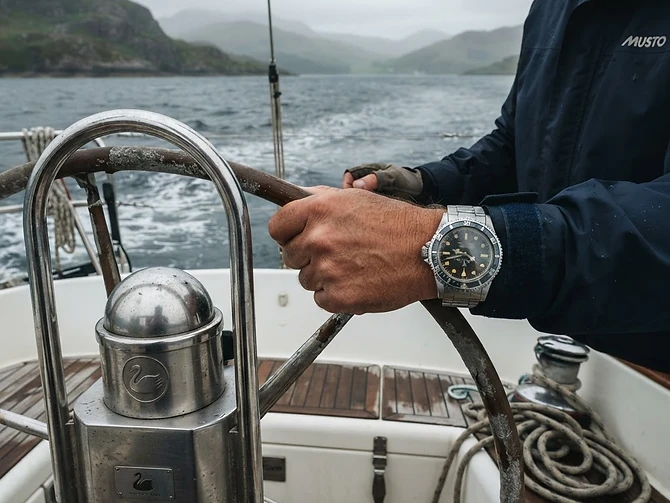
There is a peculiar honesty to this degradation. Onboard a vessel as precise as a modern yacht, where every system is monitored by digital screens and satellite feeds, the mechanical watch remains an analog anchor. It does not ping or demand attention; it simply exists, measuring the passage of the tide and the shift of the wind. My companion at the helm, a captain who has spent thirty years in these waters, once remarked that a watch only starts to perform properly once it has lost its showroom polish. He keeps a vintage reference pinned to his wrist, its casing pitted by decades of engine room heat and exposure to the damp air of Oban. It is a tool, not an accessory, functioning with a reliability that feels more biological than manufactured.
The Quiet Archive of the Anchorage
As we weigh anchor and clear the headland, the boat begins its rhythmic heave against the swell. I check the time, noting how the internal movement has adapted to the constant, subtle vibrations of the hull. This is not the sterile, predictable time of a land-based office; it is maritime time, defined by the swing of the compass and the duration of a watch. The watch on my wrist is scarred and salt-worn, yet it remains the most accurate narrative device I own, a physical archive of every anchorage from the Firth of Clyde to the outermost cliffs of the Outer Hebrides. It has been submerged in the dark, cold depths of the Minch and baked in the unexpected, fleeting heat of a Highland July, and in that wear, it has finally become part of the vessel itself.
We will drop anchor in a quiet bay near Harris before the light fully leaves the sky. There, over a glass of Talisker and the low hum of the generator, the watch will settle back into the silence of the cabin. It is a quiet, reliable partner in this life—a constant reminder that, out here, the only thing that matters is how well we mark the time we are given between the currents.






