
The Geometry of the Morning
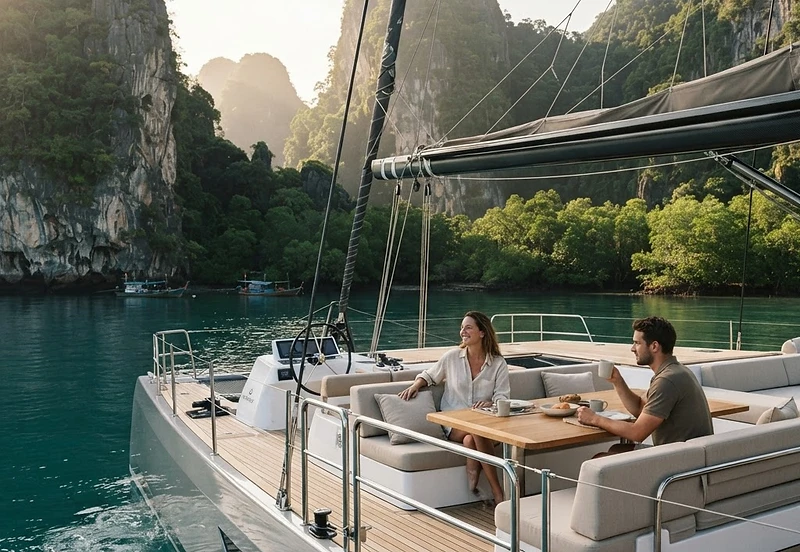
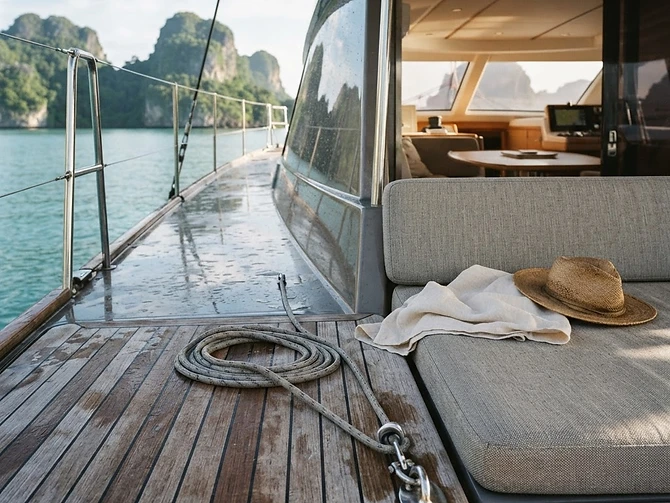
The dawn off the coast of Pulau Dayang Bunting is not a sudden illumination, but a slow, velvet erosion of the darkness. Sitting in the aft cockpit of a Gunboat 68, the teak beneath my feet still holds the faint, cool memory of the night. Here, the transition from the open-water passage into the sheltered limestone cathedrals of the Langkawi archipelago is defined by the sudden change in the water’s state—from the rhythmic heave of the Andaman Sea to the stillness of a mirror. The boat, a vessel built for the efficiency of carbon fiber and high-speed cruising, finds a different kind of purpose at anchor. The wide, flush deck of the cockpit serves as the primary stage for life aboard, a bridge between the sheer engineering of the mast and the raw, prehistoric spires of the karst islands that hem us in.
The Ritual of the Table
Morning, in this latitude, is a ceremony of small, deliberate gestures. As the heat begins its slow climb, the primary concern of the deck is the configuration of the salon-to-cockpit flow. The breakfast service here does not rely on the artifice of a formal dining room; instead, it is a curated collection of mangosteen and rambutan, local coffee sourced from the mainland highlands, and fresh, crusty rolls retrieved from a bakery near the Royal Langkawi Yacht Club before our departure. We eat in the open air, sheltered only by the generous overhang of the coachroof. There is a specific cadence to this—the clink of porcelain against teak, the distant, sharp call of a sea eagle circling the limestone cliffs, and the low, steady hum of the boat’s electrical systems coming to life for the day’s activities. The crew moves with a practiced, unobtrusive economy, ensuring the cockpit remains a space of refuge rather than operation. It is a reminder that on a performance catamaran of this caliber, the luxury is not in the ornamentation, but in the seamless access to the horizon.
The Tide’s Decision
By mid-morning, the decision of whether to head toward the southern anchorage of Pulau Tuba or remain under the shadow of the cliffs becomes the only pressing task. The yachting life is, at its core, a conversation with the elements, and the cockpit is the primary listening post. I watch the current begin to pull at the anchor chain, the nylon snubbing line stretching with a low, resonant groan as the bow swings slowly toward the channel. To be aboard a vessel like this, anchored in the lee of these ancient, rain-shadowed giants, is to exist in a state of suspended transit. The world outside the lifelines—the bustle of Kuah, the occasional maritime traffic near Telaga Harbour—feels like a different geological epoch. As the sun rises to its zenith, the cockpit transitions into a shade-drenched sanctuary, the ultimate observation deck for a sea that refuses to be tamed, only navigated.
The afternoon sun eventually bleaches the limestone white, casting sharp, deep shadows that reach toward our hull, and we begin the process of weighing anchor, the silence of the anchorage yielding once more to the insistent, rhythmic pulse of the engines.






