
The Transom Transition
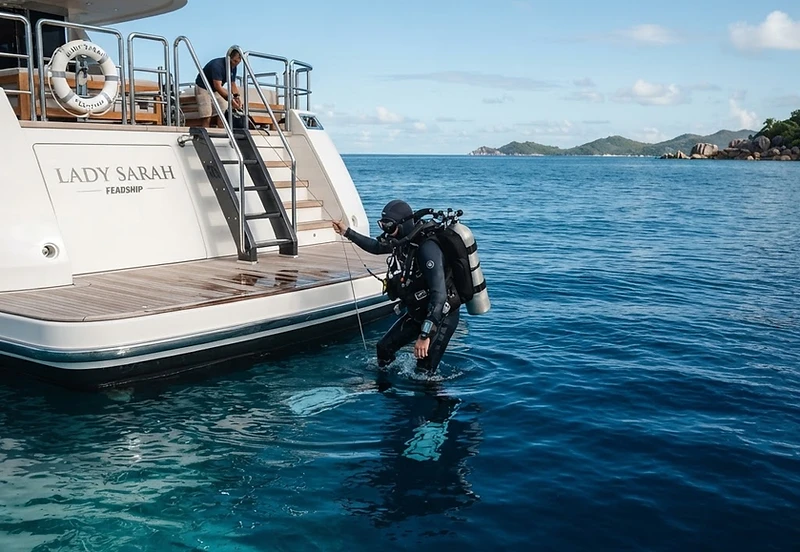
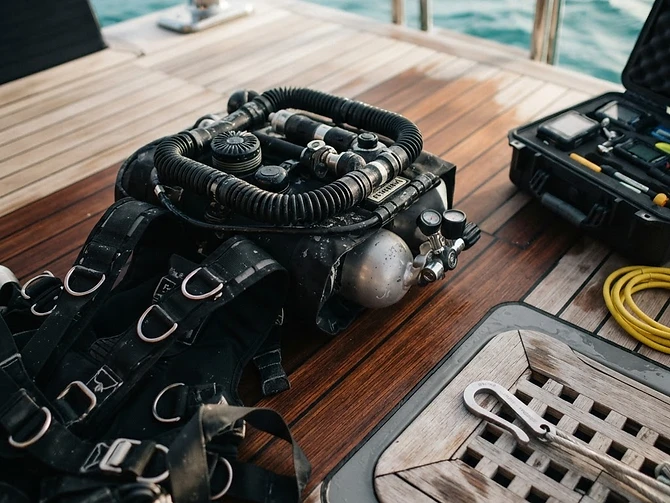
The transition from the salt-bleached teak of the Lady Sarah to the cobalt expanse of the Amirante Ridge is a lesson in calibrated stillness. At 07:00, the Seychelles morning light is thin and diffuse, casting long, pale shadows against the granite boulders that anchor the coastline. On the aft deck, the atmosphere is heavy with the scent of roasted Arabica and the sharp, iodine-rich brine of the Indian Ocean. Our dive support team moves with a practiced, unobtrusive efficiency, their hands steady as they calibrate the rebreather scrubbers and verify the oxygen partial pressures. There is no urgency in their movements, only the calm rhythm of a crew accustomed to the demands of deep-water exploration. The Lady Sarah, a Feadship of impeccable lines, holds her station with the unwavering poise of a vessel designed for long-range autonomy. As I cross the carbon-fiber threshold of the swim platform, the water beneath is a glass-like void, its surface disturbed only by the rhythmic, hollow slap of the tender’s painter against the hull.
The Rebreather Descent
Once submerged, the terrestrial world of the Lady Sarah is excised from memory, replaced by the rhythmic, metallic intake of the rebreather loop. Descending toward the vertical wall of the ridge, the spectrum of light narrows, shifting from a brilliant surface gold to a bruised, electric indigo. This is not the accessible topography of the Inner Islands; here, the reef is a chaotic, dramatic architecture of volcanic basalt and resilient, pulsing soft corals. Every movement is a deliberate exercise in buoyancy. The closed-circuit system renders my exhalations silent, a stark and eerie contrast to the muffled thrum of the yacht’s generators that lingered in the water column minutes prior. In this silence, the scale of the sea becomes personal. Silver-tipped sharks patrol the drop-off with rhythmic indifference, while gorgonian fans sway in a current that is entirely unseen from the surface. The pressure is a tangible weight, a reminder that we are temporary, invited guests in a cold, high-pressure domain governed by the relentless migration of nutrient-rich water rather than the curated climate of the interior lounge.
The Return to the Anchor
Ascending to the safety stop, the water transitions through a spectrum of impossible aquamarines, the deep blues of the abyss gradually bleeding into the luminous shallows that define the Seychelles banks. Breaking the surface, the sight of the yacht’s gleaming white superstructure against the serrated green horizon is a jarring, yet welcome, reconciliation with humanity. The crew is waiting, the dive ladder deployed, and the air is suddenly filled with the promise of a hot, freshwater rinse and a simple lunch—likely grilled jobfish, caught just outside the reef, seasoned with local lime and bird’s-eye chili. Back on board, the afternoon settles into a familiar, restorative cadence: the slow, measured unspooling of the anchor chain, the gentle yaw of the vessel as she finds her swing, and the collective exhale of a morning spent in the deep. As the sun dips behind the Amirante rim, the vessel feels less like a piece of mechanical engineering and more like a floating sanctuary. The only sound left is the gentle, percussive lap of water against the hull, a rhythmic pulse that seems to synchronize with the long, slow breathing of the ocean itself.






