
The Geometry of the Morning Manifest
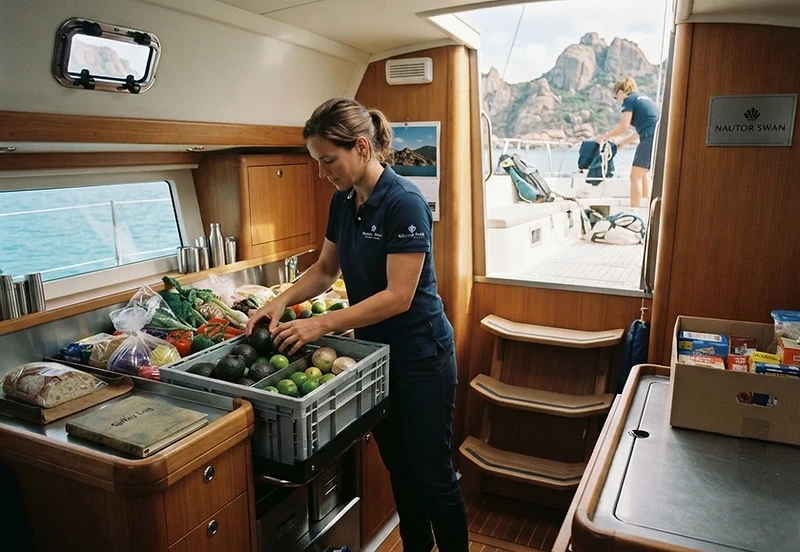
The humidity in Victoria harbor at 05:00 is a physical weight, thick with the scent of manila hemp, drying salt, and the sharp, metallic tang of the tuna fleet preparing for the dawn haul. Aboard the 45-meter Nautor’s Swan, the transition from the frantic, humid quays of Mahé to the impending vastness of the Indian Ocean is dictated not by the twin MTU engines, but by the precise, cryogenic calibration of the walk-in lockers. We watch as the last of the crates—firm, local papayas still warm from the island sun, bundles of wild-harvested sea-salted greens, and vacuum-sealed portions of line-caught jobfish—are craned over the teak gunwales with practiced surgical care. Each item is indexed against the week ahead, entered into an analog ledger that serves as the ship’s map of sustenance. There is no grocery run once we clear the lighthouse at Cap Ternay and set our heading toward the Amirantes; provisioning is an act of total foresight, a tactical estimation of human appetite balanced against the unyielding, blue-water isolation of the outer atolls.
The Pulse of the Galley
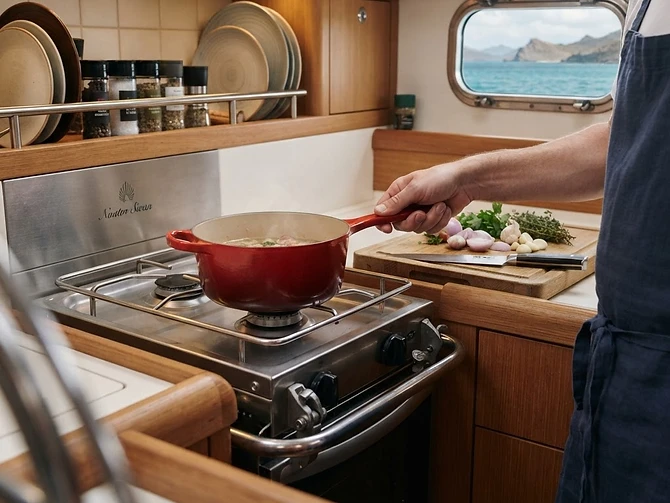
Once we clear the shallows and the hull begins its rhythmic long-period roll, the yacht truly finds its stride. The galley becomes the vessel’s internal pulse, humming with a frequency that mirrors the steady swell of the Indian Ocean. It is here that the physical architecture of the charter takes shape: the systematic breakdown of cargo into service-ready components, a logistical ballet conducted in tight quarters. We are not merely stocking shelves; we are calibrating the yacht’s internal life for the remote anchorages near Desroches. The sharp, vibrant aroma of crushed coriander and lime begins to slice through the heavy salt air, a verdant contrast to the endless, deep ultramarine of the open sea. There is a specific, quiet authority in watching the chef organize the mise-en-place for an evening meal while the yacht pivots gently on its anchor chain, the distant, muffled sound of surf breaking against a jagged coral reef acting as a constant, natural metronome. Whether it is a quick, salt-crusted lunch after a morning dive or a formal service under the immense, unpolluted, starlit dome of the tropics, the fare is the true anchor that grounds us between the daily rigors of navigation and exploration.
Anchored in the Amirante Silence
By the third day, the rigid logistics of the manifest are forgotten, replaced by the profound, singular reality of life on the water. We have tucked the vessel into a secluded, unnamed cove, the water so translucent it feels as though we are suspended in the ether rather than moored to the seabed. The galley service has settled into a meditative, fluid pace—a chilled, crisp gazpacho served on the aft deck, the beads of condensation on the porcelain bowls mirroring the sea spray that occasionally ghosts across the polished transom. As the sun dips behind the granite spires of a distant islet, the day’s activities—the snorkeling among the vibrant, swaying gorgonian forests, the slow, rhythmic checking of the wind speed and the barometer—simply dissolve. We sit in the waning, amber light, the remains of a meal shared with the quiet camaraderie of a crew that understands exactly where the horizon terminates and our small, contained world begins. There is no urgency in the final pour, only the steady, gentle lap of the tide against the hull, marking the passage of another day in the vast, beautiful blue.






