
The Descent into the Beagle’s Throat
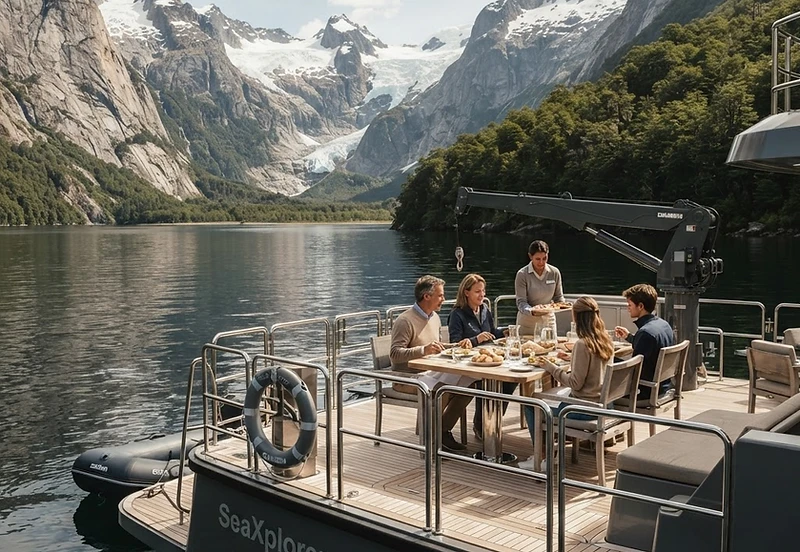
The Damen SeaXplorer sat with an unnatural stillness against the brooding backdrop of the Beagle Channel, her plumb bow slicing into water the color of hammered pewter. In these latitudes, where the wind carries the pulverized weight of the Darwin Range, anchorage is not a passive act; it is a delicate negotiation with the volatile topography of the Southern Andes. We had come to anchor off the remote headlands of the channel, where the mountains collapse directly into the sea, concealing cavernous fissures carved by eons of glacial retreat. From the bridge, the captain monitored the erratic shifts in the katabatic gusts, but the air at the waterline remained preternaturally calm. As we lowered the RIB, the temperature difference between the surface brine and the biting air felt like a physical barrier, a stark reminder that in these southern waters, you are always a transient guest of the elements.
The Submerged Cathedral
Entering the cavern required an immediate recalibration of the senses. As we moved from the open, steel-grey expanse of the channel into the narrow, salt-slicked throat of the rock formation, the light began to refract in impossible, subterranean hues of cobalt and bruised violet. We dove not for the teeming spectacle of a tropical reef, but for the profound, heavy silence of deep basalt. Below, the water acted as a liquid lens, piercingly clear and cold enough to steal the breath. The swim-through was an exercise in absolute, precise buoyancy; we drifted like astronauts through a tunnel of ancient, water-smoothed granite, the silence broken only by the rhythmic, hollow rasp of our own breath echoing against the walls. Inside the heart of the cavern, a solitary shaft of sunlight pierced the gloom from a fissure thirty feet above, illuminating a slow-motion dance of suspended mineral sediment. It was a cathedral of unvarnished isolation, a hidden reach far removed from the navigational charts and the mechanical, stabilizing hum of the yacht.
The Ritual of the Return
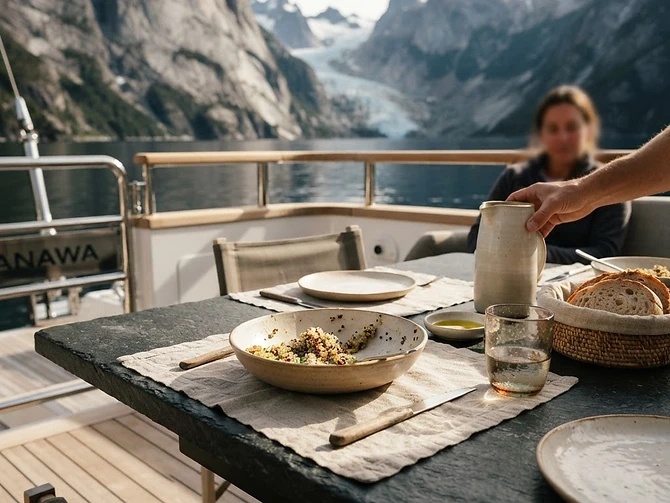
Returning to the deck of the SeaXplorer, the world aboard felt profoundly amplified by the starkness of the morning. There is a singular, quiet luxury in the transition from the raw brutality of a glacial dive to the warmth of a teak-lined aft deck. We moved with a deliberate, chilled heaviness, shedding neoprene and rinsing in the freshwater shower while the stewards arranged the midday service. Lunch was a masterclass in the unhurried rhythm of life at sea: a simple, honest preparation of king crab caught in the local waters that morning, served with toasted sourdough and a bright, citrus-forward emulsion. We sat in the glass-protected shelter of the cockpit, watching the mist re-cloak the mountains we had just emerged from. As the vessel groaned gently against her mooring lines, the conversation faded, replaced by the soft, rhythmic clatter of silver against bone china and the immense, crushing quiet of the Antarctic periphery. We did not speak of the dive or the slow climb back to the surface; we simply let the afternoon drift, anchored in the certainty of the tide and the stillness of the ship.
The current began to shift, pulling the SeaXplorer to point her bow toward the rising swell, and the faint, lingering scent of salt and ozone hung in the air long after the plates were cleared.






