
The Descent to the Waterline
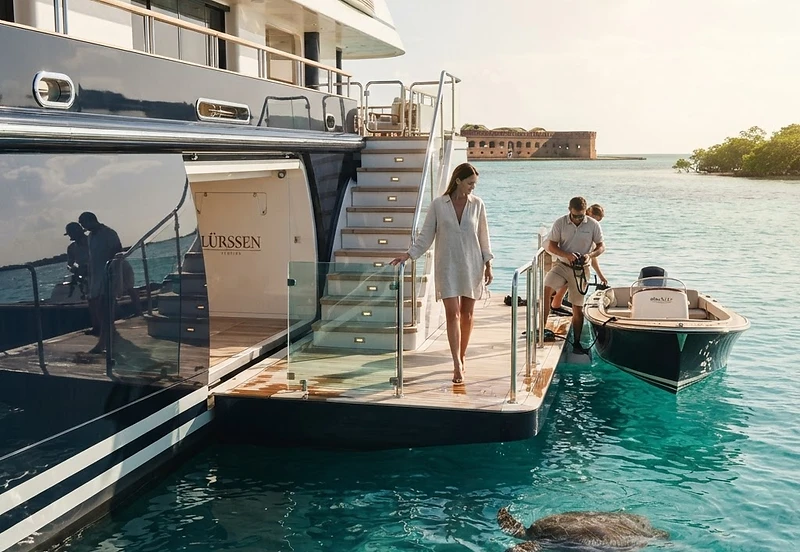
There is a specific thermal gradient that defines a morning aboard a Lürssen as it swings at anchor near the Dry Tortugas. It is the moment the hydraulics hum—a muted, mechanical sigh that signals the descent of the teak-laid swim platform until it just kisses the surface of the Gulf of Mexico. Standing on that platform, suspended mere inches above the shoals, the sheer scale of the yacht vanishes. You are no longer navigating a towering steel structure; you are a part of the reef, eye-level with the undulating shadows of permit fish passing beneath the hull.
We had arrived under a bruised, violet sky the evening prior, cutting the engines in the lee of Loggerhead Key. The transition from the bridge to the swim platform is more than a change in elevation; it is a shift in temperament. By nine, the sun is already white-hot, reflecting off the shallow, cerulean sandbars that ripple out toward the horizon. The platform has been prepared with low-slung, weather-resistant cushions, transforming a technical space into a terrestrial deck. It is here that the rhythm of the day is dictated, not by the ship’s clock, but by the subtle, rhythmic pulse of the tide against the stainless steel ladders.
The Architecture of the Salt-Soaked Afternoon
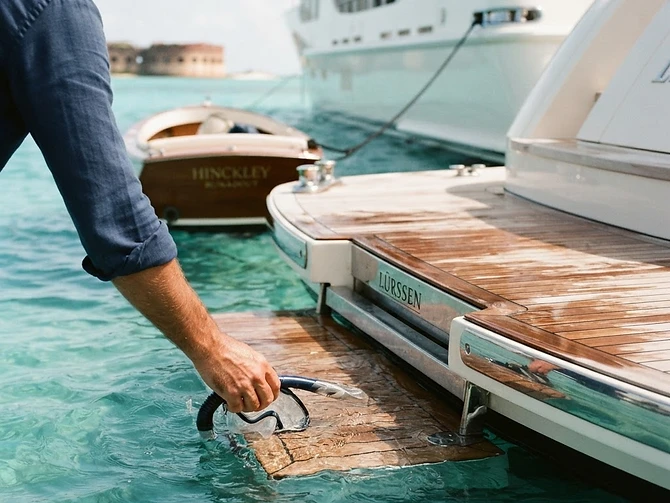
Life at the waterline demands a recalibration of service. There are no starched linens or rigid seatings here; instead, the crew brings trays of chilled stone crab claws and cold canisters of coconut water as we shed our skin in the salt. The platform serves as our base of operations, a hub for everything from snorkeling the nearby coral heads to simply watching the Hinckley tender bob gently against the fenders. There is a raw, tactile intimacy to being this close to the sea, a reminder that even the most sophisticated naval architecture is merely a guest in these shifting, unforgiving waters.
I watched our chief engineer, a man who has spent more nights at sea than on solid ground, meticulously rinse the salt from the dive gear with a fresh-water hose. He moved with the fluid, deliberate economy of someone who understands that maintenance is a form of respect for the vessel. Behind us, the yacht’s aft deck remained silent, save for the occasional, soft flutter of a canvas shade. We spent the better part of the afternoon drifting between the platform and the water, the intense heat of the Florida sun mediated by the constant, cooling spray of a light chop. The conversation was infrequent, limited to observations on the clarity of the incoming current and the occasional, distant silhouette of a frigatebird circling the lighthouse.
The Quiet Equilibrium of the Dry Tortugas
As the sun begins to dip toward the jagged, calcified edge of the horizon, the water takes on a liquid-mercury sheen. The platform is retracted partially, the teak boards glistening with residual brine. It is the hour when the day’s activities—the exploratory dives, the steady maintenance of the hull, the monitoring of the anchor chain—coalesce into a singular, quiet equilibrium. There is a profound sense of privilege in being anchored so far from the reach of the mainland, tethered to the sea by nothing more than a length of steel chain and the grace of a well-executed transom design.
We finished the evening sitting on the edge of the platform, legs dangling into the cooling dark water, watching the lights of the yacht reflect like shattered gold across the surface of the channel. The scent of the ocean, a sharp, elemental mix of brine and sun-baked limestone, filled the air. There was no music, only the gentle, rhythmic slap of water against the fiberglass and the distant, sweeping beacon of the Loggerhead Key light. It was a perfect, contained solitude, a reminder that the true luxury of the yachting life is not the vessel itself, but the way it allows us to occupy the spaces between the map and the horizon.






