
The Geometry of a Southward Huddle
The southerly change did not arrive with a whisper. It came as a grey, bruised line on the horizon, turning the jade waters of the Bay of Islands into a restless, white-capped churn. We were anchored in the lee of Urupukapuka, the rhythmic slap of the Pacific against the hull providing a percussive counterpoint to the low hum of the stabilisers. On a vessel of this pedigree—a bespoke Damen SeaXplorer designed with the uncompromising structural rigour of a land-based coastal villa—the transition from the biting, salt-laden air of the deck to the interior is not merely a movement of space, but a fundamental shift in atmospheric density. The warmth that greeted us inside was not an ambient thermostat setting, but the quiet radiation of oiled cedar and joinery so precise it felt tectonic. Here, the vessel does not merely float; it occupies the water with the deliberate weight of a cliff-bound monument.
The Interior as a Living Vessel
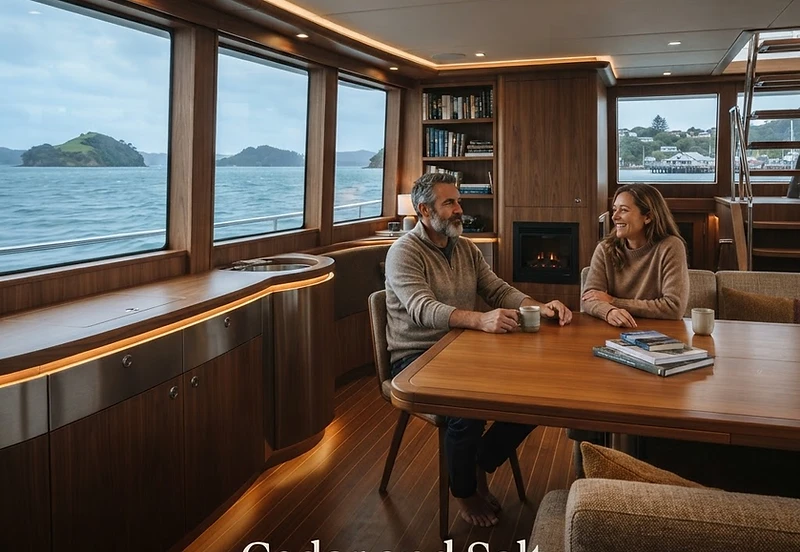
The interior design, executed with a discipline reminiscent of the most thoughtful residential architecture found in the Auckland waterfront districts, relies on the same philosophy of frame and void. As we sat in the saloon, the vast, triple-paned glass—strengthened to withstand the pressures of high-latitude exploration—functioned like the floor-to-ceiling windows of a modernist residence perched on a cliffside. There is a profound architectural honesty in how these spaces are laid out. The navigation desk, fashioned from dark, matte-finished walnut, commands the central axis, mirroring the hearth-centric design of a grand house, while the galley flows into the social quarters with a seamlessness that demands communal participation. It is here, over a bowl of steamed snapper caught near the Piercy Island arch, that the connection between the ship’s engineering and the comforts of home becomes clearest: both are intended to provide shelter against the vast, indifferent power of the elements. The galley, often the soul of a superyacht, resonates with the hum of professional-grade induction and the sharp, clean scent of fresh herbs, offering a domestic anchor amidst the churning tides.
Echoes of the Shore
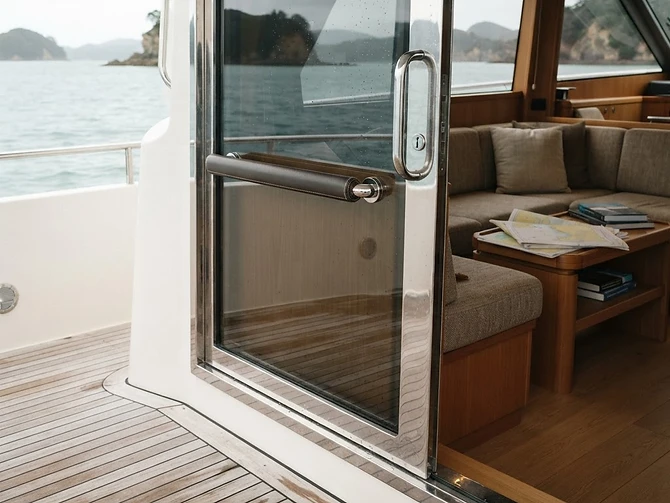
As evening settled, the interior lights dimmed, pulling the focus inward and turning the windows into dark, reflective planes that occasionally caught the flash of a navigation light from a distant tender returning to the Russell wharf. One cannot help but draw a parallel to the most iconic waterfront structures of the Northland coast; like the best houses, this yacht is designed to frame the environment without being subsumed by it. The tactile quality of the surfaces—the brushed brass fittings, the heavy wool upholstery, the seamless teak decks that continue the transition from the exterior—creates a cocoon-like stillness. We watched the rain streak against the glass, distorting the lights of the distant anchorage into liquid gold, feeling the weight of the boat beneath us as a steady, reliable pulse. It is a peculiar kind of luxury to be held in such tight, warm proximity to the water, where the architecture of the vessel serves as the only barrier between the wild, unruly surge of the bay and the profound, measured silence of a life afloat. In the final hours of the watch, the ship settles, its timbers and steel whispering as the wind drops, leaving us suspended in a vessel that is, for all intents and purposes, a sanctuary built for the sea.






