
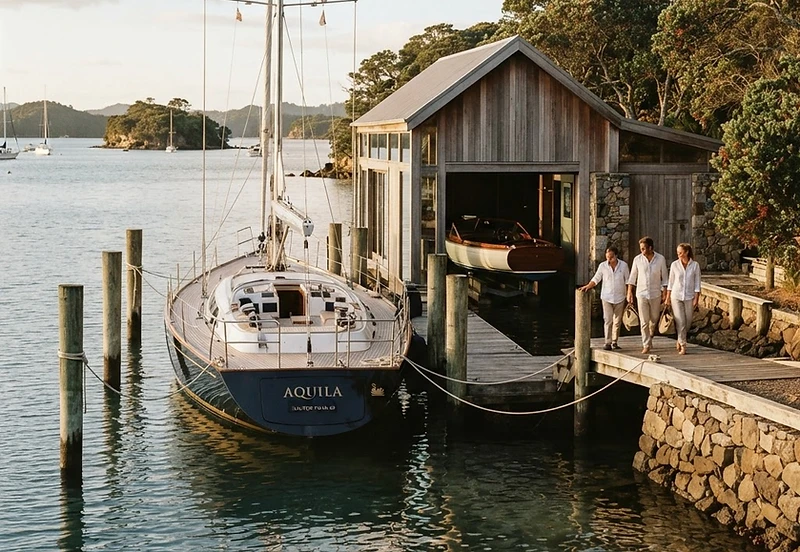
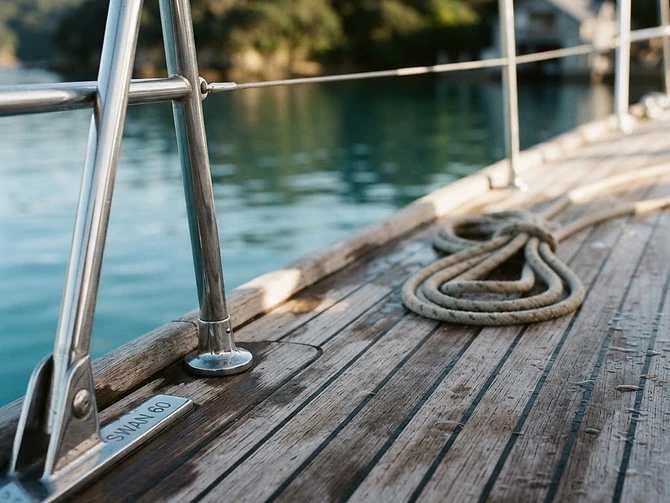
There is a specific stillness that descends upon the Bay of Islands when the trade winds drop, leaving the Pacific to lap gently against the dark, volcanic rock of the shore. We had spent the morning navigating a Nautor’s Swan 60 through the labyrinthine passage between Urupukapuka and the mainland, the deep, resonant hum of the hull cutting through the chop of the Otehei Bay. As the sun reached its zenith, we steered toward the sheltered inlet of Te Puna, where the shoreline is punctuated not by the frantic activity of a commercial marina, but by the grounded, deliberate form of a century-old boathouse repurposed into a residence.
The Architecture of the Seawall
This structure, meticulously weathered to match the surrounding pōhutukawa trees, stands as a terrestrial mirror to the vessels that dock beside it. Its design—a marriage of raw cedar planks and expansive, floor-to-ceiling glazing—echoes the clean, functional lines of a superyacht saloon, yet it is rooted firmly in the silt of the estuary. The architect, keeping the original slipway intact, has allowed the sea to remain the primary occupant. When the high tide surges, the water creeps beneath the living room floorboards, creating a rhythmic, percussive sound that mirrors the gentle slap of water against the teak decking of a tender. It is here that the boundary between dwelling and vessel dissolves; the architecture does not impose upon the water, it acknowledges the constant, fluid nature of the anchorage.
Life Aboard and Ashore
Stepping off the tender and onto the slick, moss-flecked timber of the pier, one feels the immediate shift in equilibrium. We spent the late afternoon watching a local fisherman mend nets, his hands moving with the same precise, repetitive grace as a boatswain tending to a fouled line. Later, back on the deck of our vessel, the house glowed from within, its light spilling out across the dark water like the soft amber of a binnacle lamp. We shared a simple meal of grilled snapper sourced from the nearby fish market in Opua, paired with the quiet confidence of a cold local ale. There is no urgency in these waters. Whether residing in the static hold of the timber boathouse or swaying at anchor in the bay, the rhythm is dictated by the tide and the shift of the wind, a reality that renders the modern world’s frantic pace entirely foreign.
As the Southern Cross began to sharpen against the velvet dark of the sky, the silence of the fjord was absolute. We checked the mooring lines one last time, ensuring the tension was true, and retreated to the cockpit. The house on the shore remained our silent companion, a reminder that whether we are carving a path through the Pacific or watching the world from a deckchair on the beach, we are all ultimately sustained by the movement of the sea. The transition from the solid floor of the converted boathouse back to the subtle, restless motion of the deck felt less like leaving home and more like continuing a journey that began long before we arrived in these waters.






