
The Geometry of the Approach
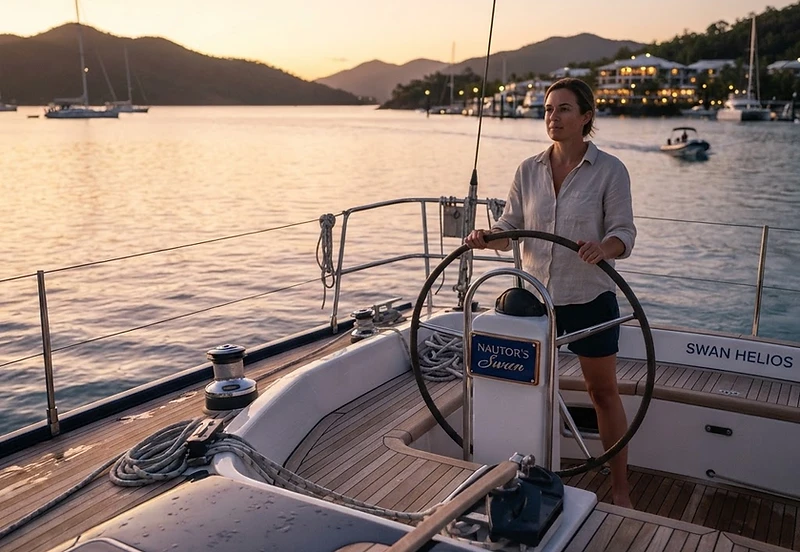
The transition from the deep, rolling sapphire of the Coral Sea into the protected lee of the Whitsundays is a shift in physics. Aboard our Nautor's Swan, the motion changed from a rhythmic, long-period heave to the clipped, energetic chop that defines these shallow, island-dotted waters. We had spent the morning running the coast of Hook Island, the teak decks warming under a relentless Queensland sun. There is a distinct, sharp smell to the air here—a mix of ancient eucalyptus drifting from the escarpment and the mineral salt of a seabed that rarely exceeds thirty meters. Managing the helm during the final approach, the focus is entirely on the chart plotter and the visual markers of the headlands. You do not sail these waters by intuition alone; you sail them by the precise, demanding geometry of the tide, watching the depth sounder as it ticks toward the single digits.
The Ritual of the Transom
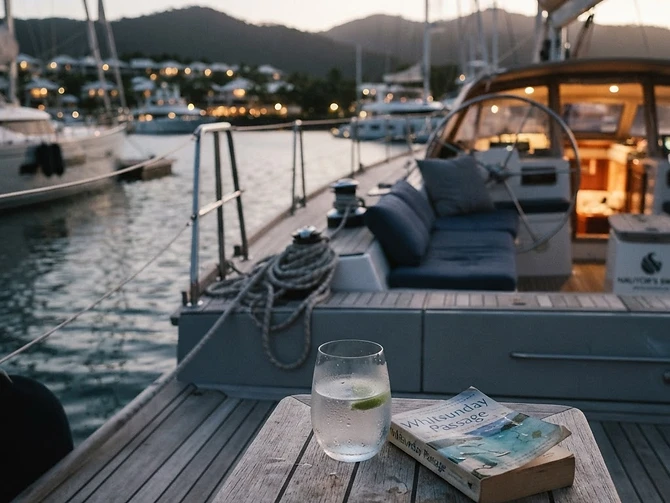
As we rounded the southern tip of Whitsunday Island, the approach to the Hamilton Island Marina became a study in controlled choreography. The berth was tight, flanked by a Lürssen of significant draft and a smaller, sleek Hinckley that seemed more sculpture than vessel. The moment the lines were made fast, the rhythm of the crew shifted instantly from the tactical demands of the passage to the refined protocols of port life. Aboard, the afternoon transitioned into a sequence of quiet, well-rehearsed movements: the clearing of the navigation station, the hosing of the salt-crusted teak, and the careful unfurling of the aft deck cushions. We moved through these tasks with the muscle memory born of a long transit, a silent acknowledgment that the vessel requires as much care in the slip as it does in the teeth of a gale. The cockpit, recently a theatre of intense focus, was transformed into an evening staging ground, the air now perfumed with the citrus-heavy scent of the local limes used for our pre-dinner refreshers, the ice clinking against heavy crystal as the day’s heat finally began to bleed out of the air.
The Marina Afterglow
By nightfall, the marina had settled into a state of glowing, metallic suspension. We walked the pontoons, the only sound the rhythmic, syncopated slap of halyards against alloy masts and the distant, low-frequency hum of generators from the larger yachts, their shore power cables humming with the weight of full climate control. Dinner was served not on the quay, but on the aft deck, watching the constellation of masthead lights reflect across the dark, still surface of the marina basin. The meal—a light, perfectly seared barramundi with a local herb reduction—felt like a direct extension of the landscape we had navigated that day, the clean, mineral flavors echoing the clarity of the reef. There is an inherent intelligence to this lifestyle; after the sustained exposure of the deep water, the port night is not a party, but a necessary, restorative recovery. As the last of the cabin lights flickered off across the harbor, the boat itself seemed to exhale, settling deeper into its lines, a singular, quiet entity anchored in the dark heart of the Whitsundays. The water lapped gently against the hull, a persistent, rhythmic reminder that we were merely guests, tethered for a few hours to a world that never truly stops moving.






