
The Passage to the Ghost of a Fort
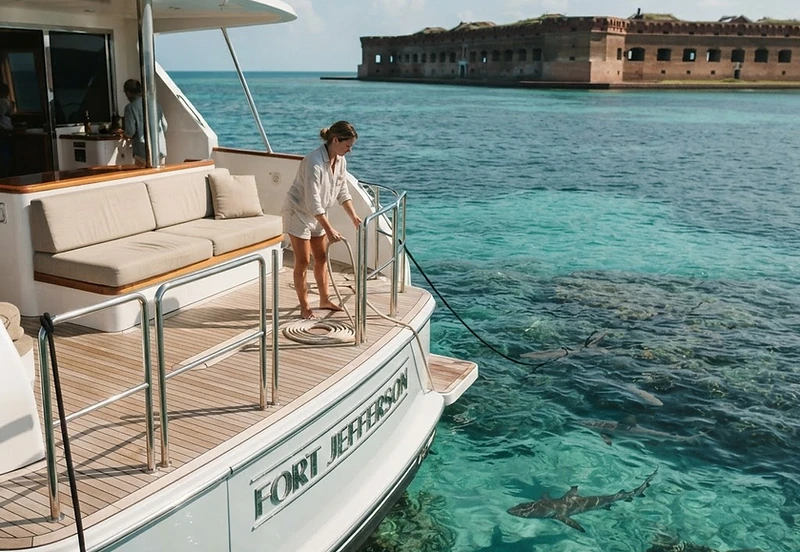
The transition from the manicured docks of Key West to the isolation of the Dry Tortugas is less a journey of distance and more one of shedding expectations. We stood on the foredeck of our 75-foot Hatteras as the silhouette of Fort Jefferson emerged from the heat haze, its massive brick ramparts rising from the cerulean expanse like a stranded leviathan. The water here is distinct—a pale, translucent turquoise that betrays the shifting calcified sands of the shallow banks. Anchoring in the lee of Loggerhead Key, the wind dropped to a whisper, leaving us in a stillness that felt heavy with the weight of maritime history. Life aboard shifted immediately from the mechanical thrum of the passage to the sensory sharpness of the anchorage; the warm, sun-baked scent of teak mingled with the faint, metallic tang of the coming tide, a reminder that in the Tortugas, the sea dictates every movement.
The Dive and the Reef's Silent Sovereignty
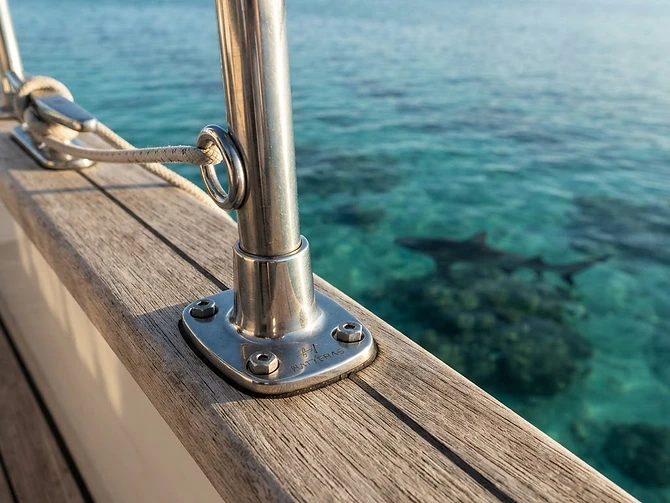
Dropping into the water off the western edge of the reef, the shift in reality was absolute. The surface noise of the boat—the clatter of a dive ladder and the distant generator hum—was instantly replaced by the rhythmic, hollow rasp of my own breathing through the regulator. We were here for the sharks—the Caribbean reef sharks that patrol these deeper shelves with an effortless, predatory grace. They are the true sovereigns of this cruising ground, moving through the water column with a fluid precision that makes our own nautical navigation look remarkably clumsy. Watching a six-foot female navigate the coral canyons of the Pulaski Shoal, I felt the familiar, grounding hum of the sea's indifference. It is a necessary correction to the ego of the yachtsman, a stark reminder that even in a vessel as refined as a Hatteras, we are merely temporary guests in a realm governed entirely by current, light, and the eternal, quiet hunt.
Culinary Rhythms and the Galley's Harvest
Returning to the aft deck, the adrenaline of the deep dive gave way to the deliberate, quiet rituals of the transition. Our chef had sourced a haul of hogfish and Florida spiny lobster from a local fisherman operating out of Marathon, the catch arriving just hours before our departure. Back in the galley, the approach was disciplined and regional: the hogfish was treated with minimal interference, pan-seared with a hint of juice from Key limes and a dusting of sea salt harvested from the Florida coast. We sat at the teak table as the sun dipped toward the Gulf, the taste of the white, firm fish anchored by the sharp, electric brightness of the lime. There is an unmistakable alchemy in eating the catch of the day while swaying gently at anchor, the physical exertion of the dive providing a seasoning that no laboratory garnish could ever replicate. We finished the evening with slices of breadfruit charred on the grill, a nod to the enduring foodways that link our modern liveaboard experience to the centuries of mariners who navigated these same treacherous, rewarding waters. As the last of the light faded into a bruised purple horizon, the only sound was the lap of the tide against the hull, a rhythmic pulse that promised another morning of exploration in the lee of the fort.






