
The Weight of Stewardship
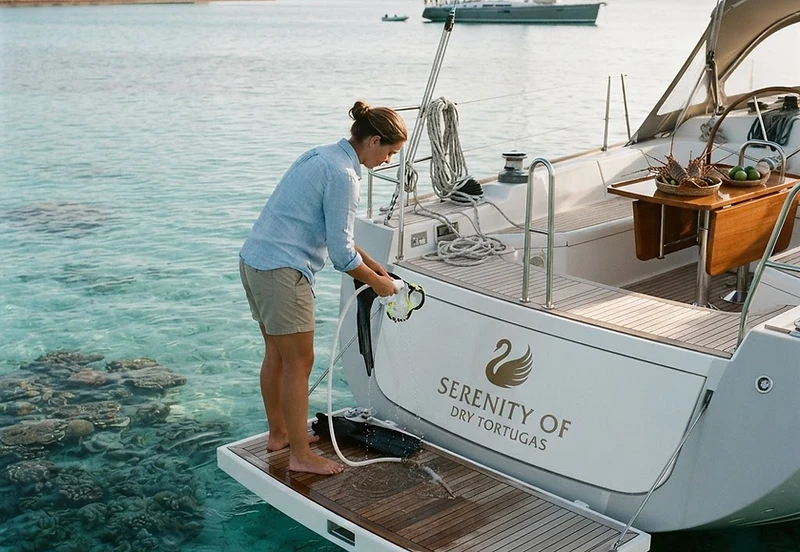
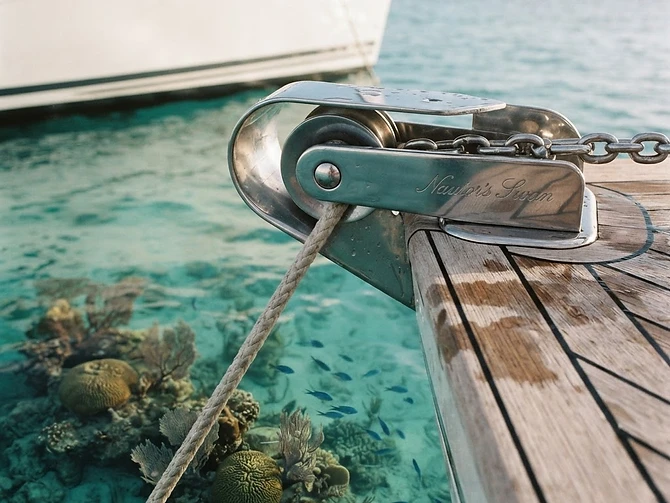
The dawn air in the Dry Tortugas is thick with salt and the low-frequency hum of a shifting tide. As our Nautor’s Swan settles into the sandy basin off Loggerhead Key, the process is one of surgical deliberation rather than routine. Here, the water is a translucent, piercing turquoise that reveals the topography of the seabed with unnerving clarity, exposing every ripple of the silt and the emerald swathes of turtle grass. To drop anchor in these protected Florida waters is to enter into a silent pact with the environment. We study the chart plotter, then cross-reference the reality beneath the hull with polarized lenses, seeking the vast, empty stretches of sand that serve as the only acceptable footprint for our steel. We are guests in a cathedral of calcified life, and the focus is entirely on ensuring our chain remains a distant, respectful observer to the ancient corals.
The Culinary Pulse of the Keys
Life aboard, when anchored in such a precarious natural sanctuary, takes on a contemplative, measured tempo. After the morning check of the anchor bridle and a careful sweep of the surrounding seabed from the tender, the galley becomes the heart of our ritual. We are not merely eating; we are tracing the lineage of the Florida Keys. The local catch, a firm, flaky yellowtail snapper delivered by a small skiff from the nearby outposts earlier that morning, demands a simple, respectful preparation that prioritizes the integrity of the harvest. Our chef, working on the teak of the aft deck, emulsifies the sharp juices of local Key limes—harvested from the groves of the mainland—with a touch of crushed serrano and sea salt gathered from the solar salt pans of the region. The resulting ceviche, served alongside warm, buttered brioche, captures the vibrant, citrus-heavy brightness of the Florida straits. It is a meal that acknowledges the source, mirroring the light, clean clarity of the water beneath our keel, where the foodway is as transparent as the current.
The Geometry of the Evening Tide
As the afternoon light shifts, casting long, bruised shadows across the shallow flats, the rhythm of the yachting life remains tethered to the reef’s enduring health. We take the tender toward the periphery of Fort Jefferson, navigating the labyrinthine channels with the caution of a mariner who understands that a single errant line or a dragging fluke could undo decades of biological growth. There is an unspoken expertise in this movement; we steer clear of the gorgonian forests and the slow-growing brain corals, keeping to the deeper, shifting channels. In the evening, the ritual turns to the horizon. We watch as the light fades into an amber wash, the stark silhouette of the nineteenth-century fort standing in silent sentinel against the encroaching purple of the Gulf. There is a profound luxury in this restraint—the knowledge that we are stewards of a complex, living system. We gather on the transom, enjoying the mineral crispness of a chilled Albariño while the anchor remains perfectly, quietly set in its chosen desert of sand, holding our shared world in perfect balance until the morning tide turns once more.






