
The Architecture of the Morning Watch
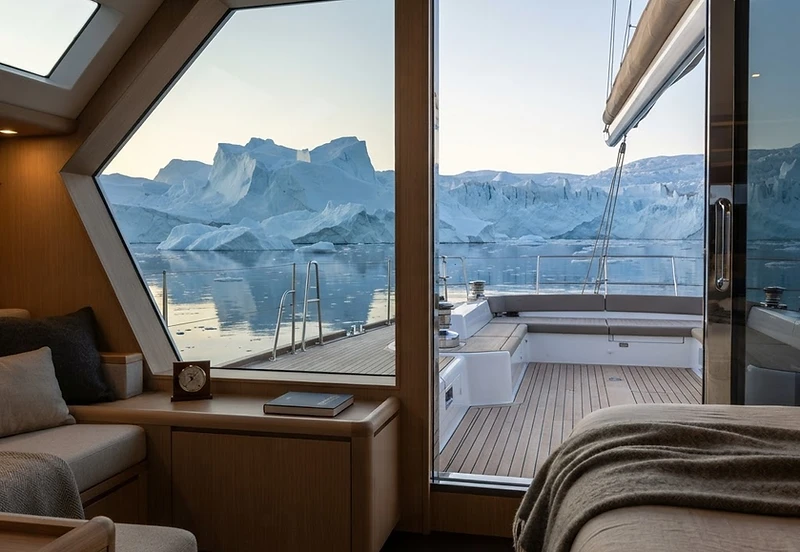
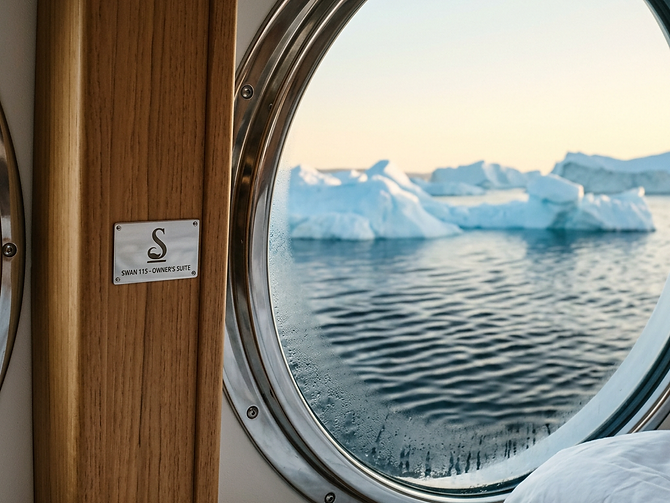
To wake in the owner’s suite of a Nautor's Swan 115 while anchored off the coast of Ilulissat is to understand that true silence possesses a physical weight. The hull, a masterpiece of composite engineering from the Jakobstad yards, holds the interior in a secure, teak-lined embrace, insulating the senses from the biting, crystalline crispness of the Davis Strait. Outside, the morning is a jagged composition of cathedral-sized icebergs, their deep, compressed blues shimmering against a horizon that refuses to succumb to day. The ritual begins not with a bell, but with the subtle shift of the yacht at anchor, the metallic, rhythmic tension of the chain against the windlass, and the low, muffled thrum of the ship’s systems breathing life into the dawn. It is a moment of total detachment, where the boundary between the warmth of the berth and the immense, frozen scale of the Greenlandic coastline dissolves completely.
The Culinary Latitude of the North
Life aboard in these high latitudes demands a rigorous departure from the light, Mediterranean-style grazing common to warmer cruising grounds. When the chef returns from a dawn tender run to the local harbour near the Ilulissat Icefjord, the galley is filled with the clean, saline scent of the Arctic: fresh Greenland halibut, the firm, translucent flesh harvested from the frigid, nutrient-rich depths. We breakfast on gravlax cured with wild crowberries and a dusting of sea salt harvested from the nearby fjords, paired with hearty, dense rye bread sourced from local bakers. There is a singular, bracing clarity to this dining—a focus on the raw, unadorned integrity of the ingredient that mirrors the stark, monolithic landscape visible through the suite’s expansive, vacuum-sealed glazing. Every meal here functions as a dialogue with the coast, an acknowledgment of the profound, limited bounty that these waters offer to those willing to push past the temperate limits of traditional yachting.
The Anchorage at Dusk
As the day wanes, the light does not so much fade as it does bruise, turning the surrounding glaciers into vast, obsidian shapes that loom against an indigo sky. The owner’s suite serves as the ultimate observation deck, a private sanctuary for watching the slow, inexorable drift of pack ice. There is no urgency to reach the shore, though the distant, colourful timber houses of the settlement remain a vivid temptation in the twilight. Instead, the true luxury lies in the stillness: the weight of brushed wool blankets, the unexpected sound of a lone humpback whale exhaling in the distance, and the absolute confidence that the vessel is perfectly poised. We dine late, perhaps a slow-braised muskox shank, its primal richness serving as a necessary, warming counterpoint to the sub-zero temperatures waiting just beyond the bulkhead. To exist here, tucked into the berth while the current pulls gently against the stern, is to recognize that the finest navigation is not always about the distance covered between ports, but the capacity to remain entirely, comfortably, and quietly present in the deep, frozen heart of the sea.






