
The Geometry of the Trade Winds
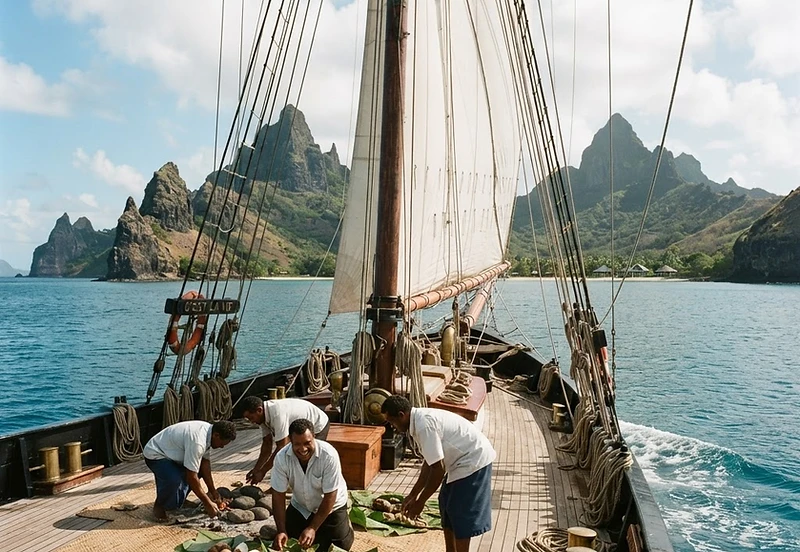
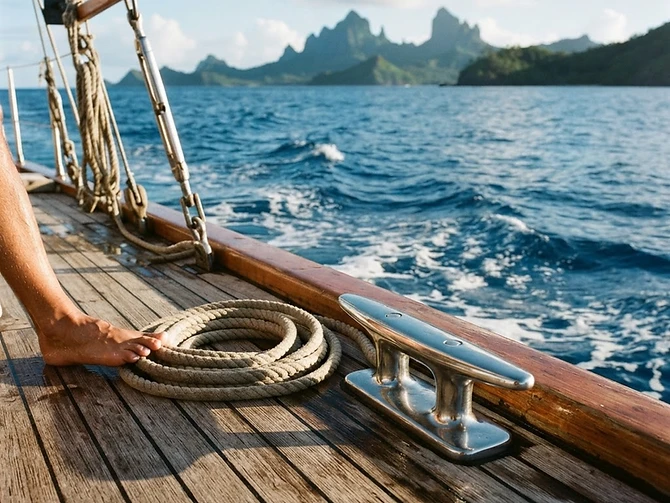
The dawn watch off the southern tip of Waya Island arrives with a peculiar, soft clarity. Aboard C’est La Vie, a painstakingly restored 1920s gaff-rigged schooner, the morning breeze is a mere whisper against the weathered teak decks. There is no thrum of engines to disturb the silence, only the rhythmic, tensioned creak of stainless steel standing rigging and the insistent, gentle slapping of the South Pacific against the hull. To navigate these waters is to submit to a cadence dictated not by the rigid schedules of Port Denarau, but by the fickle, generous breath of the Yasawa trade winds. We are ghosting north, threading the needle between volcanic spires that rise from the indigo depths like the basalt teeth of a submerged leviathan. The schooner heels ever so slightly, a subtle, confident tilt that signals the deep, reliable hold of her ballast. It is a moment of pure, kinetic grace, the kind of equilibrium that only manifests when period canvas meets salt-thickened air in a perfectly tuned, silent dance.
Culinary Traditions of the Lagoon
By midday, the charts guide us into the sheltered, turquoise leeward bay of Nacula. We lower the tender—a utilitarian RIB that serves as the essential bridge between the nomadic, pressurized life of the yacht and the grounding permanence of the shoreline. We are here for the lovo, the traditional earth-oven cooking method practiced by the families of the archipelago. Our chef from C’est La Vie, keen to observe the local craft, steps onto the sand carrying a basket containing the morning’s trade: a magnificent, silver-scaled coral trout acquired from a local outrigger an hour after sunrise. Beneath the canopy of palms at the Blue Lagoon beach, the air is dense with the aromatic perfume of woodsmoke, searing banana leaves, and the sharp, bright acidity of freshly halved citrus. We sit at a rough-hewn timber table, watching the rhythmic efficiency of the preparation. They unearth the feast with steady, calloused hands: root vegetables, tender octopus simmered in local coconut cream, and the earthy, starchy comfort of roasted taro. This is not service; it is a direct, honest conversation between the volcanic soil of the Yasawas and the bounty of the surrounding reef. We conclude the meal with slivers of just-plucked papaya, the fruit’s honeyed sweetness tempered by the cooling sea breeze that accompanies our return to the tender.
The Quiet Descent of the Horizon
Returning to the schooner, the vessel seems to have settled into her own skin, the tall masts swaying in long, deliberate arcs against a sky deepening into shades of violet and crushed amber. As the wind dies, the anchor chain rasps against the roller—a sharp, metallic punctuation in the gathering evening hush—before silence reclaimed the anchorage. We gather on the aft deck, the kettle whistling a low, lonesome note, and watch the last of the light dissipate into the obsidian depths of the Pacific. Tonight, there is no urgency to reach a marina or claim a berth; the destination is merely the next horizon. The schooner swings gently on her tether, held firm by the holding ground and the profound, shifting weight of the tide, drifting toward a night that feels as vast and uncharted as it did a century ago.






