
The Dawn Ritual at Papeete
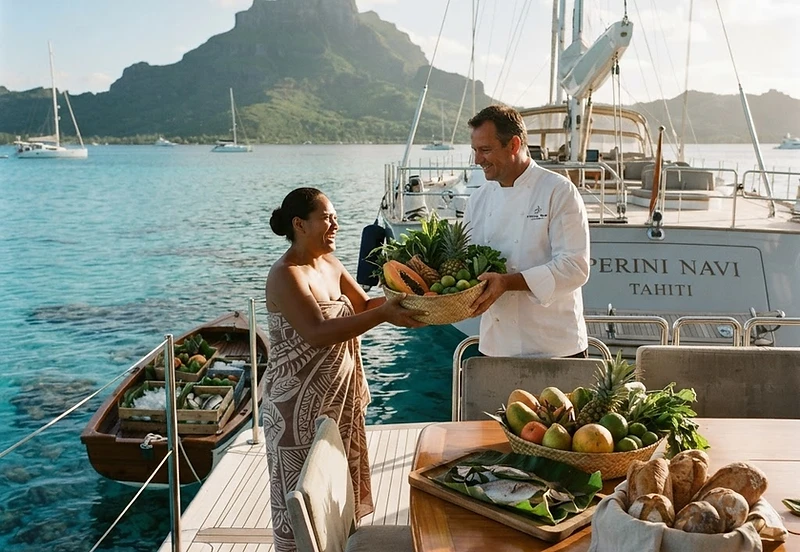
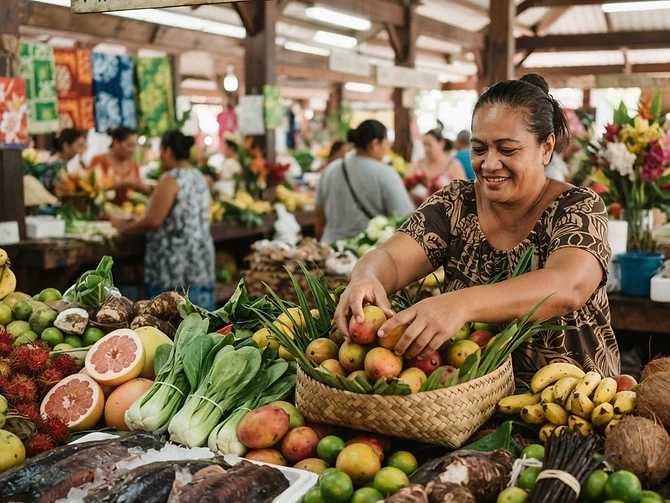
The first light in Papeete strikes the polished aluminum hull of our 45-meter Perini Navi with a pale, bruised-violet intensity. Before the trade winds have fully woken, the tender is already lowered, slapping rhythmically against the gentle swell of the harbor as we make for the Marché de Papeete. Provisioning here is not a logistical chore; it is an act of sensory negotiation with the Pacific. The air inside the market is heavy, thick with the intoxicating, humid scent of wild vanilla, overripe mangoes, and the sharp, clean brine of freshly landed mahi-mahi. Our chef, eyes scanning the weathered wooden crates with the intensity of a navigator marking a chart, bypasses the imported luxury labels found in the urban center in favor of the island’s raw bounty: heavy clusters of mountain-grown bananas, fibrous stalks of ginger, and small, intensely flavorful tomatoes grown in the mineral-rich volcanic soil of Tahiti’s interior. We are here not just to stock a galley, but to anchor the soul of these islands into our evening service.
The Architecture of the Anchorage
Once back aboard, the provisioning shifts from acquisition to the delicate, high-stakes geography of stowage. A superyacht’s galley is a space of constrained, exacting precision; every kilo of cargo must be secured with an eye toward the inevitable roll of a passage to Moorea or Raiatea. As the crew works to stow the stores, the galley takes on a quiet, disciplined energy. By midday, we are anchored off the coast of Bora Bora, the water beneath our keel a translucent, impossible turquoise that defies the lens. This is when the kitchen transforms. The morning's catch is expertly filleted on the cool stainless-steel counters—the flesh firm and translucent—and paired with the citrus-bright zest of local limes and the creamy, rich infusion of coconut milk pulled from a fresh husk. At sunset, sitting on the aft deck as the engine heat dissipates, the transition from the frantic machinery of the port to the profound, breathless stillness of the lagoon is total. We dine on poisson cru, the raw fish marinated in a precise balance of lime and coconut, tasting of the very waters that lap against our transom.
The Shoreward Connection
Our week of cruising is punctuated by the ritual of the shore-side meal, where the yacht’s self-sufficient independence meets the grounded hospitality of the islands. We anchor within sight of the weathered, sand-floored tables at Bloody Mary’s in Bora Bora, the scent of charcoal and grilling fish drifting across the lagoon on the evening breeze. It is a necessary departure from the strictures of life aboard, a chance to ground our wandering in the literal sand. Here, we enjoy the catch of the day, perhaps a local tazar—wahoo—seared over an open flame, served alongside breadfruit roasted in hot embers. It is a vital reminder that while our vessel is a world unto itself, our culinary life remains tethered to the geography of the coast. As we return to the yacht in the dark, the silhouette of the mast etched against the star-dusted Polynesian sky, the galley is already being prepped for the next day's passage, the cycle of the sea and the table beginning anew.
As the final plates are cleared, the gentle roll of the lagoon against the hull becomes the only music in the silence of the anchorage. There is a deep, quiet satisfaction in knowing that the larders are replenished, the course is set for the outer atolls, and the vast, unmapped ocean is waiting for the first light of tomorrow's dawn.






