

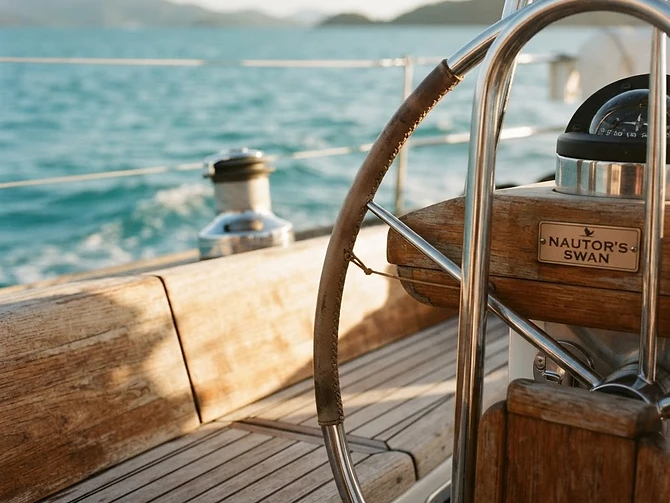
The morning light over Hook Island
The dawn air in the Whitsundays carries a distinct, sharp salinity, a cold bite that hits the senses long before the sun clears the horizon. Standing on the aft deck of the Nautor’s Swan, the teak underfoot is damp with salt spray, still holding the residual chill of the Coral Sea. We are anchored in the shelter of the Hook Passage, where the currents swirl with a deceptive, muscular grace. There is a profound stillness here, punctuated only by the rhythmic slap of water against the hull—a sound that serves as the heartbeat for our slow, deliberate passage through these island clusters.
Preparing the vessel for the day’s short hop requires a sensory inventory: the tension of the lines, the smell of damp canvas, and the low, steady hum of the electronics coming to life in the cockpit. Navigating these waters demands a constant dialogue between the helm and the charts. The reef, vibrant and unforgiving, shifts with every tide, requiring a steady hand to thread the needle between the submerged outcrops that barely disturb the turquoise surface.
The rhythm of the anchorage
By mid-afternoon, the rush of the passage gives way to the ritual of the anchorage. We pull into a quiet bay near Whitehaven Beach, where the sand is so fine it feels like velvet beneath the soles. Life aboard transitions seamlessly from the technical demands of sail trim to the unstructured flow of the afternoon. A simple lunch—chilled melon, local prawns, and sourdough—served on the cockpit table reminds us that the luxury of the sea is found in the absence of urgency. We eat as the sun begins its long, amber descent, casting deep shadows across the ridges of the island.
Wellness here is not a prescriptive act but a physical one: the sensation of a cold swim in the bay, the feeling of dry linen against sun-warmed skin, and the quiet camaraderie that develops when a crew settles into the isolation of the reef. There is no conversation that isn't tethered to the horizon. We discuss the set of the anchor, the way the light catches the white silica sand, and the necessity of keeping our footprint light upon this delicate, shifting geography.
The quiet ingress to dusk
As evening pulls the blue from the water, the cabin becomes a sanctuary of soft, low-voltage light. We retreat below, the air inside smelling faintly of cedar and the cooling breeze filtering through the hatches. A glass of chilled crisp white, sourced from a small grower in the Adelaide Hills, provides the only garnish to a long, salt-etched day. We listen to the water shift its weight against the hull, a sound that has accompanied mariners in these waters for centuries.
There is a singular clarity that comes from living at the speed of the tide. We aren't merely traversing the Whitsundays; we are existing within its pulse, moving from one shelter to the next as the currents dictate. Tomorrow, the wind promises to shift, and we will follow it, content to let the geography of the Coral Sea determine the rhythm of our own quiet progress.






