
The Kinetic Tension of a Restored Icon
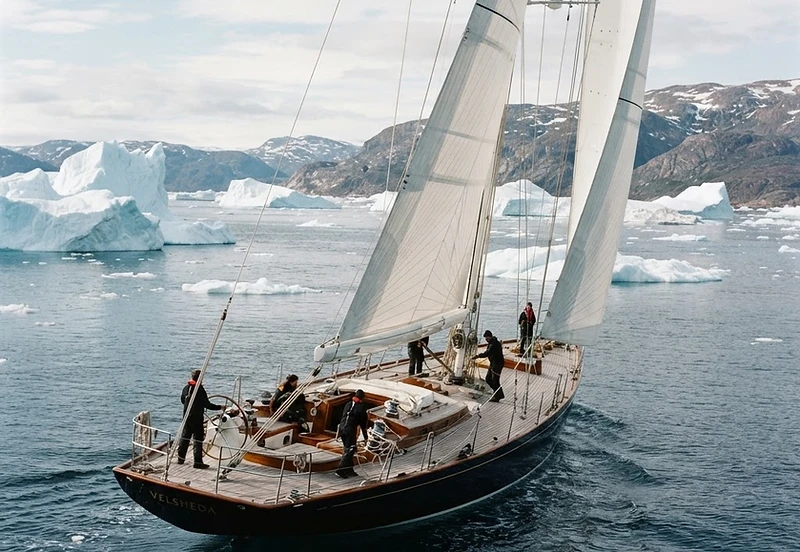
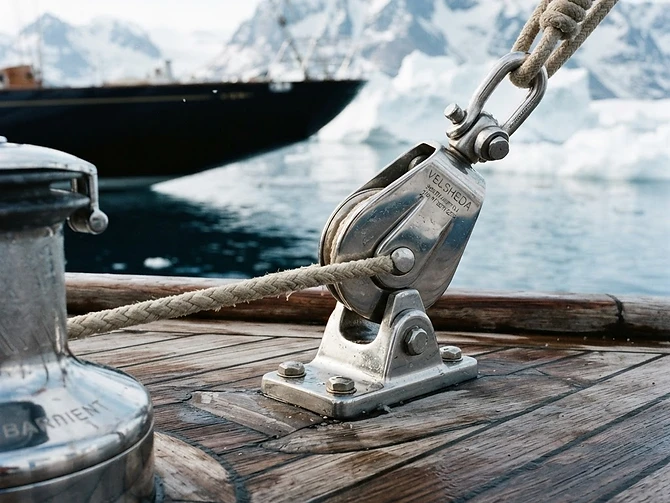
The Velsheda does not simply sail; she commands the heavy, metallic waters of Disko Bay with a singular, archaic gravity. Standing at the helm, the sensation is one of profound kinetic tension, a physical dialogue between the nerves in one’s hands and the massive, straining canvas above. Launched in 1933 and meticulously coaxed back to life by the craftsmen at Southampton Yacht Services, the steel-hulled giant feels entirely at home amidst the jagged architecture of Greenland’s glacial discharge. There is no mediation here, no electronic buffer; every gust that catches the mast transmits directly through the wheel, a reminder that we are merely the temporary stewards of a maritime machine designed for the relentless pursuit of speed. As we navigate the labyrinth of growlers—small, deceptive remnants of calved ice—the yacht’s sheer displacement provides a rhythmic, authoritative pitch that defies the biting Arctic wind, grounding us in a pedigree of naval engineering that predates the modern era of carbon-fiber convenience.
The Galley’s Dialogue with the Arctic Littoral
Life aboard a J-Class in the high latitudes demands a rigorous, almost monastic choreography. When the horizon is a jagged line of icebergs, the galley below deck serves as a vital bulwark against the sub-zero reality of the Davis Strait. Our chef operates with a pragmatism that mirrors the boat’s restoration, favoring the raw, uncompromising bounty of the region over any imported artifice. We feast on Greenland halibut—qaleralik—procured directly from the morning tender of a local Ilulissat fisherman. The fish is pristine, its firm, snow-white flesh seared briefly in butter and finished with the sharp, acidic punch of wild, sea-foraged sorrel gathered from the rocky, lichen-dusted littoral. There is a profound honesty to this table; the meals are an extension of the landscape, stripped of excess and centered on the mineral purity of the catch. As we dine under the bruising, low-slung light of an Arctic evening, the table set with heavy linens that barely mute the resonant thrum of the current against the rudder, the conversation naturally turns to the shifting tides and the encroaching pack ice.
The Basalt Silence of Qeqertarsuaq
To drop the tender and push toward the settlement of Qeqertarsuaq is to cross the threshold into true isolation. The water here is a sheet of cobalt glass, so still that the engine’s exhaust seems a violent intrusion upon the silence. Ashore, the air tastes of ancient basalt and frozen salt. We find our way beyond the harbour edge to a quiet, wind-scoured wooden structure where the local hospitality is as sparse and enduring as the terrain. We are served dried muskox, the game meat offering a dense, iron-rich complexity that serves as a necessary, visceral palate cleanser after days of sea air. It is a meal that demands attention, grounding the maritime journey in the specific, harsh reality of the geography. Returning to the yacht as the aurora begins to bleed a faint, ethereal green across the zenith, one recognizes that the true luxury of a J-Class is not in her polished teak or gleaming brightwork, but in her singular, robust capacity to hold her own within this silent, frozen cathedral.
As the final lines are dampened by the freezing spray and the deck lights throw long, amber shadows across the white-capped fjord, the wind finally drops to a whisper. The only remaining sound is the distant, geological groan of a glacier shifting in the dark, a slow-motion collapse that ripples across the water. Beneath our feet, the Velsheda rests, her steel spine vibrating with the faint, persistent heartbeat of the current, perfectly held in the icy cradle of the north.






