

The Anchor’s Descent in the Kangerlussuaq
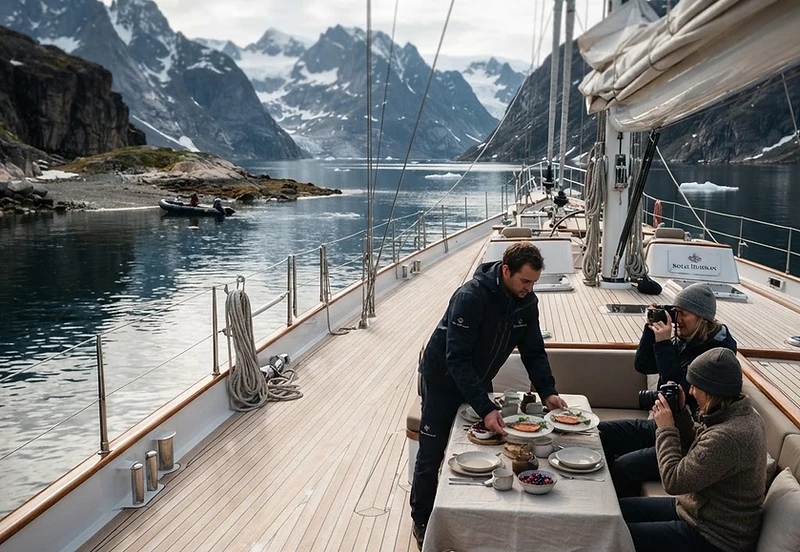
The Royal Huisman schooner swung with a rhythmic, measured cadence on her mooring, the anchor chain rasping briefly against the hawsepipe before finding purchase in the dense, dark silt of the Kangerlussuaq fjord. Above, the sky hung as a bruised plum, fading into the jagged, snow-dusted charcoal of the Greenlandic coastline. To reach the shore, we lowered the tender, carving a wake through water so unnervingly still it mirrored the surrounding ice-sculpted peaks with absolute fidelity. There is a piercing, singular clarity to the air at this latitude; it carries the scent of ancient, weather-worn stone and the biting, metallic salt of the Davis Strait. Leaving the polished teak and climate-controlled comfort of the vessel, we made landfall on a narrow, basalt-strewn spit of earth—a forgotten rib of the continent protruding into the vast, indifferent Arctic expanse.
The Culinary Rhythms of the North
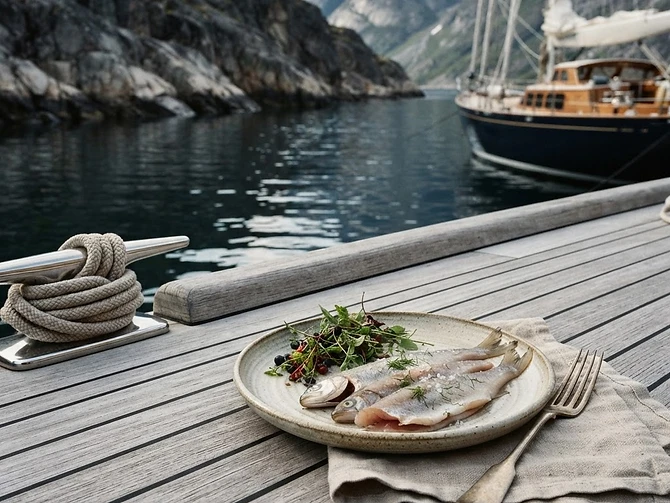
Our luncheon on the shingle was not a matter of white tablecloths or formal service, but of grounding ourselves in the harsh, rewarding reality of the region. Earlier that morning, the chef had visited the small harbour at Sisimiut, coordinating with local fishermen to secure a supply of Greenland halibut, or qaleralik. Its flesh, pearlescent and rich with the cold-water fat essential for survival in these temperatures, was prepared with restraint over a small, contained driftwood fire built directly onto the cooling stones of the beach. We ate the fish accompanied by thin, translucent shavings of mattaq—the skin and blubber of narwhal—which provided a startling, nutty contrast to the delicate flakiness of the halibut. The meal was punctuated by the sharp, earthy bite of wild crowberries, foraged from the tundra slopes mere paces behind our improvised hearth, their acidity cutting through the salinity of the air-dried, salt-cured lamb that the local community had gifted us at the dock in a gesture of Arctic hospitality.
The Quiet Return to the Saloon
Sitting there, protected only by the lee of a massive, lichen-covered granite erratic, the sheer scale of the environment became overwhelming. The conversation drifted naturally from the immediate pleasure of the meal to the complex logistics of navigating these high-latitude waters—the constant, sharp-eyed vigilance required to track calving ice, the deep reliance on the yacht’s robust hull integrity, and the shared appreciation for a vessel that can transform such a formidable wilderness into a temporary, safe sanctuary. We finished with tea infused with arctic thyme, its fragrant, herbal steam curling into the frigid air, drifting toward the water where our mast stood as a slender, human-made needle against the immense, brooding horizon. As the light began its long, glacial descent behind the western peaks, we pushed the tender back into the glassy shallows, the rhythmic, percussive slap of cold water against the fiberglass hull serving as a final, quiet reminder of the immense sea that held us.
Returning to the warmth of the saloon, the transition from the rugged, exposed shoreline back to the sanctuary of hand-oiled mahogany and soft indirect lighting felt seamless—a testament to the protective, intuitive architecture of life aboard. We departed the coast as we found it: a solitary, stark beauty that remains entirely indifferent to our brief transit. The only trace of our visit was a faint, lingering ghost of woodsmoke on the evening wind, which was quickly swallowed by the vast, unyielding silence of the fjord.






