
The Horizon’s Narrow Margin
The transition from the deep, bruising cobalt of the South Pacific to the luminous, incandescent turquoise of the Yasawa shallows is a physical event, felt as much through the displacement of the hull as through the optics of the bridge. Anchoring off Nanuya Balavu, one senses the delicate geography of this chain; the bottom rises from the abyss with startling, uncompromising speed. Navigating these waters—even in a vessel of modest draft—demands a constant dialogue with the depth sounder and the light. There is no margin for error here, only the necessity of reading the ripple of the current against the sun to discern the hidden coral heads. It is the quintessential yachting experience: the deliberate movement from the vast, unpredictable energy of the open ocean to the intimate, fragile clarity of a protected anchorage.
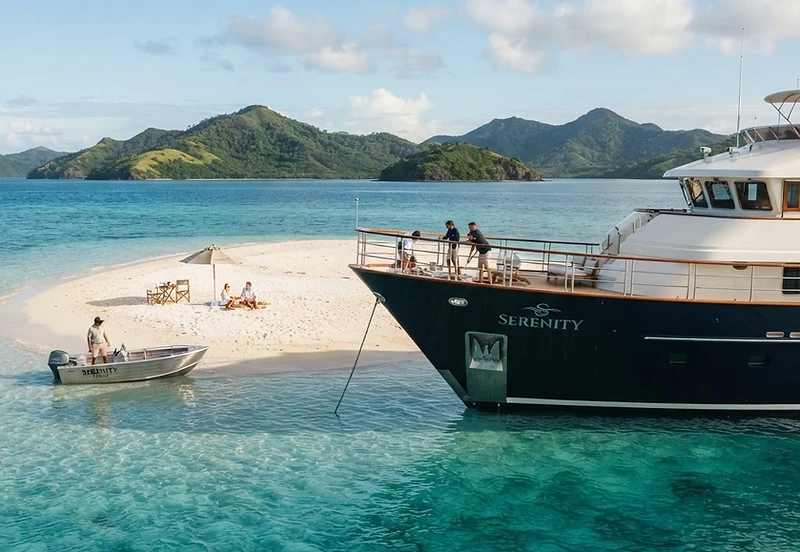
We deployed the tender, its outboard breaking the stillness of the morning, and charted a path through the serpentine channels. Ahead, the sandbank emerged—a blade of white bone against the surging, darker blue of the tide. Stepping off onto the shifting, sun-warmed sediment, miles from the nearest permanent settlement, the sensation is one of total, exhilarating exposure, yet we remained anchored to the world by the sight of our mothership, resting patiently on the horizon like a tethered bird.
The Galley’s Pacific Dialogue
Life aboard a yacht in the Yasawas finds its purpose in these moments of transition between the sea and the shore. Our chef, having secured a haul of donu—fresh coral trout—from local fishers at the Lautoka market at the first hint of daybreak, prepared the day's centerpiece with local economy. The fish was cured in the vibrant, acidic embrace of fresh coconut cream and lime, punctuated with the sharp, persistent heat of bird’s eye chili. The dish functioned as a direct translation of the seascape surrounding us: the brightness of the citrus reflecting the morning glare, the richness of the coconut mirroring the velvet sand beneath our feet.
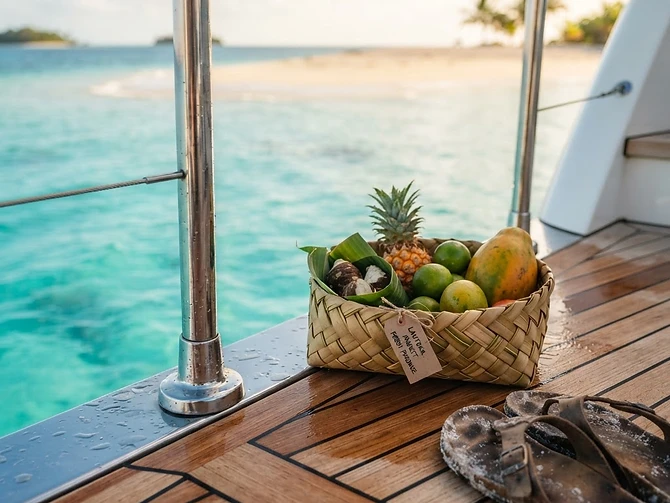
Dining on the sand, exposed to the relentless trade winds, demands a discipline of simplicity. There is no room here for the heavy artifice of silver service or the structured ceremony of the formal dining room. Instead, we ate with our hands, the salt of the Pacific still drying as a fine, cooling crust upon our skin. The taro, harvested from the volcanic soil of the neighboring islands and roasted in the galley before our departure, provided a grounding, earthy contrast to the sharp, fleeting zest of the cured fish. It was a meal that acknowledged the distinct geography of the Yasawas—a region where the volcanic loam and the nutrient-rich currents dictate the menu long before the chef ever touches a blade.
The Quiet Return
As the tide began its slow, inevitable reclamation of our makeshift dining room, the rhythm of the afternoon dictated our departure. We raised the anchor of the tender, leaving nothing behind but the faint, fleeting impression of our footprints in the wet sand, which the next surge would surely erase. The return journey, weaving back through the coral heads, was a meditative process of stewardship; the helmsman’s hands were steady, responding to the subtle shifts in the current, maintaining a respectful distance from the fragile, sun-dappled ecosystem below.
Back aboard, the deck was warm to the touch, the teak glowing with the deep, amber patina of a well-maintained craft. Watching the sunset cast long, violet shadows across the bow, the memory of the sandbank felt like a brief dream of land, held gently in the mind before being subsumed by the deeper, more constant pull of the tide. The anchorage held firm, a quiet island of stability in a vast, shifting world.






