
The Morning Tide at Hook Passage
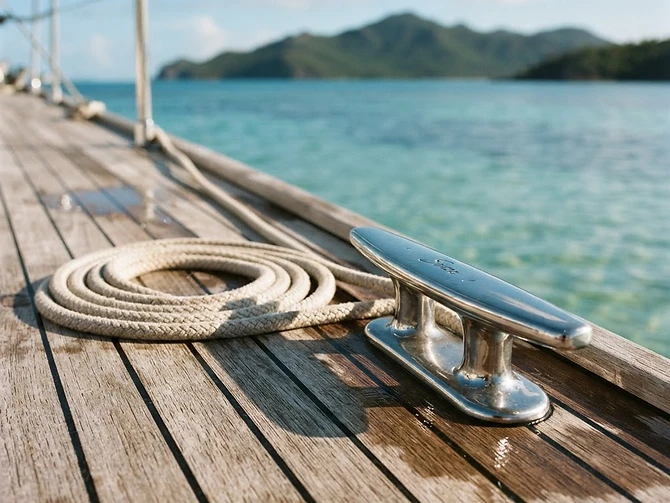
The dawn in the Whitsundays does not break so much as it dissolves, turning the obsidian sky into a palette of bruised violet and burning gold. Aboard a Nautor's Swan, the morning rhythm is defined by the gentle, rhythmic slap of water against the hull—a sound that anchors the soul before the engine even turns. We sat in the cockpit as the current began to pull through the Hook Passage, the water moving with a deceptive, muscular grace. There is a singular clarity to these Queensland waters, a turquoise so bright it feels almost tactile, refracting the sun into dancing light patterns on the teak decking. To stand at the rail here is to feel the immense, silent power of the Great Barrier Reef, a massive, living geological monument that dictates every nautical mile we plot.
From the Reef to the Galley
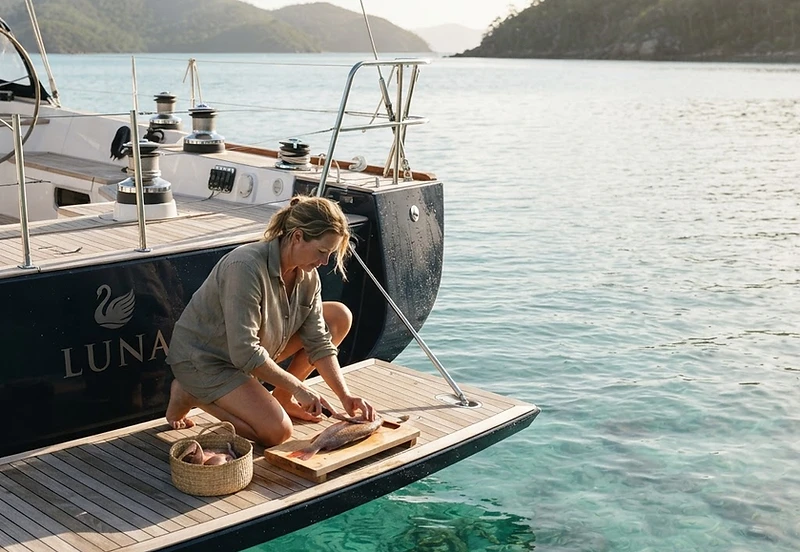
By mid-morning, we had maneuvered the tender into the shallower, protected reaches of the reef. The chef had spent the previous day liaising with local fishermen out of Hamilton Island, securing a haul of vibrant coral trout—firm, sweet, and possessing a saline brightness that speaks directly to the health of the reef. Back aboard, the galley became a theater of efficiency, a space where the complexity of the yacht’s systems meets the simplicity of elemental cooking. The focus remained entirely on the provenance of the ingredients: finger limes, harvested for their sharp, effervescent acidity, and a handful of wild sea parsley foraged from the craggy, sun-baked headlands during a brief shore excursion. We watched as the chef performed the near-sacred transformation of this haul: the trout was pan-seared just until the skin crisped, then finished with a reduction of local macadamia oil and citrus. Served on deck as the vessel swung slowly at anchor, the meal was a direct dialogue between the environment and the table, bridging the gap between the thrill of the passage and the quiet intimacy of life on board.
Anchored at the Edge of the World
Dinner was not a formal affair, but a deliberate, slow-moving extension of the day's maritime movement. We took the tender to the shore near the Whitehaven headland, where the silica sand is so fine it hums beneath your feet like dry, singing snow. The transition from the yacht to the shore is the true luxury of this life; the ability to drift between the sophisticated, stainless-steel mechanics of a well-found vessel and the raw, unmediated landscape of the islands. As the sun dipped below the horizon, painting the sky in shades of ochre and dust-rose, the conversation shifted to the complexities of the tides and the subtle nuances of the trade winds that govern every decision we make on the water. We returned to the yacht under a canopy of stars that felt close enough to touch, the masthead light flickering like a distant, solitary lighthouse in the void. The day ended as it began—not with the noise of the world, but with the quiet, persistent pulse of the Pacific against the hull, leaving us perfectly suspended between the deep blue and the soft, white edge of the tide, drifting toward the next morning watch.






