The Architecture of the Shore
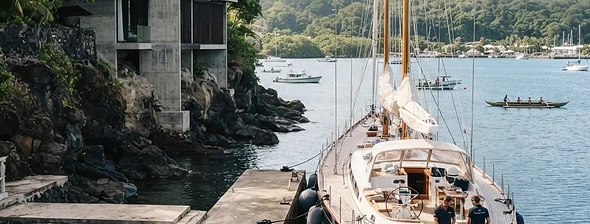
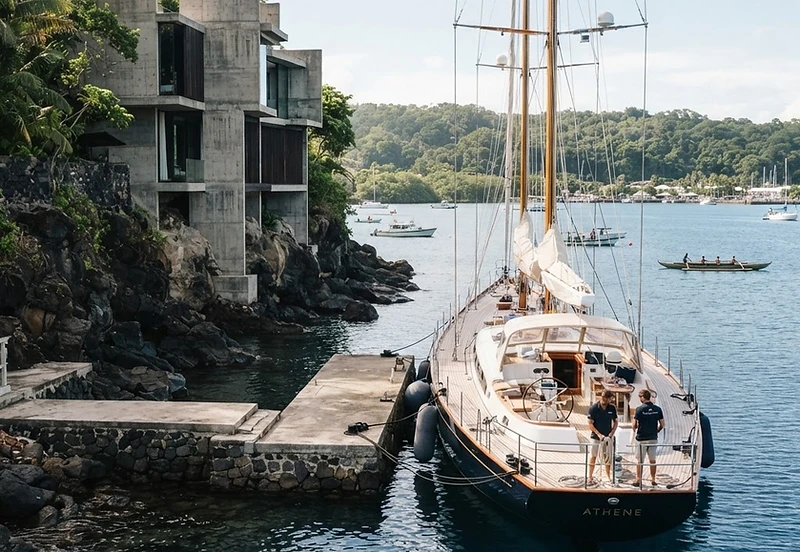
The dawn air off the coast of Efate holds a specific, metallic clarity, a sharp reminder that Vanuatu’s volcanic geology dictates the pace of life both on land and at sea. From the sundeck of our 45-meter Royal Huisman, the view is dominated by the monolithic presence of a private residence perched on a basaltic outcrop at the edge of Mele Bay. This structure, designed with a brutalist’s respect for the island’s topography, employs local black volcanic stone and vast expanses of glass that dissolve the boundary between the living space and the Pacific swell. The house does not merely sit upon the shore; it grows from it, cantilevering over the tide line with a structural resolve that feels entirely at home beneath the canopy of towering banyans. As we swing on the anchor, the yacht’s white superstructure provides a soft, refined foil to the jagged, grounded weight of the stone villa. They are two manifestations of the same intent: to inhabit the edge of the world with absolute technical precision.
The Sundeck Ritual
Life aboard during an anchorage is defined by the intentionality of movement. As the sun climbs, we transition the sundeck into a space of quiet restoration, sheltered by the yacht's sleek bimini. The therapist from the Port Vila marina has arrived by tender, bringing with her the warm, earthen scent of crushed sandalwood and cold-pressed coconut oil. To be worked upon on a teak deck, with the rhythmic, mechanical thrum of the chain pulling taut against the windlass, is to experience a rare form of kinetic peace. The house on the cliff remains in our periphery, its infinity pool bleeding into the horizon, a mirror for the same waters currently cradling our hull. There is a profound symmetry in being elevated above the waterline in this curated space while the land-based architecture below mirrors that same desire for vantage. We observe a small outrigger canoe navigating the gap between the house's private slip and our stern, a sharp reminder of the scale of this place—the monumental architecture of the villa and the vessel briefly dwarfed by the sheer volcanic mass of the island.
The Long Exhale at Anchor
By early afternoon, the wind shifts, carrying the scent of damp earth and coming rain from the interior of Efate. We migrate from the sundeck to the shaded aft cockpit, seeking the respite of the overhang. There is no urgency to weigh anchor; the bay is deep, the holding ground is comprised of thick volcanic silt, and the house on the shore provides a reliable visual anchor for our own stillness. We drink fresh lime water, the acidity bright and sharp against the humid air, and watch as the shadows of passing clouds traverse the banyan-crowned cliffs. In these hours, the distinction between the built environment of the villa and the floating environment of the yacht dissolves. Both are simply vessels for existing in a place that asks nothing of us other than to remain observant. As the light turns to the bruised gold of a tropical dusk, the house lights flicker to life—a constellation of warm, low-voltage points mirrored by the gentle, bioluminescent wash of the tide against our hull, leaving us to contemplate the quiet privilege of being precisely where we are.