
The Lagoon’s Quietude
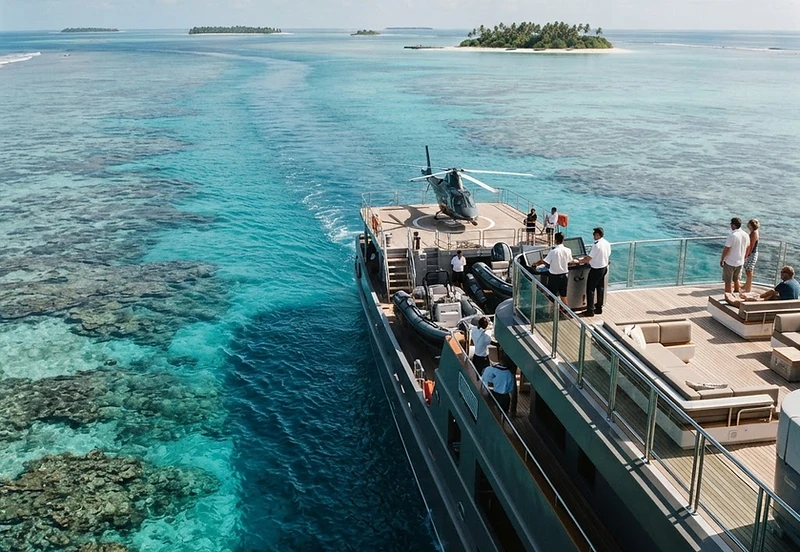
The transition from the deep, indigo expanse of the open Arabian Sea to the inner, shallow reaches of Agatti Atoll is a tactile exercise in pure concentration. As our draft narrows against the shifting bathymetry of the Lakshadweep archipelago, the electric, near-translucent turquoise of the lagoon serves as both our primary navigational chart and a visceral reminder of the vessel's vulnerability. The silence of the morning here is heavy and profound, punctuated only by the rhythmic, percussive lap of water against the teak toe rail of our 35-meter motor yacht. We have dropped anchor in a patch of firm sand over coral rubble—a technique refined by years of necessity in an environment where the seabed is as unforgiving as it is visually arresting. The transition from the chaotic swell of the open passage to this breathless calm is the defining moment of the arrival.
Tactical Navigation and Infrastructure
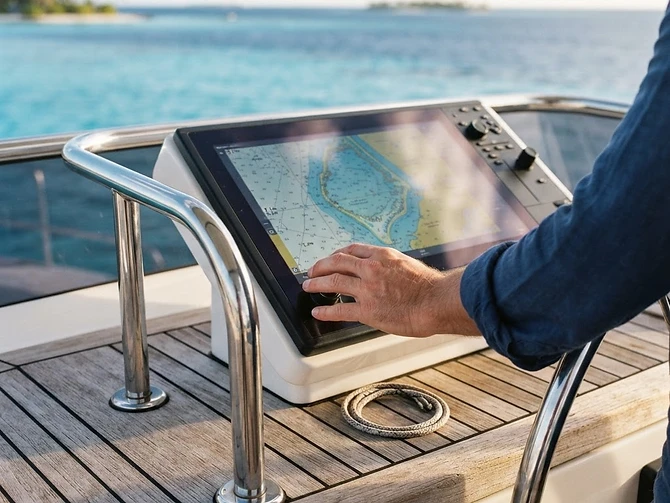
For the discerning skipper, Agatti is an exercise in rigorous preparation and constant adjustment. While this remote archipelago offers a level of solitude that is increasingly rare in modern cruising, the practicalities of the harbour demand a level of vigilance rarely required in a developed port. The lagoon entrance is deceptively narrow, and the prevailing tides dictate the cadence of every arrival; one does not transit these waters without a thorough scan of the current, corrected soundings and a dedicated bow watch to visually identify the coral heads. Secure holding is generally reliable in the sandy patches, but drag risk remains a constant, low-level conversation during the monsoon transition. Shore infrastructure is deliberately modest, reflecting the delicate nature of the islands. Fresh water must be managed through our onboard desalinators, as the municipal supply is strictly limited, and while electricity is accessible at the public jetty for local fishing craft, our reliance remains on the vessel's own generator banks and battery management systems. Waste disposal is handled via the most rigorous onboard protocols; there are no commercial-scale pump-out facilities here, necessitating a strict 'leave-no-trace' philosophy that is as much an ethical requirement for the crew as it is a logistical one. Maintenance is equally self-reliant; there is no local shipyard, meaning spares and mechanics must be part of your pre-voyage load-out.
The Ritual of the Atoll
Life aboard takes on a entirely different tenor when the horizon is broken only by palm-fringed sandbars and the distant, shimmering haze of the Indian Ocean. Our morning ritual has become a study in intentional simplicity: a quiet breakfast of local papaya and freshly caught reef fish prepared in the galley, followed by a silent tender run to the island’s periphery to scout the morning light. There is a specific, bracing quality to the air in Agatti—a mix of salt, tropical heat, and the damp, earthy fragrance of the atoll’s interior that lingers on the decks. We spend the afternoons in the lee of the island, where the shallow water creates a near-perfect glass surface, ideal for cleaning the hull or simply observing the vibrant reef life from the quietude of the swim platform. As the sun begins to dip toward the western horizon, turning the lagoon into a shimmering, bruised sheet of copper and violet, the day's technical decisions—where to swing, how much scope to pay out, the coordination of the evening's anchorage watch—fade into the background. We are left with nothing but the soft, steady hum of the tide pulling against the anchor chain, a quiet, resonant coda to a day spent at the edge of the world.






