
A Dialogue with the Tides
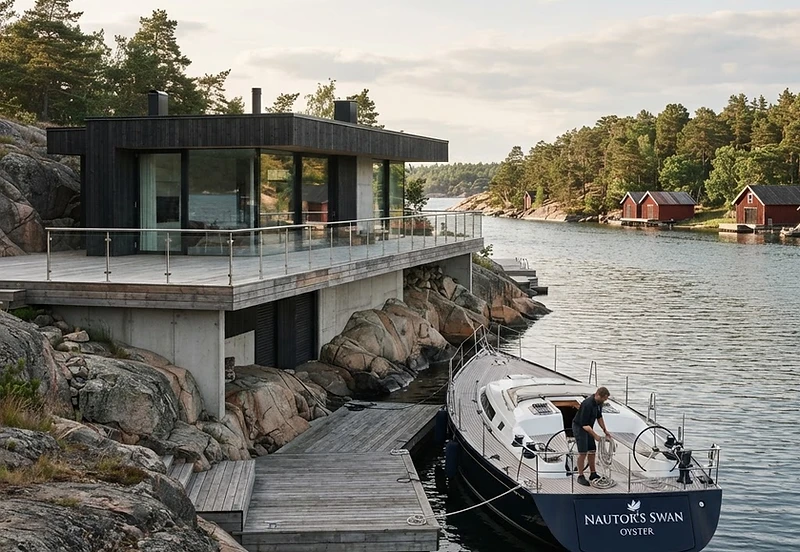
To arrive at the Stockholm archipelago is to shed the noise of the mainland. Here, where the Baltic Sea meets the jagged granite of the Swedish coastline, the horizon is a singular, unyielding line of slate gray. My arrival was marked by the gentle hum of an Nautor Swan 65, its teak decks bleached bone-white by decades of salt and sun, as we slipped into a narrow inlet. Nestled into the rock sits a structure that defies conventional notions of residential architecture. Once a functional shelter for local fishing vessels, the building has been resurrected as a private residence, maintaining its original silhouette while quietly revolutionizing its purpose. The design philosophy was rooted in preservation; the architect sought not to impose, but to emerge from the rock, utilizing traditional charred timber cladding—shou sugi ban—that mirrors the darkened, weathered hues of the surrounding pines.
The Geometry of Light and Mooring
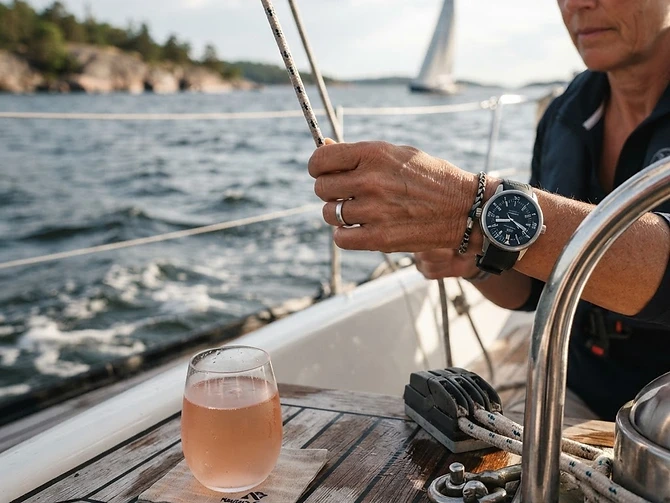
Inside, the interior is a study in purposeful subtraction. Every element has been curated for its tactile necessity, from the seamless larch wood flooring that recalls the feel of a well-maintained cabin sole, to custom-milled cabinetry that vanishes into the walls. By day, the boathouse acts as a light-capture device. Floor-to-ceiling glass, framed in razor-thin steel, invites the erratic northern sunlight to map the passing hours across the floorboards. The light here is different—diffused, cool, and crystalline—providing a constant, shifting backdrop to a space defined by profound stillness. I recall standing there as the sun dipped behind the treeline, sipping a simple infusion of wild birch sap, watching our Swan tug gently against its mooring lines, the rhythmic thrum of the halyards against the mast acting as the only heartbeat in the bay.
The house does not sit upon the land; it breathes with it, rising and falling in rhythm with the encroaching Baltic swells.
Refining the Remote
Engineering a residence in such an isolated location necessitates a profound intimacy with the environment, not unlike the discipline required for a long-range passage. Every material chosen for the build had to withstand the relentless salinity of the air and the biting chill of winter gales. The resulting structure is both a fort and a lens. The lower level retains its maritime heritage, functioning as a semi-open workshop and storage space for sea kayaks and traditional oars, while the upper living quarters are elevated to provide an expansive, panoramic view of the archipelago’s labyrinthine channels. It is a rare architectural achievement that manages to be entirely modern while appearing as if it has belonged to these windswept rocks for centuries, a sanctuary for those who understand that the sea demands both respect and a sturdy place to retreat.
Ultimately, this boathouse offers more than mere shelter; it provides a vantage point for contemplation. In an age of constant connectivity, the decision to retreat to such a stark, beautiful periphery is an act of defiance. It serves as a reminder that true luxury is not found in accumulation, but in the clarity of one’s surroundings and the rare, quiet privilege of witnessing the sea exactly as it is, untamed and eternal.






