
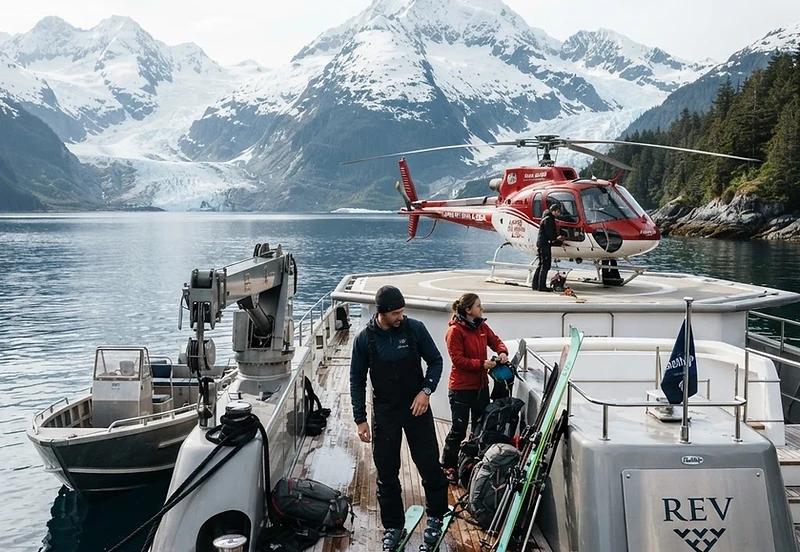
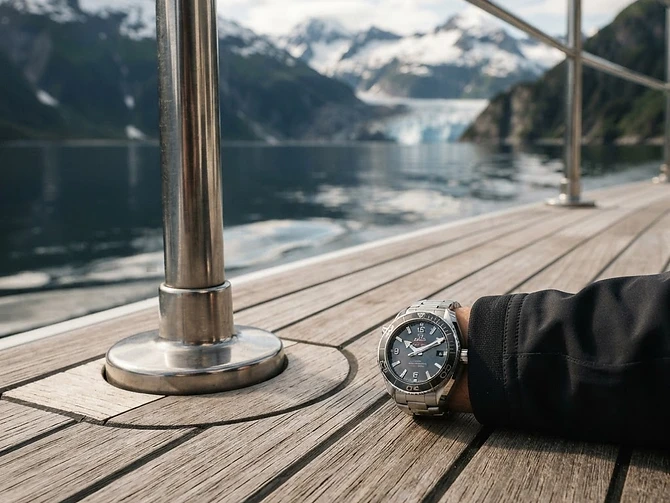
In the quiet, icy reaches of the Alaskan coastline, the stillness is absolute, broken only by the rhythmic, hollow lap of glacial water against a carbon-fiber hull. Here, where the Chugach Range descends with violent grace into the deep, slate-grey waters of Prince William Sound, a singular form of travel has matured: the heli-skiing expedition. It is a pursuit that demands a rare convergence of technical precision and aesthetic appreciation, transforming the explorer yacht into a sanctuary that bridges the divide between the deep, salt-scented ocean and the silent, blinding white of the alpine summit.
The Zenith of Exploration
To navigate the labyrinthine fjords of the North Pacific by yacht is to experience a landscape that is both brutal in scale and profoundly beautiful in detail. For the modern adventurer, the vessel serves as more than mere transport; it is a mobile, self-sustaining base camp capable of delivering unparalleled access to virgin, unmapped terrain. As the sun begins to crest over the saw-toothed horizon, the helicopter lifts from the aft deck, its rotors churning the frigid air as it whisks skiers toward slopes untouched by anything but the scouring wind.
The silence of the high alpine, punctuated only by the sharp, metallic intake of cold, crystalline air, provides a perspective on the earth that is impossible to replicate.There is a particular grace in descending a vertical mile through pristine powder, only to return to the warmth of a heated, teak-lined deck. I recall one evening, anchored in the lee of an unnamed inlet, watching the steam rise from a copper bowl of fire-roasted sockeye salmon, the table set against a backdrop of dancing auroras that turned the sky an impossible, bruised violet.
Refined Resilience
The success of such an expedition relies entirely on the interplay between the ship's architecture and the volatile maritime environment. These vessels are marvels of engineering, designed to withstand the temperamental swells of the Gulf of Alaska while providing a cocoon of absolute comfort. Interiors are defined by a tactile, muted luxury—brushed light oak, heavy cashmere textiles, and expansive, triple-paned glazing that brings the drama of the shifting ice fields directly into the salon. This is the art of the slow climb, where the pace is set by the barometer and the luxury is defined by the total absence of human noise. Whether one is in the wheelhouse monitoring drift-ice patterns or standing in the mudroom adjusting bindings, the experience remains intimate, focused, and deeply private.
The Quietude of the Edge
As the expedition concludes and the vessel turns its bow toward the more temperate waters of the Inside Passage, the resonance of the experience lingers. There is a weight to the silence found in these latitudes—a heavy, ancient peace that settles in the chest. It is a reminder that the world’s most profound luxuries are not found in abundance, but in access; the rare ability to stand at the edge of the known map, witnessing the earth in its rawest, most indifferent state, and then returning to a place of absolute, curated stillness. Alaska, in its cold and imposing grandeur, offers this gift only to those prepared to meet it on its own terms, finding equilibrium between the thrum of the engine and the breath of the mountain.






