
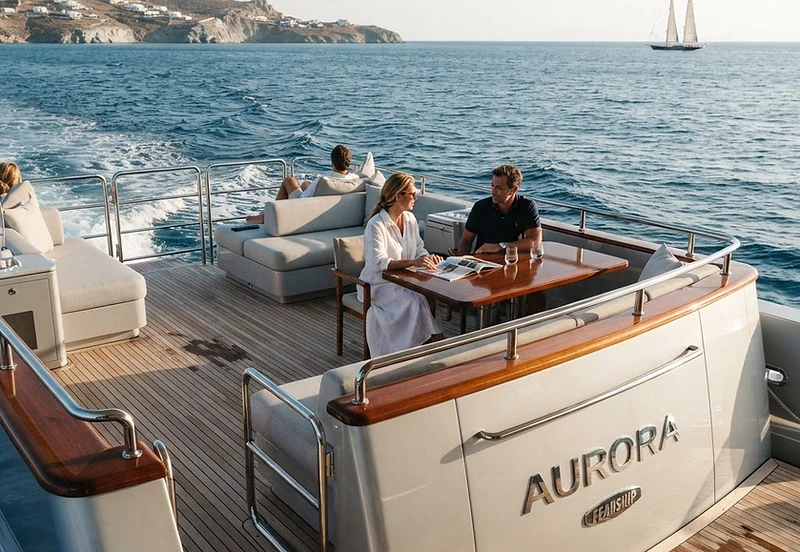
In the quiet theatre of coastal navigation, the transom of a day cruiser has evolved from a mere functional boundary into a sophisticated architectural transition. It is the threshold where the refined stillness of the deck meets the fluid energy of the Mediterranean or the Caribbean tides. Modern design philosophy no longer treats the stern as a wall, but as a permeable membrane—a series of kinetic planes that expand the livable footprint of the vessel while preserving its elegant silhouette. To stand on the aft deck of a Riva or a VanDutch as it cuts through the turquoise expanse off the coast of St. Barts is to understand that the sea is no longer something merely to look at; it is something to inhabit.
The Kinetic Horizon
The contemporary swim platform is a study in hydraulic precision and spatial efficiency. No longer a static appendage, the submerged terrace now acts as a natural extension of the yacht's interior flow. When deployed, these platforms dissolve the divide between the hand-laid teak decking and the saline surface. Designers are increasingly favoring surfaces that sit flush with the cockpit sole, creating a continuous horizontal line that draws the eye toward the horizon with unsettling ease.
The most successful designs do not merely provide access to the water; they curate the experience of entry, turning a simple descent into a meditative ritual.This seamlessness is achieved through hidden hinges and concealed locking mechanisms, ensuring that the vessel remains uncluttered and sculptural when at rest, whether anchored in the secluded calas of Menorca or tied up at the Marina Grande in Capri.
I remember a particular morning off the coast of Panarea; the water was as still as a sheet of hammered silver. As the hydraulic platform of our cruiser lowered silently into the Ionian, the transition was so fluid it felt as if the deck were melting into the sea. There was no jarring mechanical groan—only the soft, rhythmic lap of water against the transom. Standing there, waiting for the first dive of the day, the separation between the vessel’s engineered comfort and the raw, salt-crusted reality of the ocean felt entirely bridged.
Refinement in Motion
Beyond the mechanical, the geometry of the transom plays a crucial role in the vessel's character. Whether expressed through the sharp, aggressive rake of a sport-focused hull or the rounded, organic curves of a more classic cruiser, the transom defines the yacht's wake—the indelible signature it leaves upon the sea. The integration of seating into the aft bulwarks, often featuring modular elements that pivot to face either the forward cockpit or the open wake, exemplifies a restraint that values versatility over excess. By softening the edges of the bathing platform and utilizing warm, recessed ambient lighting, the aft deck transforms from a daytime staging area for swimming into an intimate evening salon, perfectly suited for the quiet transition from golden hour to starlight.
One evening, while anchored near the rugged cliffs of Bonifacio, the crew cleared away the lunch service, replacing the linens with a simple tray of local olives and crisp, chilled water. The aft deck, bathed in the long, low-angled light of dusk, felt like a private balcony suspended between two worlds. The engine was off, the silence broken only by the distant chime of a bell buoy and the faint, sweet scent of Mediterranean maquis drifting from the shore. It is in these moments of stillness that the true brilliance of the day cruiser design reveals itself; it is a space designed not just for transit, but for the profound appreciation of the passage.
Ultimately, the beauty of the modern day cruiser resides in this measured interface. It is the point where the vessel asserts its presence against the vastness of the ocean, offering a sanctuary of design that is as grounded in utility as it is in aesthetic grace. It remains the essential threshold, connecting the voyager to the infinite.






