
The Geometry of the Morning Tide
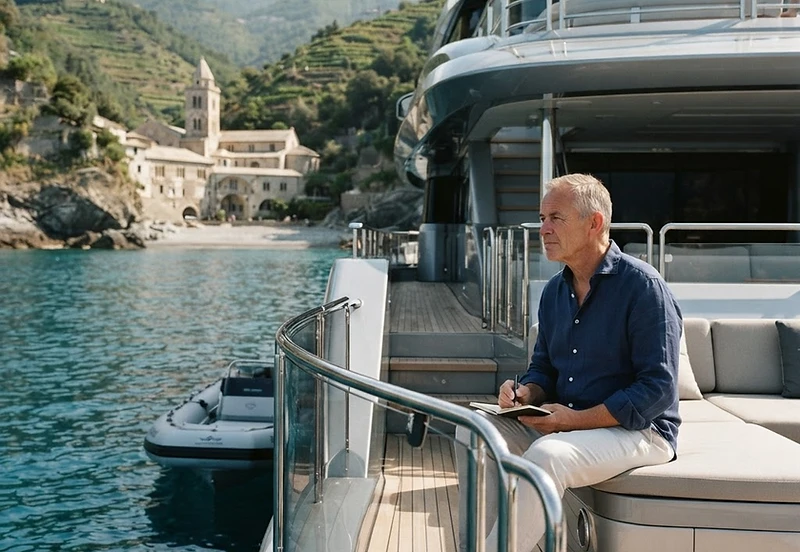
The dawn light off the coast of San Fruttuoso hits the water with a peculiar, bruised lavender quality, casting the abbey in sharp relief against the green-black cliffs. We are anchored in the bay aboard a 50-metre vessel, her lines tracking the horizon with a deliberate, muscular grace. Standing on the teak foredeck, I watch the naval architect, Espen Øino, trace his thumb along the sheer line of the superstructure. The yacht is not merely a hull; it is a house afloat, a residential volume designed to engage with the elements rather than resist them. He notes how the tumblehome of the hull mimics the jagged geometry of the Ligurian limestone rising from the surf, a reminder that true exterior styling is less about ornamentation and more about how a vessel holds its place in the world.
Designing for the Living Horizon
To view a superyacht as an architectural piece is to rethink the transition between interior and exterior. At the yard in Viareggio, the conversation shifts from hydrodynamics to the flow of air and light. The architect describes the deck as a floor plan—a series of rooms connected not by corridors, but by the salt-heavy breeze of the Mediterranean. When designing a yacht of this scale, the naval architect must consider how the cantilevered overhangs of the decks act as the eaves of a cliffside villa in Positano, providing shade while preserving the connection to the sea. We sit on the aft deck, the air smelling of pine needles and damp stone from the shore, watching the crew prepare the tender for a run into the village. The vessel is designed to disappear into the landscape, its profile echoing the layered terraces of the coast. The structural glass, the interplay of shadow and light on the aluminium, and the way the superstructure meets the deck are all exercises in restraint; they are designed to offer a stationary sense of comfort while navigating the unpredictable shifts of the open sea.
The Weight of the Current
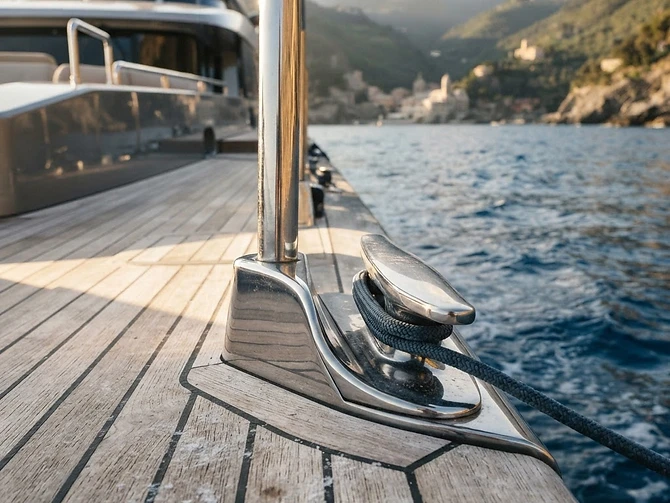
By late afternoon, the wind has picked up, pushing the yacht gently against the strain of her anchor chain. There is a specific sound to this—a rhythmic, metallic creak that serves as the heartbeat of the vessel. We are no longer discussing the lines of the bow, but rather the way the vessel sits in the water, her center of gravity balanced to ensure that even in a heavy swell off Cap Ferrat, the saloon feels as grounded as a library in an old Genoese palazzo. The naval architect watches the way the water curls against the bilge, observing the wake that unfurls like a silk ribbon behind us. He mentions that for all the sophistication of CAD modeling, the final test is always subjective: does the boat feel like a home or a machine? As the sun begins to bleed into the horizon, tinting the deck varnish the colour of burnt sugar, the yacht seems to settle into the water, a solitary architectural island holding its ground against the vast, shifting dark of the Ligurian sea.






