
When a catamaran comes to rest in a sheltered cove, the vessel’s architectural geometry undergoes a subtle transformation. On a recent passage through the Exumas, I watched the crew of a Sunreef 80 Echo lower the hydraulic swim platform as we tucked into a secluded bay off Shroud Cay. The mechanism, an often overlooked triumph of modern marine engineering, descended with a whisper to kiss the turquoise surface, bridging the gap between the deck’s polished teak and the vast, shifting expanse of the Atlantic. This is where the day’s rhythm shifts from the navigational to the sensory, defined not by GPS coordinates, but by the weightless interplay of light and water.
The Architecture of Descent
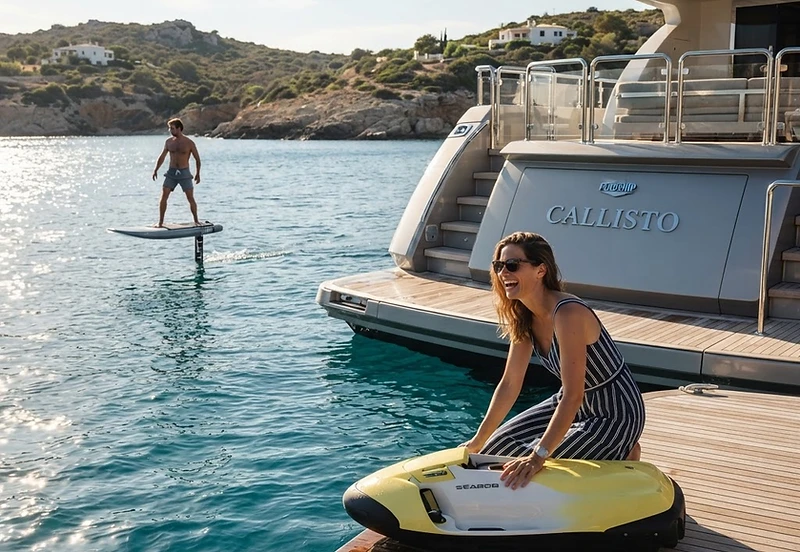
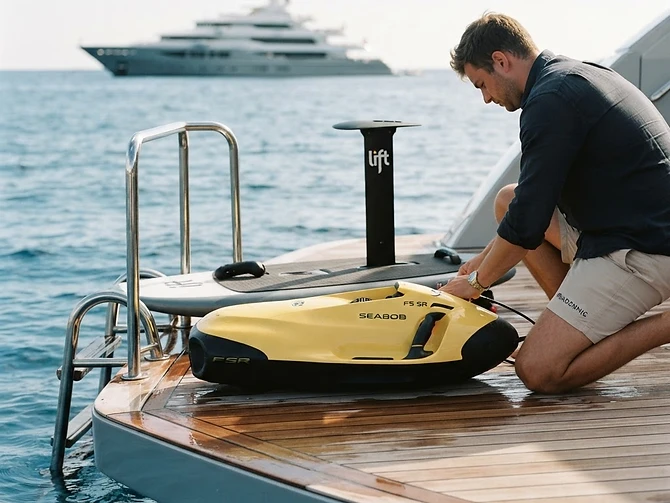
The platform acts as a liminal space, a stage for the quiet choreography of the afternoon. As the sun climbs toward its zenith, the deck becomes an organic extension of the living quarters, yet it remains entirely untethered from the constraints of the interior. There is an inherent dignity in the equipment deployed here: the electric hydrofoils that rise silently above the surface, the transparent kayaks that preserve a view of the seabed, and the Seabobs that move with the sleek, predatory grace of an aquatic creature. Everything is stored with a surgical, disciplined efficiency, leaving the deck uncluttered and focused solely on the horizon. I recall the captain, a seasoned mariner with a penchant for order, manually checking the titanium hinges of the platform—a small, habitual gesture that speaks to the profound trust we place in these machines to facilitate our ease.
Tactile Serenities and the Salt-Stiffened Air
To enter the water from this height is to participate in a sensory reset. The transition is brief, marked only by the gentle tension of the surface as one slides from the platform into the cool, crystalline blue. Whether one is engaging with the refined physics of an E-foil, feeling the subtle torque of the motor beneath the palms, or simply drifting in the wake of the catamaran with nothing but the rhythm of the swell for company, the experience remains solitary and intentional. Lunch that day was served back on the aft deck—a simple, elegant composition of seared local snapper and crisp radishes, finished with a squeeze of lime gathered from the market in Nassau. We ate in a comfortable, salt-stiffened silence, watching the shadows of the rigging trace slow arcs across the teak. There is no urgency here, only the measured pace of the tide and the restorative stillness that only the middle of the sea can provide.
The platform is not merely a launch point; it is a point of departure from the terrestrial, a suspended threshold where the vessel and the ocean negotiate a brief, silent truce.
As the afternoon wanes and the water takes on the deeper, bruised hues of twilight, the platform is raised once more, tucking the day's instruments back into their silent, hidden berths. The vessel resumes its composure, its lines once again sharp and solitary against the darkening water, as the quiet ritual of the evening commences on the aft deck. The transition back to a closed deck is always felt—a return to the safety of the hull, yet imbued with the lingering memory of the water. As the anchor light flickers to life, the sea remains a constant, rhythmic pulse beneath the hull, reminding us that we are merely guests in this vast, fluid domain.






