
The Geometry of the Still Point
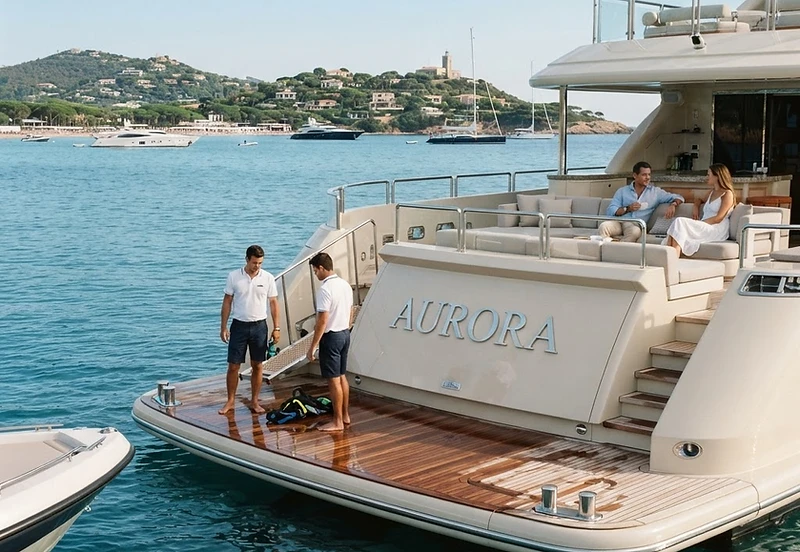
In the quiet, suspended hours after the midday heat has crested, the Bay of Pampelonne undergoes a subtle, almost liturgical transmutation. The water, which throughout the morning has been chaotic with the rhythmic wake of tenders scurrying between the beach clubs and the fleet, settles into a vast, unblemished sheet of hammered silver. Within this shimmering expanse, a sixty-meter steel hull holds its position with the absolute, uncompromising certainty of a pendulum caught at its peak. The vessel does not merely sit upon the water; it interrupts the horizon, creating a fixed, gravitational point around which the entire coastal geography of the Saint-Tropez peninsula seems to pivot.
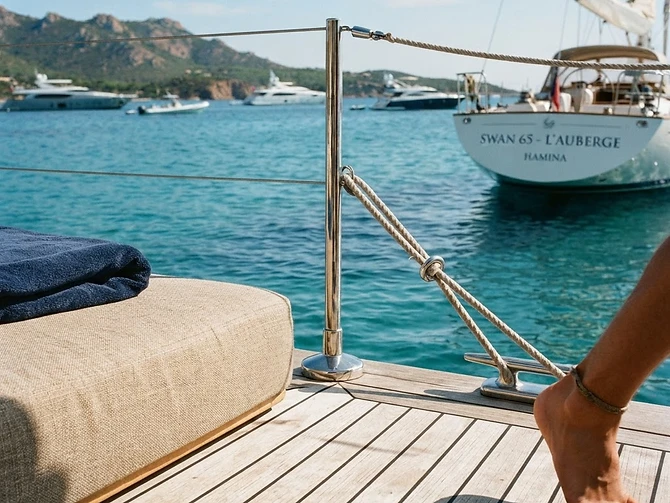
To stand on the foredeck is to witness a masterclass in restrained engineering. The teak planks, bleached to the color of weathered bone by relentless exposure to the Provencal sun, provide a neutral, tactile stage for the interplay of shadow and salt-thickened air. There is no frantic movement here, only the calculated, silent grace of a crew anticipating a request before it is even voiced, and the rhythmic, hypnotic oscillation of the hull against the anchor chain. This is not the yachting of high-speed transit or Atlantic crossings; it is an exercise in nautical stasis, where the primary objective is to maintain a fluid, respectful dialogue with the environment without once disturbing its fragile equilibrium.
Tactile Landscapes and the Horizon
Life aboard a vessel at rest is defined entirely by the absence of transition. From the sundeck, the jagged, pine-forested silhouettes of the Cap de Saint-Tropez appear not as distant shores, but as a direct, sweeping extension of the yacht’s own structural profile. The interior, cooled to an exact, hum-less temperature, acts as a sanctuary of soft, heavy linens and brushed metallic accents that catch and disperse the changing hues of the sea. By mid-afternoon, the light shifts from the clinical, brilliant white of the zenith to a richer, liquid gold that clings to the stainless steel handrails and turns the glass of the superstructure into a mirror for the circling gulls.
I remember a particular Tuesday, the air thick with the scent of pine needles drifting from the shore, when the steward brought a small, chilled bowl of locally sourced olives and a carafe of iced water. There was no conversation for an hour—only the soft clink of the ice against the glass and the distant, muffled pulse of a sound system emanating from a nearby vessel, reduced here to a rhythmic thrum that matched the beating of one’s own heart.
The true luxury of the sea is the luxury of duration, of being held in a place that the rest of the world perceives only as a fleeting transit zone.
As the sun begins its long, languid retreat behind the hills, the deck becomes an observatory. The yacht, a dormant architecture of glass and alloy, begins to absorb the thickening quietude of the surroundings. There is a profound honesty in how the design of the hull—sharp, aggressive, and purposeful by daylight—softens under the fading violet light. It ceases to be an instrument of navigation and becomes, for these few precious hours, a private island, detached from the frantic energy of the shore and anchored firmly in the slow, rolling syntax of the Mediterranean.
As the stars emerge, the vessel’s silhouette dissolves, leaving only the warm, amber glow of the interior lights to trace the lines of the decks against the velvet water. It is a final, glowing testament to the art of remaining perfectly, intentionally still in a world that never stops moving.






