
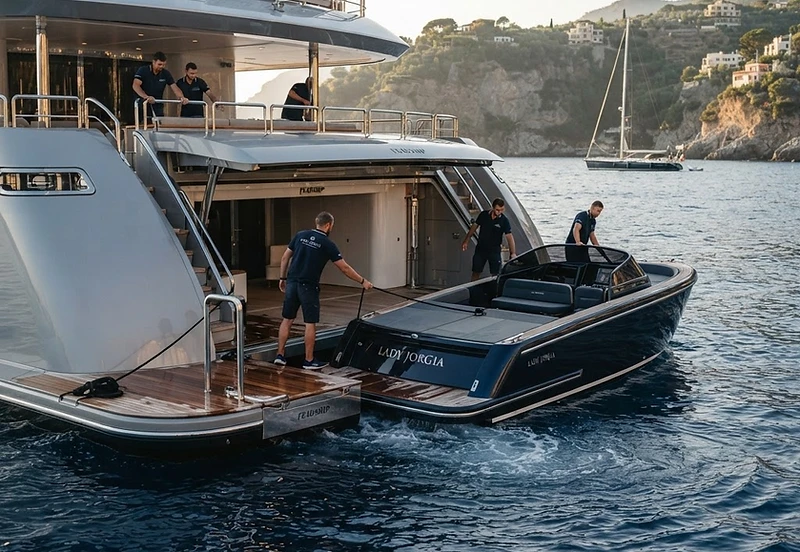
When the hydraulic transom of a modern superyacht descends into the water, it acts less like a door and more like the curtain lift of a private theater. Beyond this threshold lies the tender bay—a space of industrial precision and quiet expectation, existing in the cool, climate-controlled shadows beneath the main deck. Far removed from the champagne-soaked social expanse of the sun deck, this vault is where the vessel’s secondary personality resides, offering a catalog of ways to interact with the raw, shifting medium of the open sea.
The Architecture of Deployment
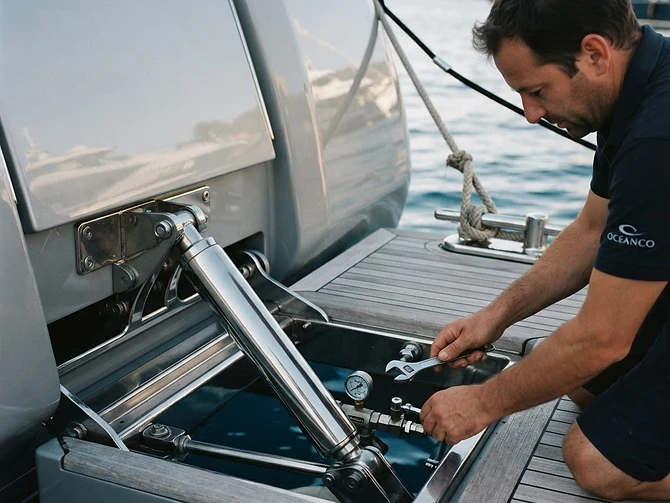
In the quiet, low-light hours of a morning at anchor off the coast of Corsica, the operation of the launch system reveals an intentional grace. I remember watching the crew prepare a custom Pascoe limo tender near Calvi; there was no shouting, only the rhythmic hum of heavy-duty hydraulics and the muffled clicks of carabiners. Carbon fiber cranes and hidden telescopic davits retracted with an almost eerie fluidness, shifting the considerable weight of the craft into the sapphire blue of the Mediterranean. There is a profound satisfaction in the economy of movement here; every stowage rack is indexed, every charging cable for the electric surfboards is coiled with military discipline, and every inch of the hull’s interior is utilized to maximize the inventory of pleasure.
The beauty of the modern tender bay is not found in the luxury of the craft themselves, but in the near-invisible efficiency of their stowage. It is a logistical ballet performed in the dark, restricted confines of the lower deck.
The space is redolent of fresh fiberglass, lithium grease, and the faint, lingering scent of ozone from the charging racks. Here, the sheer density of engineering is staggering. Beneath the waterline, the yacht manages a fleet of watercraft that would shame a boutique marina, all tucked away behind a seamless, teak-lined bulkhead that, when closed, gives no hint of the mechanical heart beating behind it.
The Nexus of Exploration
This fleet, however, serves a purpose that transcends simple utility. Whether it is a rigid inflatable boat designed for high-speed coastal reconnaissance or a fleet of foil-assisted boards that allow one to glide silently above the swell, these tools define the true reach of the yacht. The bay serves as the nexus of exploration, turning the vessel from a static, gilded villa into a mobile base camp. It is the jarring, wonderful contrast between the plush, air-conditioned interior of the yacht and the raw, salt-sprayed intimacy of the tenders that provides the true thrill of the voyage. To leave the mothership in a tender, feeling the spray hit your cheeks as you navigate toward a limestone cove in the Ionian Islands, is to experience the sea as a participant rather than a spectator.
As the sun begins to dip below the horizon, painting the wake of the yacht in shades of bruised purple and gold, the cycle repeats. The tenders return, their hulls dripping with the day’s brine, to be winched back into their cradles with practiced familiarity. The hydraulic transom pivots upward, sealing away the noise of the wind and the surf, and the yacht returns to its state of silent, luxurious equilibrium. In the quiet of the locker room, the gear is rinsed, tethered, and readied for the following day’s transit. They wait in the cool, dim light of the hull, silent machines poised for the next departure into the vast, beckoning blue.






