
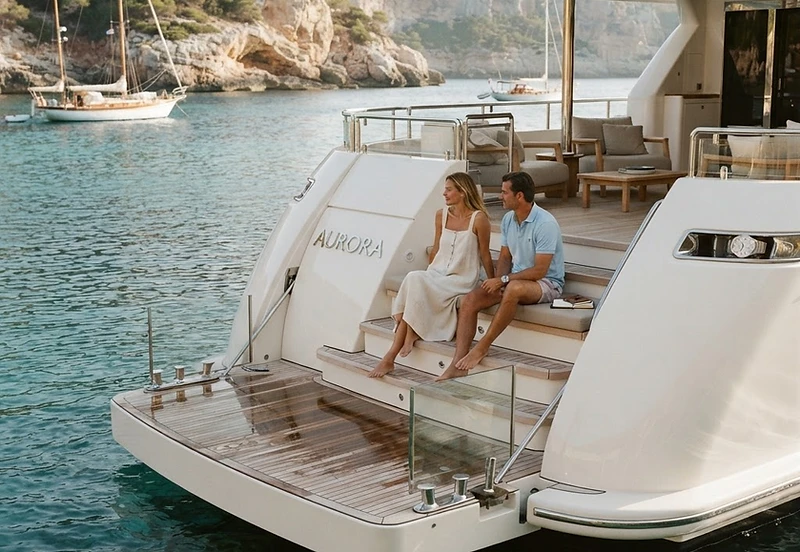
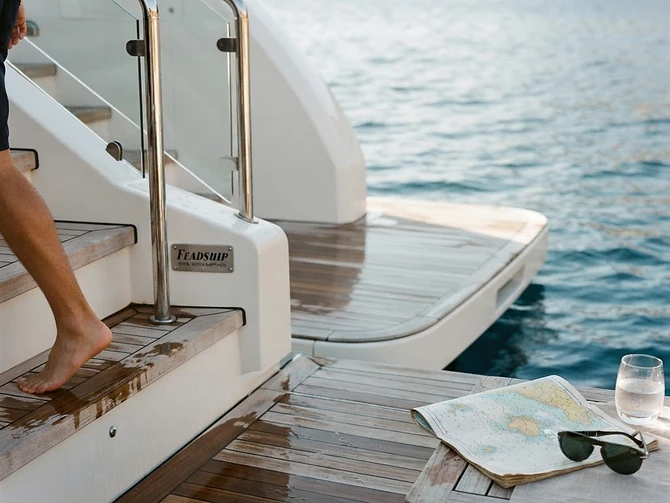
In the quiet coves of the Balearic Islands, where the limestone cliffs of Mallorca drop precipitously into the turquoise depths, the motor yacht does not merely sit upon the water; it colonizes the interface between the deep blue and the air. The modern aft deck, once a utilitarian appendage reserved for tender stowage and mooring operations, has evolved into a sophisticated theatre of maritime existence. As the hydraulic pistons hiss—a low, mechanical sigh—and the expansive teak platform lowers itself to kiss the swell, the vessel enters a state of grace, shedding the rigid geometry of the hull for an intimate, aquatic proximity that now defines the modern charter experience.
The Architecture of the Edge
Consider this transition as a form of fluid architecture. When the transom folds away, the boundary between the interior salon and the ocean dissolves, creating a singular, unified volume. On a vessel such as the 50-meter Benetti, the transition is seamless. The deck furniture is arranged with the deliberate precision of an avant-garde villa; low-slung, cream-toned lounges invite a specific kind of stillness. Guests move from the climate-controlled serenity of the interior, through the expansive glass aperture of the aft bulkhead, and onto the sun-warmed wood of the platform, effectively stepping off the boat and directly into the Mediterranean. This is not merely swimming; it is an act of total immersion, a physical reconciliation between the guest and the environment they have traveled so far to reach.
A Rhythmic Equilibrium
Life at this level is governed by the water’s own cadence. Last Thursday, anchored in a secluded bight off Cabrera, I watched as the crew deployed the swim stairs, their movements practiced and silent. By mid-afternoon, the platform had become the social meridian of the ship. We spent hours there, suspended between the salt air and the cooling depth. I remember the sharp, clean scent of the sea, punctuated by the faint hum of a distant jet-ski far across the bay, a sound that only served to deepen the isolation of our own anchorage. We lunched on grilled sea bass and local tomatoes, the oil glistening under the Mediterranean sun, while our feet dangled mere inches above the shifting currents. The weight of the boat, countered by the subtle, rhythmic pull of the sea, creates a tension that is simultaneously energizing and deeply sedative. It is here that the yachtsman monitors the passage of the day, not by the urgency of a schedule, but by the lengthening shadows of the cliffs against the hull.
As the sun dips toward the horizon, painting the water in hues of bruised violet and liquid gold, the hydraulic theater reverses. The platform retracts with a heavy, satisfying clunk, sealing the vessel once more into a fortress of steel and glass, preserving the day’s quiet memories within the hold. As the stars begin to punctuate the twilight, the memory of that proximity to the water lingers. Whether one is watching the wake of a tender returning from the shore or observing the bioluminescence stirring beneath the waterline, the platform remains the truest expression of life aboard—a refined, shifting boundary where the vessel finally relinquishes its distance from the deep.






