
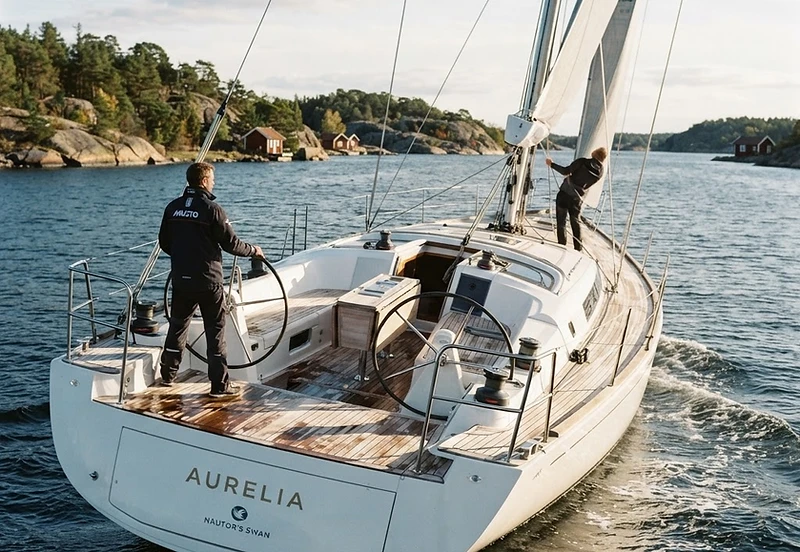
Navigation in the Stockholm archipelago demands a singular focus on the interplay between deep-water channels and the deceptive shoals of glacial granite. As our fifty-foot tender threaded the needle between the Södra Saxarfjärden reefs, the rhythm of the passage shifted from the open-water swell of the Baltic to the hushed, sheltered tension of the inner islands. There is a specific kind of vigilance required here; one reads the water not for the scale of the waves, but for the subtle darkening that betrays a shelf of rock lurking just beneath the surface. Steering toward the private dock of a glass-walled residence, the yacht becomes an extension of the navigation itself—the helm feels lighter as we approach the timber pilings, our wake dissipating against the ancient, lichen-covered stone. The air here holds a crisp, pine-scented sharpness, a reminder that while the sun may be bright, the depths are perpetually cold.
The Architecture of the Anchorage
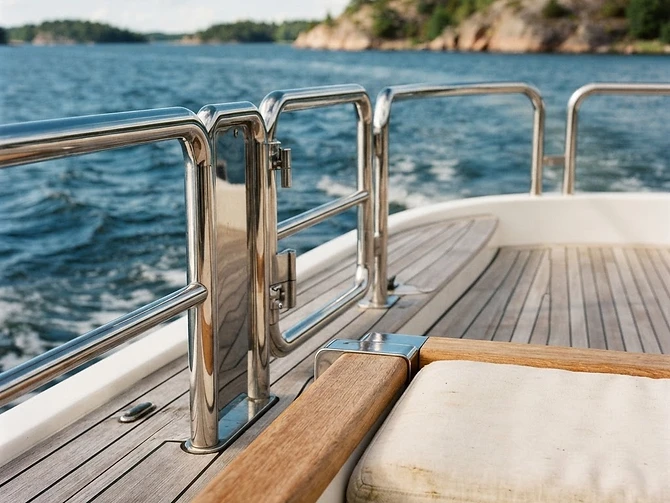
The house itself, a cantilevered structure of steel and floor-to-ceiling glass, emerges from the granite landscape like a ship brought into permanent dry dock. It shares the same DNA as the performance cruisers anchored a hundred yards off the shore. Inside, the design philosophy mirrors the spatial efficiency of a well-appointed superyacht. There are no wasted angles. The transition from the teak-decked tender platform to the interior floorboards is seamless, intended to extend the lifestyle of the deck into the living room. Architectural clarity here is not merely an aesthetic choice; it is a necessity for those who wish to keep the horizon in view from every position, whether one is plotting a course for the Aland Islands or simply monitoring the drift of the tide. One afternoon, while sitting on the expansive terrace, I watched the captain adjust the fenders of our tender with the practiced, quiet efficiency of a sailor who understands that here, the rock is an unforgiving neighbor.
The Ritual of the Northern Light
Life aboard in the archipelago is dictated by the arc of the sun, which lingers far longer than one expects, casting long, bruised purples across the water as evening descends. The ritual of dinner is defined by this proximity to the sea. We opted for a simple service of freshly caught Baltic herring, prepared with dill and browned butter, served on the aft deck while the vessel gently surged against its mooring lines. The silence of the cove is occasionally punctuated by the distant, rhythmic thrum of a passing motor yacht, its navigation lights blinking in the fading twilight. Being at anchor here is a study in restrained luxury; there is no clamor, only the creak of the hull and the rhythmic wash of water against the granite shoreline.
Leaving this anchorage requires the same level of discipline as the approach. As the engines hum to life and the vessel pulls away from the dock, the house recedes into the granite, its glass facade catching the reflection of the passing masts. It is a transient beauty, a reminder that in these waters, the most sophisticated homes are those that acknowledge the fluidity of the surroundings, remaining perpetually ready to cast off for the next tide.






