
The Verticality of the Open Sea
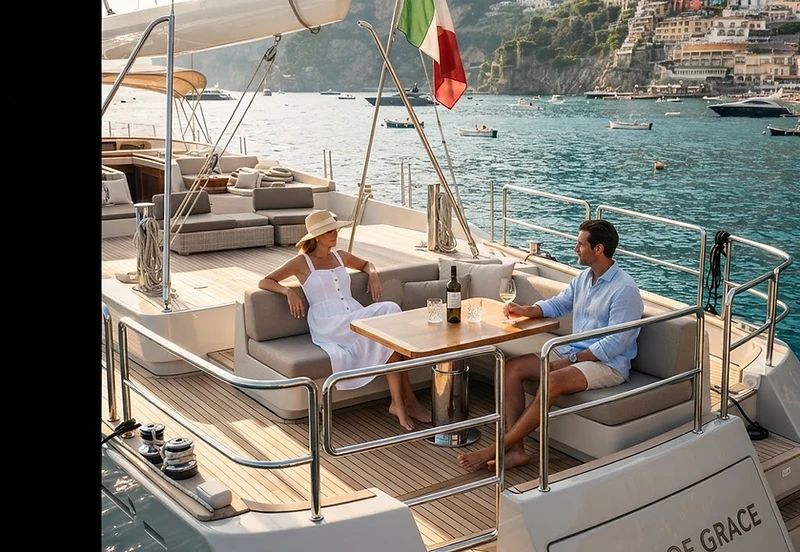
The modern superyacht is no longer defined merely by its length or the brute horsepower of its engines; it is defined by the depth of its connection to the water. As a vessel sits at anchor in the translucent, turquoise shallows of the Exumas, the aft deck serves as the primary stage for life aboard. Designers have increasingly moved away from the static, single-level transom toward a cascading series of terraces that mimic the structural sophistication of a cliffside villa in Positano. These decks do not simply house the yacht; they compose an architectural dialogue between the internal salon and the vast, blue horizon.
This spatial logic of layering creates distinct, private zones for the yachting enthusiast. The upper terraces often host sheltered dining areas where the midday sun is diffused by carbon-fiber louvers, while the lower platforms, descending toward the waterline, act as a bridge to the sea. The experience is one of controlled expansion; as one moves from the shaded interior to the sun-drenched aft, the vessel seems to open its lungs, breathing in the salt air and the stillness of the bay. I recall a morning aboard a Feadship moored off Allen's Cay, where the transition from the breakfast table on the bridge deck to the primary aft swim platform felt less like walking across a boat and more like descending through a private, sun-warmed garden.
Refinement at the Waterline
Living aboard requires a rhythm that balances the grand scale of exploration with the intimacy of a private residence. Much like the careful curation of a coastal estate, the arrangement of these tiered decks requires architectural precision. A well-designed aft terrace provides the perfect vantage point for a transition from an active morning of diving or tender-towing in a custom Dariel tender to the refined ritual of a sunset arrival. As the light softens, the tiered steps become informal seating—an amphitheater where the only performance is the shifting current against the hull. On that particular evening in the Exumas, the steward served chilled gazpacho, the brightness of the tomatoes mirroring the cooling intensity of the dying sun.
This architecture of movement demands that every transition be deliberate. When the hydraulic platform lowers, revealing a seamless connection to the ocean, the boundary between the yacht’s engineered steel and the organic sea vanishes entirely. It is in this moment—suspended between the luxury of the deck and the depth of the water—that the yacht reveals its true purpose as a residence that defies the limits of solid ground. Here, the architecture is not built of stone or wood, but of buoyancy, light, and the quiet movement of the tide. You feel the pulse of the ocean through the soles of your feet, a reminder that your sanctuary is, fundamentally, a creature of the sea.
The Architecture of Buoyancy
The success of these cascading designs rests on the fluidity of the experience. It is not enough for a deck to look like a villa; it must function like one, offering refuge from the glare of the noon sun and shelter from the sudden, spray-filled squalls that define life in the tropics. The most masterful vessels—those built by yards like Lurssen or Amels—treat the aft decks as a living, breathing extension of the architecture. There is a specific, quiet joy in watching the crew ready the deck for the evening, the careful unfurling of awnings and the methodical placement of teak-backed chairs, ensuring that every angle optimizes the view of the receding coastline.
The measure of a successful design is found in this ease of movement. As the vessel swings at anchor, the cascading decks capture the breeze, turning the yacht into a sanctuary that remains connected to the elements even at its most opulent. In these layered spaces, the sea is not merely a backdrop, but the foundational constant of life aboard, pulling the traveler ever closer to the rhythm of the tides.






