
When the stabilizer fins engage and the 60-metre steel form finds its natural, steady frequency against the swells of the Ligurian Deep, the yacht ceases to be merely a vessel of transport and becomes a sophisticated, floating manor. The transition from the high-tension environment of the bridge—where the navigator monitors the pulse of the AIS and the subtle shifts in wind—to the dining saloon is marked by a deliberate change in pace. At the captain's table, the evening meal is less about sustenance and more about punctuating the vast, featureless void of a long-range crossing with a sense of place. It is a moment where the technical prowess of naval engineering meets the tactile, slow-motion ritual of fine dining.
The Gravity of the Vintage
Provisioning a yacht for a Mediterranean passage is an exercise in both logistics and cultural preservation. One remembers a particular evening off the coast of Bonifacio, where the mist clung to the limestone cliffs like a soft, grey shroud. As the stewardess decanted a vintage into weighted crystal, the liquid clung to the glass with a viscosity that mirrored the calm, dark water moving past the hull. There is a profound, quiet alignment when the cork is pulled while the yacht is midway between the coast of Sardinia and the French Riviera; at that moment, the liquid serves as the anchor for the room, grounding the occupants as they drift across deep-sea coordinates. The air in the saloon, cooled by a silent climate-control system, carries the faintest hint of the salt spray that persists outside, a reminder of the relentless proximity of the sea.
Architectural Pairing at Anchor
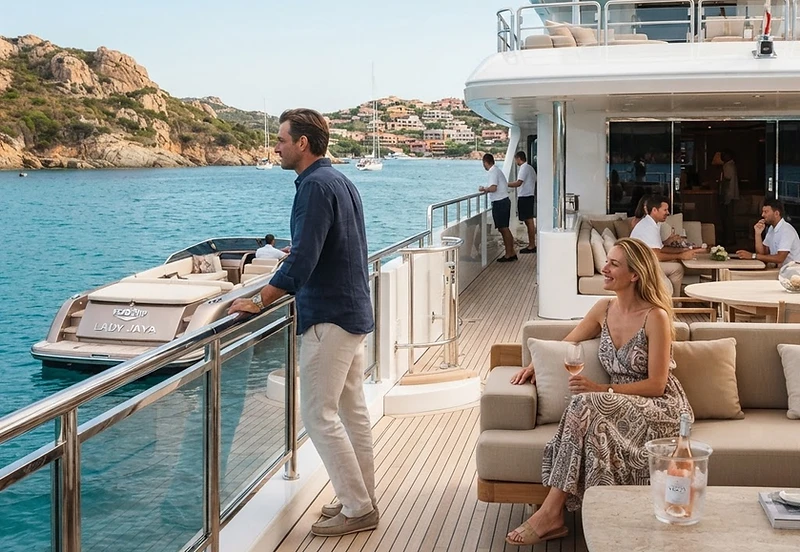
Dining at sea requires a choreography that respects the yacht’s architecture. As the sun dips below the horizon, the illuminated teak decks and the floor-to-ceiling glass of the saloon create a sanctuary of light against the encroaching cobalt of the night. On a recent passage toward the Aeolian Islands, we found that the chosen bottle mirrored the surrounding geography—a crisp, mineral-heavy white that echoed the volcanic soil of the nearby shores. This ritual of the pour, conducted against the rhythmic, low-frequency hum of the thrusters, transforms the aft deck into a theatre of refinement. Even when the vessel is at rest in an anchorage like Cala di Volpe, the architectural clarity of the space ensures that the focus remains outward, with the vessel becoming a lens through which the Mediterranean is observed.
The horizon is not merely a distance to be conquered; it is a boundary that defines the intimacy of the space within.
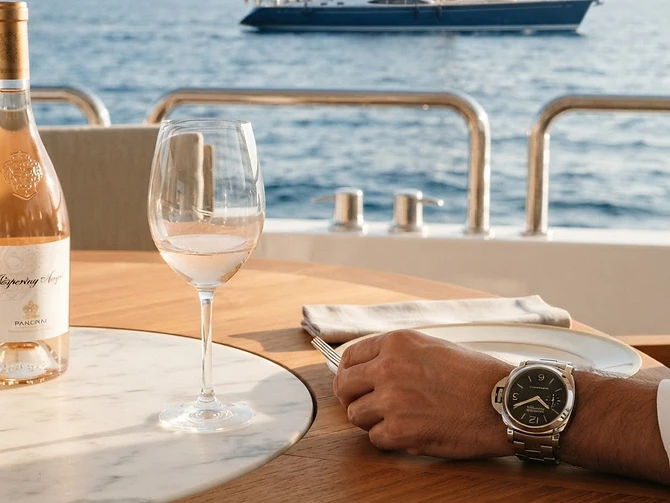
The experience is heightened by the small, necessary gestures: the way a napkin is folded to resist the subtle pitch of the deck, or the precise placement of a vessel’s custom stemware to catch the ambient glow of the overhead recessed lighting. These are not merely decorative choices; they are expressions of a discipline that demands excellence regardless of the longitude. Whether anchored off the coast of Saint-Tropez or navigating the deeper reaches of the Tyrrhenian Sea, the ability to maintain such standard is the hallmark of the true mariner.
Ultimately, the wine poured during a passage serves as a bridge between the precision of the ship’s systems and the fluid, unpredictable grace of the Mediterranean. It is a testament to the discipline of yachting that such moments can be cultivated with absolute consistency, turning the expanse of the open water into an intimate, storied gallery of taste and time. As the night deepens, the ship continues its steady, rhythmic pulse, carrying its passengers through the darkness with a quiet, unwavering confidence.






