
The Geometry of Arrival
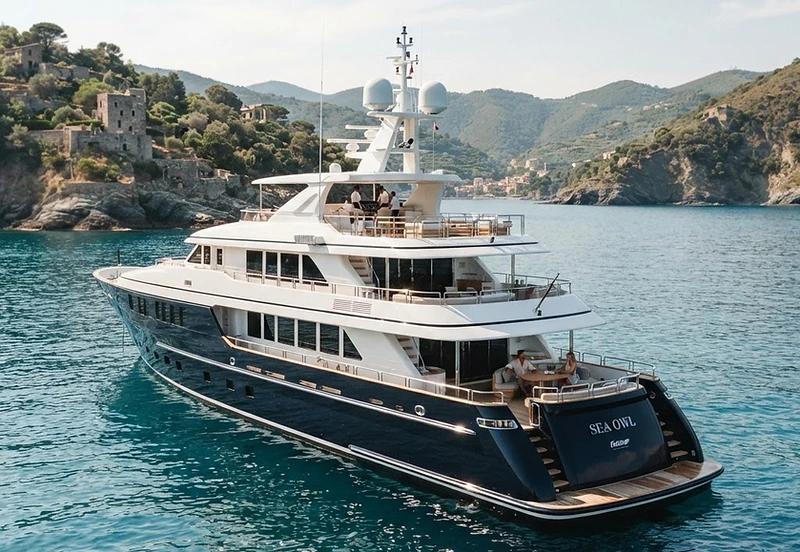
Stepping off a custom 50-metre motor yacht—a vessel of such precision that its presence in a bay feels like a natural extension of the topography—onto a private, cantilevered quay feels less like an arrival and more like a deliberate continuation of the sea’s inherent rhythm. When the design of a shoreline pavilion is conceived in direct dialogue with the yacht it berths, the boundary between vessel and villa begins to dissolve. The structure, carved from local limestone that seems to have grown directly from the cliffside and reinforced with discreet, high-tensile marine-grade steel, acts as a physical anchor for the wandering spirit of the voyage. The pavilion’s low profile mirrors the horizontal sweep of the sundeck, ensuring that the transition from the teak-laid cockpit to the shaded colonnade is entirely fluid, uninterrupted by the rigid, vertical geometries of traditional land-based architecture.
I recall one particular arrival at dawn near the rocky fringes of the Aeolian Islands. The sky was the color of a bruised plum, the sea a glassy, oil-slick black that barely held the reflection of the masthead lights. As the crew secured the lines, the scent of wild rosemary and drying brine wafted into the open saloon. Stepping from the polished teak of the yacht onto the warm, rough-hewn stone of the pavilion felt like a homecoming—a transition from the kinetic energy of the crossing into a state of absolute, profound stillness.
Tactile Continuity and the Living Space
Inside the pavilion, the interior echoes the discipline and austerity of life aboard. There is a profound sense of tactile continuity; the same brushed, pale oak used in the yacht’s master suite lines the pavilion floors, while floor-to-ceiling glass panels retract completely into the stone, inviting the same salt-kissed breeze that dictates the mood of a long-range crossing. Here, the ritual of the sunset cocktail is preserved in a permanent, fixed form. The pavilion serves as a secondary saloon, a place to decompress after a week of navigating the unpredictable Tyrrhenian currents, where the stillness of the masonry provides a grounding, immovable counterpoint to the subtle, persistent movement of a hull at rest.
It is in these moments of transition that the philosophy of the space truly reveals itself. Sitting on a low, linen-upholstered divan while watching the yacht swing slowly at its moorings, one becomes acutely aware of the relationship between the human scale and the horizon. The furniture is scaled low, mimicking the sightlines from a captain’s chair, and the lighting is curated to mimic the soft, ambient glow of a vessel's interior after nightfall. There is no clutter here; only the essentials of comfort are permitted, much like the meticulously organized galley and storage of a well-found ship. The pavilion does not compete with the sea; it honors the discipline of the nautical life.
The Memory of the Horizon
No shore-side retreat is complete without the sensory resonance of the regions traversed. Within the pavilion’s temperature-controlled cellar, bottles sourced from the hillside estates of the Balearics and the terraced slopes of the Tuscan coast wait, their labels mapping the yacht’s previous seasons of exploration. To pour a glass in this quiet terminal, while watching the masthead lights flicker against the darkening horizon of the bay, is to bridge the distance between the nautical and the domestic. The pavilion does not merely house the sailor; it houses the memory of the voyage, held in stone and glass, waiting for the next tide to call the vessel back to the open water.
As the yacht swings slowly at its moorings, held by the gentle push of the evening thermal, the pavilion stands as a silent sentinel. It is the perfect synthesis of architecture and navigation, providing a permanent address for those who prefer their life to be measured in nautical miles, the shift of the tides, and the soft, lingering taste of salt on the evening air.






