
The Geometry of the Anchorage
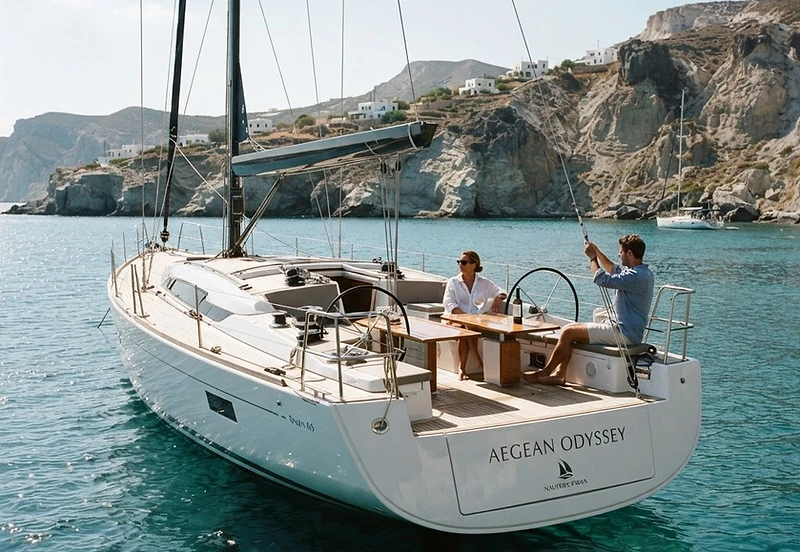
To drop anchor off the southern coast of Milos is to participate in an ancient dialogue between steel and stone. The yacht, a seventy-meter displacement hull, sits with the quiet authority of a private island, her white superstructure gleaming against the rugged, volcanic silhouettes of the Cyclades. From the aft deck, the sea is not merely a setting; it is a living floor, shifting in shades of cobalt and liquid turquoise, governed by the rhythmic pull of the Mediterranean. The vessel holds her position with the precision of a master mariner, the bow thrusters and stabilizers working in near-total silence to counteract the persistent push of the wind, maintaining an unwavering horizon line for those seated at the table. Beneath us, the anchor chain descends into the clarity of the water, a golden thread tethering our floating architecture to the white-sand seabed below.
The Vintage in the Salt Air
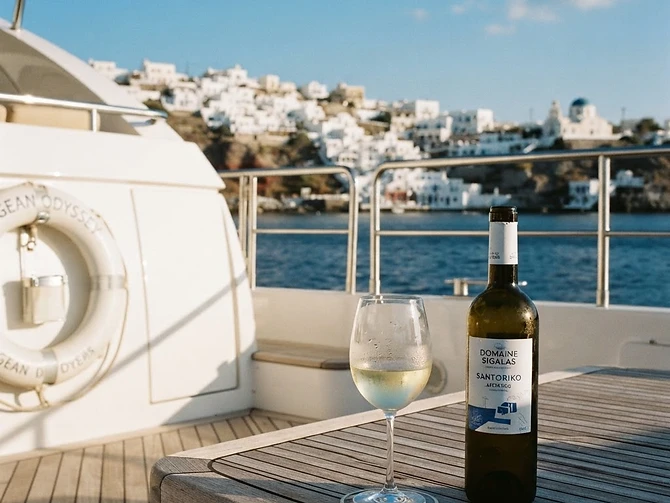
The transition from the morning’s navigation to the lunch hour is marked by a shift in pace, where the vessel’s utility gives way to the ritual of the table. A long lunch at sea demands a specific vernacular of refreshment. We pour a crisp Assyrtiko—a wine defined by its bracing acidity and saline minerality, characteristics that mirror the very environment in which we float.
The wine acts as a sensory bridge, tying the mineral-heavy dust of the cliffs above us to the crisp, crystalline energy of the water beneath our feet.On the teak-decked aft, the heat is tempered by the shade of the bimini and the endless breeze, while the clink of glassware against a polished tabletop underscores the profound stillness of the anchorage. We are served a simple dish of sea bream, carpaccio-thin, dressed only in local olive oil and sea salt. It is a meal that tastes of the distance we have traveled, a reminder that the true luxury of yachting lies in this ability to strip away the clamor of the land and replace it with a focused, intentional atmosphere of absolute ease.
A Tempo Measured in Light
As the afternoon wanes, the light begins its slow migration across the bleached rock faces of Kleftiko. Time here is circular rather than linear, defined not by clocks but by the slow rotation of the yacht around her anchor chain. The crew moves with a fluid, practiced grace, preparing the tender for a late-afternoon excursion to the sea caves that honeycomb the cliffside. I watch the deckhand coil a line, his movements measured, deliberate, and entirely devoid of urgency. Every detail aboard—from the way the sunlight catches the grain of the teak to the quiet hum of the climate control—is a testament to a life lived in service to the horizon. We remain suspended here, a vessel of architecture and ambition, anchored in the heart of the Aegean, perfectly still within a world of constant motion. There is a profound comfort in realizing that for the next several hours, the only destination of note is the one we already occupy.
As the sun dips toward the horizon, painting the white hull of the yacht in hues of soft apricot and bruised gold, the day feels complete. We have traded the frantic pace of the mainland for the infinite, shifting beauty of the Greek coast, content to let the tide dictate our next direction.






