
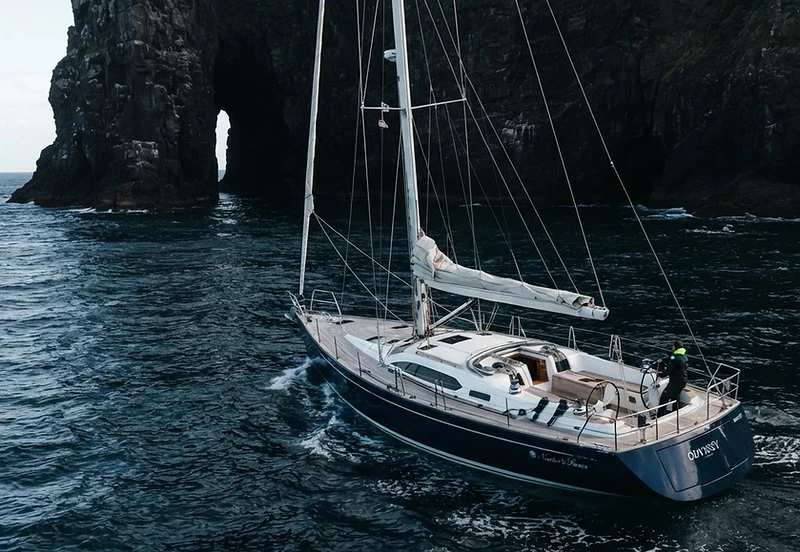
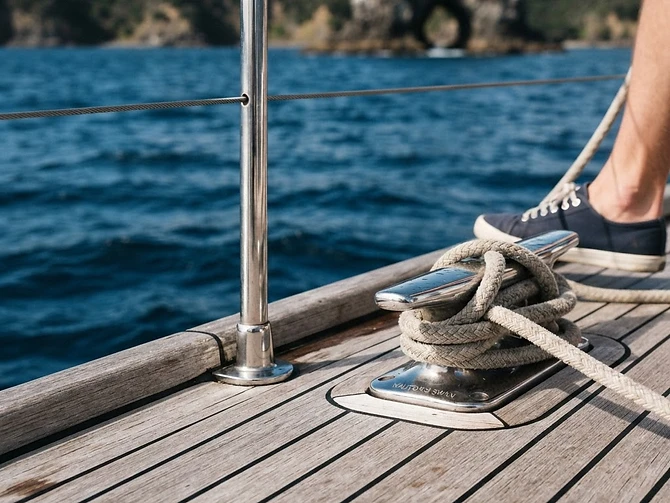
The wind has a specific, restless temper in the Bay of Islands once the sun retreats and the midnight hour settles over the Tasman. As we cleared the sheltered, obsidian-dark waters near Urupukapuka Island, our Nautor's Swan 65 began to find her stride. There is a profound, almost musical resonance when a hull of this pedigree meets the open swell; it vibrates upward through the teak decking, a low-frequency hum that you feel in your soles before you hear it. There is no urgency in this navigation, only the rhythmic necessity of the watch. In the dim, amber glow of the binnacle, the vast world shrinks down until it is bounded only by the luminous sweep of the navigational instruments and the cold, unblinking clarity of the southern stars.
The Geometry of the Dark
Steering a vessel like the Swan 65 is less about guidance and more about a sustained, tactile conversation. The helm feels remarkably alive, sensitive to the slightest fluctuation in the breeze pouring off the rugged headlands near Cape Brett. There is a unique architecture to the night shift; the ship becomes a contained, kinetic structure—a private, floating pavilion moving through a void. We keep the passage intentionally silent, save for the rhythmic, percussive slap of the Pacific against the carbon-fiber rudder and the low, steady thrum of the engine, which we have throttled back to a mere whisper to ensure we remain in sync with the environment.
Standing at the wheel, one develops an acute awareness of the ship’s geometry. You learn to anticipate the swell before it hits, reading the subtle shift in the water’s texture against the starlight. The darkness here is not an absence of light, but a canvas. When we passed the sheer, looming silhouette of the Piercy Island archway, the scale of the landscape was breathtaking—a towering monolith carved by centuries of relentless surf. It is moments like these that redefine the meaning of luxury; it is not merely comfort, but the rare privilege of solitude in a place where the earth feels both ancient and entirely untamed.
Calibration and the Morning Tide
Around 03:00, the temperature dropped, the air turning sharp and crystalline, signaling the ritual shift in our collective vigilance. We retreated to the galley, where the aroma of freshly brewed coffee cut through the salt-heavy air, offering a fleeting, domestic comfort in the middle of the ocean. Returning to the helm, I found that the mechanical precision of our navigation provided a necessary tether to reality. We verified our position against the jagged, dark contours of the coast, ensuring our line held steady toward the sanctuary of the inner bays.
The transition toward dawn is a masterclass in subtlety. The horizon did not explode with light; rather, it bruised into soft shades of violet and slate, slowly revealing the familiar, rolling hills of the Russell waterfront. By the time we dropped anchor in the absolute stillness of Matauwhi Bay, the exhaustion of the night shift had dissolved into a quiet, profound contentment. We stowed the lines, the vessel now perfectly aligned with the rising tide, waiting for the first tender to break the glassy surface of the harbor.
The passage is done, the logbook is closed, and the relentless rhythm of the ocean has been replaced by the gentle, steady heartbeat of the anchorage. On deck, the silence is broken only by the clink of porcelain as breakfast is laid out, the morning light catching the polished brass of the deck fittings. There is nothing left to do but watch the tide turn and wait for the day to begin in earnest.






