
The Architecture of the Open Helm
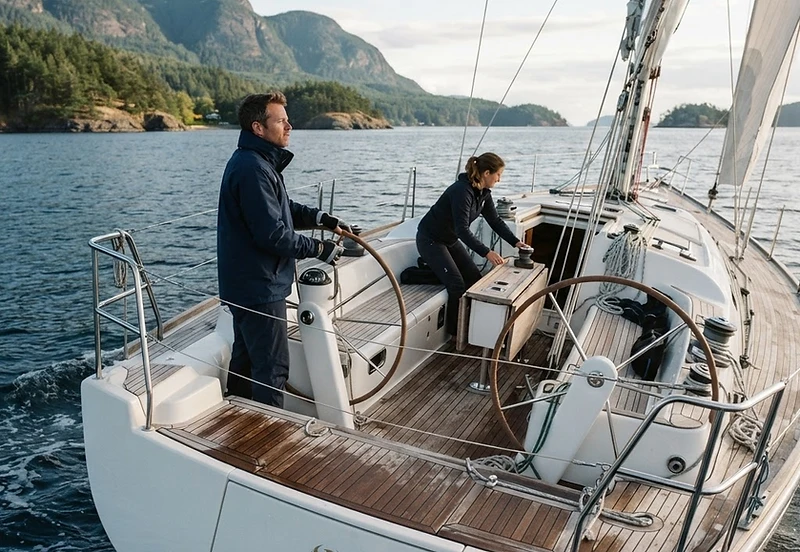
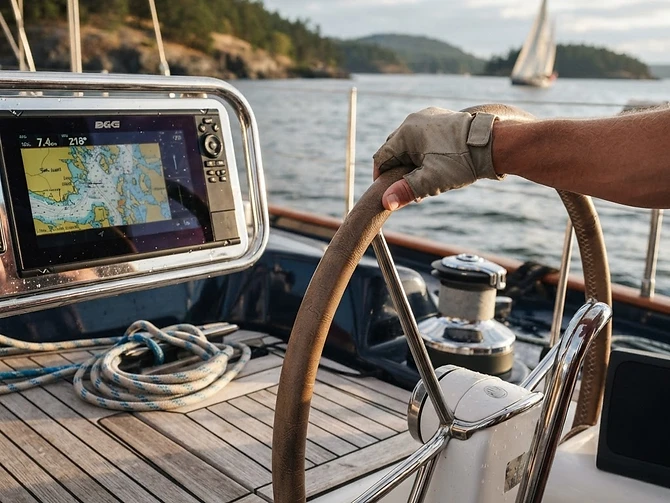
Steering a Nautor's Swan through the San Juan Islands is an exercise in profound tactile intimacy. As we ghosted past the jagged, cedar-crowned silhouette of Sucia Island, the wind dropped to a mere whisper of air, yet the yacht remained alive, acutely sensitive to the powerful, rhythmic tidal push of the Rosario Strait. At the twin helm stations, the sensation is one of total exposure; one does not simply command the vessel, one balances between the physics of the standing rigging and the volatile, shifting light of the Pacific Northwest. To stand at the helm is to be an extension of the rudder, the wheel offering a direct, unmediated conversation with the water. As the sun began to dip behind the serrated ridge of the Olympic Mountains, casting a long, violet bruise across the glassy surface of the strait, the duality of the twin stations revealed its genius. To leeward, the captain feels the subtle strain in the primary winch, a vibration that speaks of sail shape and trim; to windward, the eyes track the luff of the genoa, a hypnotic, rhythmic dance of white canvas against the darkening, bruised sky.
The Galley’s Foraged Bounty
The transition from the helm to the cockpit is a deliberate shift in tempo, moving from the technical rigours of navigation to the restorative, quiet ritual of the evening meal. Our chef, having returned that morning from the bustling docks at Friday Harbor, brought aboard a haul of local spot prawns and wild Dungeness crab, landed mere hours prior by small-boat fishermen. While the yacht tracked a steady, silent course toward a protected anchorage in the lee of Orcas Island, the scent of searing shellfish—tossed in a heavy pan with local coarse sea salt and a bright, resinous hit of foraged spruce tips gathered near Eastsound—began to drift aft through the companionway. There is a profound honesty to dining aboard in these waters. We served the prawns simply, accompanied by a crusty, tang-heavy sourdough from a small bakery in Eastsound, the bread still warm from the oven. To eat this way, with the residue of cold salt spray still on our lips and the vessel gently heaving under the influence of the current, is to understand the geography of the Salish Sea through its most immediate, unadorned, and intense flavours.
The Twilight Watch
As the anchor chain finally rattled out into the profound silence of the bay, the twin helms were lashed down, their carbon-fibre rims cooling rapidly in the damp, evening air. This transition—from the active, muscular navigation of a coastal passage to the stillness of a secluded anchorage—is the true soul of life aboard. We settled into the teak-lined cockpit as the water began to reflect the first emergence of the stars, while the tide pulled gently against the hull, a persistent, rhythmic reminder of the world’s constant motion. It is in these moments, suspended between the intensity of the sail and the sanctuary of the night, that the privilege of the vessel truly reveals itself. It is not found in the speed of the transit, nor the reach of the distant shoreline, but in the simple, quiet ability to hold this space at the edge of the continent, watching the islands dim until they are nothing more than charcoal shadows against the gathering dark of the Pacific.






