
The Southern Reach
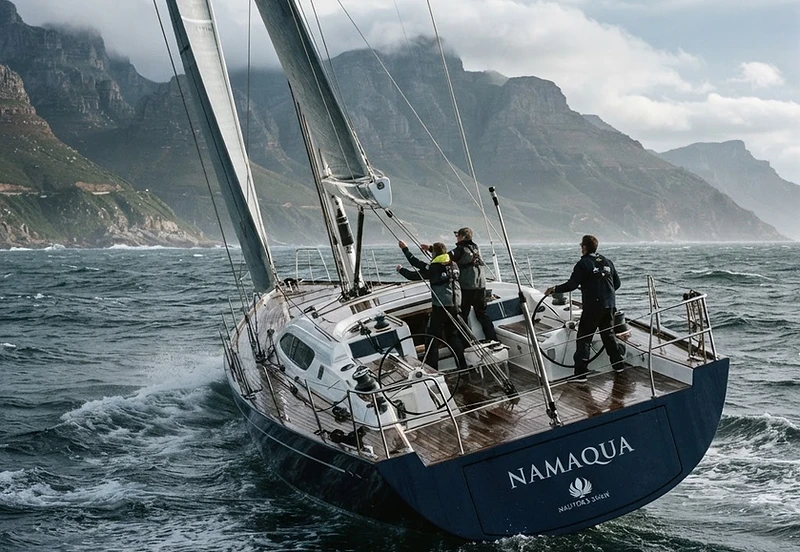
The dawn air in Hout Bay carries a sharp, metallic clarity, a stark departure from the humid lethargy of the typical Mediterranean summer charter grounds. We cast off from the V&A Waterfront just as the first light touches the top of Table Mountain, the silhouette of a Nautor’s Swan 78 cutting a deliberate, silent path against the brooding mass of the peak. The wind here is not merely weather; it is an active participant in the geometry of the passage. As the carbon-fiber hull leans into the long, rhythmic swells of the South Atlantic, the teak decks offer a familiar, tactile resistance, grounding the motion of the deep ocean in the traditional, methodical rhythm of high-end sail. There is a specific thrill in the way a Swan handles these waters—a sense of structural integrity that transforms a potentially nervous crossing into an exercise in pure kinetic grace.
The Architecture of the Granite Coast
Rounding the Sentinel, the coastline undergoes a dramatic metamorphosis, transforming into a series of sheer, vertical granite cliffs that dwarf the vessel. There is an architectural resonance in these jagged formations; the rugged, weathered precipices evoke the raw, modernist ambition of the local residential designs clinging to the precarious slopes of Clifton and Bantry Bay. From the deck, the superyacht feels less like a floating luxury asset and more like an extension of the rugged landscape—a mobile, seaworthy observatory. We drop anchor in the sheltered, protected lee of Miller’s Point, where the water shifts suddenly from a dark, brooding indigo to a brilliant, crystalline turquoise. Lunch on the aft deck is a deliberately simple affair: fresh, chilled local oysters served with a crisp, mineral-forward Chenin Blanc, the piercing acidity of the local terroir mirroring the sharpness of the Atlantic breeze. Sitting there, with the spray drying into fine, white salt on the stainless railings, one feels the profound isolation of the Cape, a stark contrast to the manicured marinas of the Cote d'Azur.
Calibration and the Cape
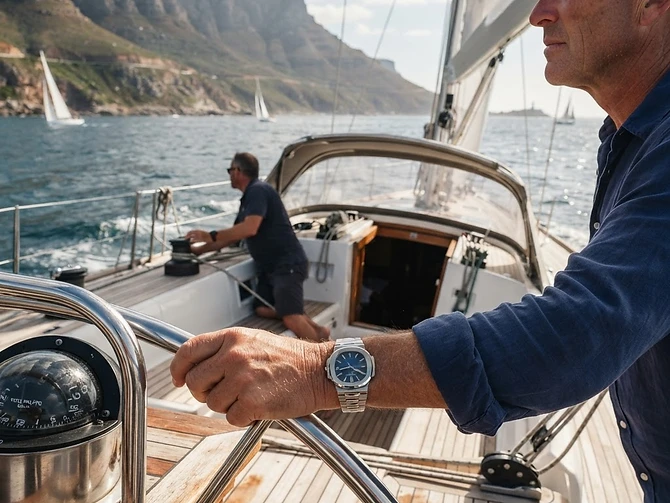
Time takes on a distinct, heavier weight when navigating the Cape of Storms. The crew moves with a silent, disciplined efficiency, their movements honed by years of traversing the volatile Southern Ocean. On the helm, the captain’s hands are steady, his focus entirely on the interplay between the rudder and the swell. Every nautical mile in these waters requires precise synchronization, a quiet understanding between the sailor and the geography. As the sun dips behind the Twelve Apostles, the light turns a deep, bruised purple, and the ship’s log is updated by hand in the dim glow of the chart table. There is no urgency here, only the steady, calculated pulse of a vessel holding her own against the vast, indifferent power of the southern swells. It is a moment of singular clarity, standing on the stern, watching the wake disappear into the darkening expanse.
By the time we return to the quiet, obsidian basin of the harbor, the salt crust on the deck rails serves as a map of the day’s journey. Living aboard in these latitudes is an exercise in restraint; it is about acknowledging the raw power of the currents and the architectural grace of a well-balanced rig. As the city lights begin to flicker like distant, cooling embers along the shore, the charter concludes not with a flourish, but with the quiet, profound satisfaction of a passage completed with absolute precision. We are left only with the scent of brine and the memory of the wind, the ultimate measure of a day well spent under sail.






