
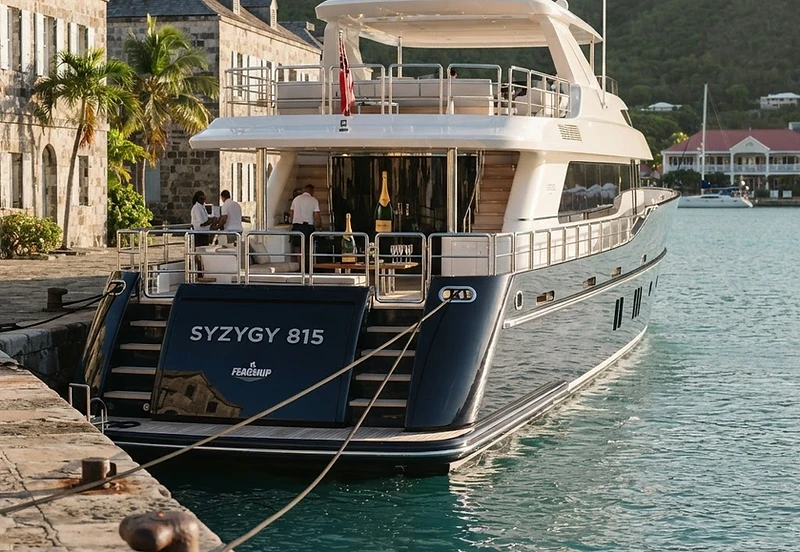
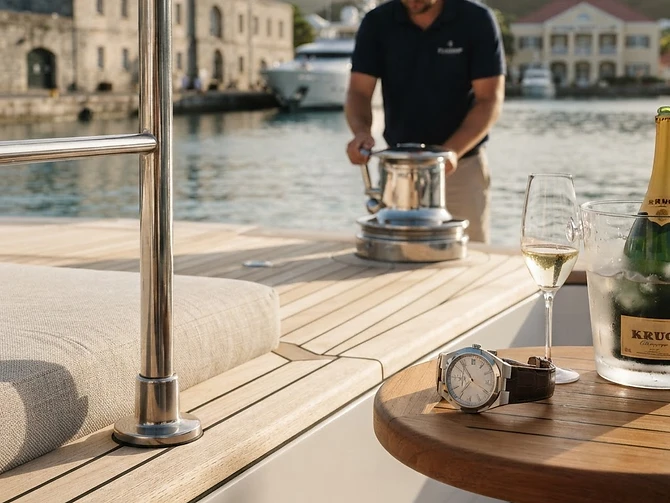
The morning light in English Harbour, Antigua, possesses a particular, crystalline clarity that strips away the residual haze of the previous night’s revelry at the Antigua Yacht Club. Sitting on the aft deck of the Feadship currently moored against the historic stone quay of Nelson’s Dockyard, the world feels balanced by the meticulous, deliberate geometry of the vessel. Naval architect Espen Øino once remarked that a yacht is a building in motion, and watching the sun climb over the weathered sandstone pillars of the dockyard, the observation rings with absolute truth. The hull, with its subtle rake and sweeping sheer line, interacts with the tepid Caribbean water not as a barrier, but as a fluid extension of the island's own volcanic topography. Here, the boundary between the heritage of the colonial masonry and the futuristic sheen of modern steel is bridged by the quiet hum of the air conditioning and the rhythmic slapping of water against the swim platform.
The Calculated Sheer
A superyacht is an exercise in extreme, controlled architecture. As I traced the flare of the bow, I was struck by the way the overhangs echo the traditional lines of the J-class sailing yachts that once dominated these specific trade wind lanes, yet executed with the cold, precise efficiency of contemporary naval engineering. There is no excess permitted here; every curve, every stanchion, and every recessed deck light serves to soften the transition between the vast, chaotic energy of the open ocean and the curated, sheltered life on board. It is a home engineered for the trade winds, designed to channel the steady breeze through the open-plan saloons while shielding its inhabitants from the relentless, high-noon tropical glare. The sheer line is not merely an aesthetic choice; it is a calculated response to the physics of the sea, ensuring that the vessel sits in the water with a dignified poise that few land-bound structures could ever hope to replicate.
Syncopation at the Helm
We prepared to slip the lines for a short passage to Green Island, and the atmosphere on the bridge shifted from one of languid observation to one of focused intent. The transition from berth to blue water is always marked by a subtle change in the vessel’s personality; the engine’s idle deepens, and the ship begins to respond to the infinitesimal pushes of the current. There is a profound comfort in the alignment of systems—the belief that if the navigation arrays, the stabilizers, and the helm response remain perfectly in sync, the vessel’s path through the fickle, shifting currents of the Leeward Islands will be effortless. We moved quietly through the narrow channel, the yacht’s stabilizers working in a silent, hydraulic ballet, keeping the equilibrium of the deck absolute even as we cleared the headland and met the first of the Atlantic swells.
Life aboard, when stripped of the unnecessary, becomes a refined study in movement and repose. Later, as we dropped anchor in the lee of a jagged limestone outcrop, the yacht became a permanent, shimmering pavilion on the sea. The afternoon was spent in the soft shade of the sundeck, listening to the crew prepare a light lunch of grilled mahi-mahi and local citrus, the scent of the charcoal grill carrying faintly over the salt-crusted air. We watched the water shift from a deep, bruised indigo to a startling, translucent turquoise. Anchored firmly against the tide, the yacht proved that when architecture is mastered on the water, the destination matters far less than the vessel's perfect, serene integration with the sea itself.






