
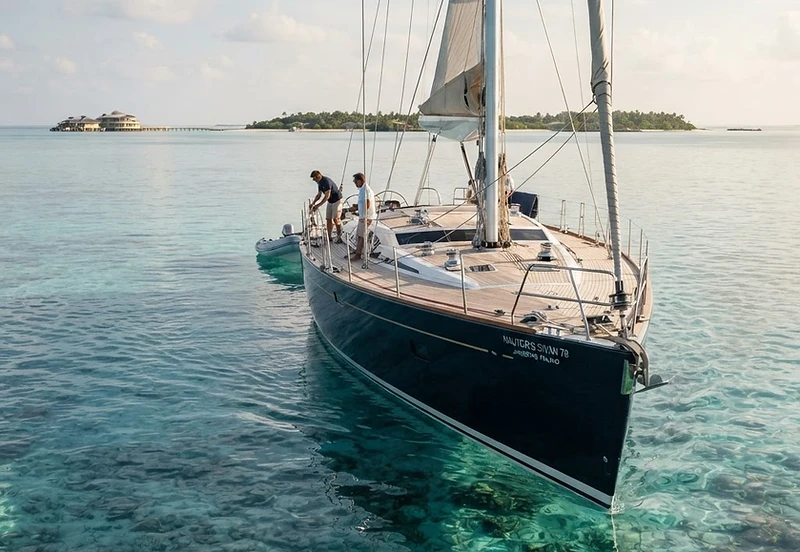
The morning light in the Baa Atoll does not merely touch the water; it illuminates the white sandbank from beneath, turning our Nautor’s Swan 78, anchored in the turquoise shallows, into a suspended object of gleaming fiberglass and weathered teak. From the cockpit, the horizon is a seamless, vibrating line of azure, broken only by the low, verdant silhouettes of islands that seem to float upon the current. We are here not for the bustling, crowded harbours of the Mediterranean, but for the quiet, saline isolation of the Indian Ocean—a landscape that demands a different sort of navigation, one where the draft of the vessel and the clarity of the swirling tide dictate every decision. There is a profound stillness here, punctuated only by the rhythmic slap of small, gentle waves against the hull, a sound that serves as the metronome for our life at sea.
The Architecture of the Lagoon
Life aboard a Nautor’s Swan, particularly in these remote reaches, feels less like sailing and more like occupying a well-crafted, floating pavilion. The interior, finished with the precision of a fine marine instrument, mirrors the surrounding atolls: clean, light-filled, and utterly respectful of its environment. As the sun climbs, the heat radiates off the carbon fiber rig, a stark, silent reminder of the engineering required to hold one's place against these strong, shifting currents. We pass the mid-morning hours by calibrating our path toward the Soneva Fushi resort, where the architecture of the villas—open-air, thatched-roof structures that seem to dissolve into the dense jungle—offers a land-based echo of the yacht's fluid transition from deck to water. Moving between the deck of the Swan and the white sands of the resort feels like moving between two variations of the same element, where the boundary between architecture and nature is kept intentionally porous.
Tactile Navigation and the Evening Tide
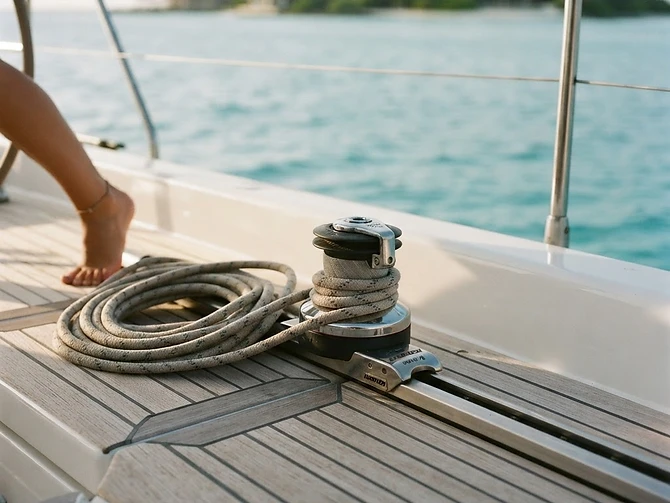
The true luxury of this cruise lies not in the service, but in the sensory interplay between the boat and the reef. Before the heat of the afternoon truly sets in, I find myself sitting forward on the teak deck, running my hand along the cool, polished stainless steel of the pulpit. The water is so clear that from the bow, we can track the shadows of eagle rays gliding over the coral heads twenty feet below. Navigation here is a tactile, visual art; one does not merely follow a chart, but reads the color of the water—the shift from dark, deep sapphire to a pale, electrifying cyan indicating exactly where the reef threatens the hull. It is a humbling experience that strips away the artifice of modern transit, returning us to a state of heightened awareness. When we take the tender to the reef edge, the silence of the atoll is absolute, amplified by the total absence of distant sirens, city hum, or engine noise. As the sun begins to dip, the sky bruises into deep violet and burnt orange. We secure the lines and prepare for the evening, the air thick with the scent of salt and crushed coral. We are mere guests in this submerged geography, traveling between the fluid architecture of the sea and the rooted, ancient rhythms of the archipelago, finding our balance in the quiet, drifting space between the two.
As night claims the horizon, the Southern Cross begins to sharpen in the velvet sky. The yacht swings gently on her mooring, the chain rattling softly against the sandy floor—a final, comforting reminder of our tether to this fleeting, beautiful place.






