
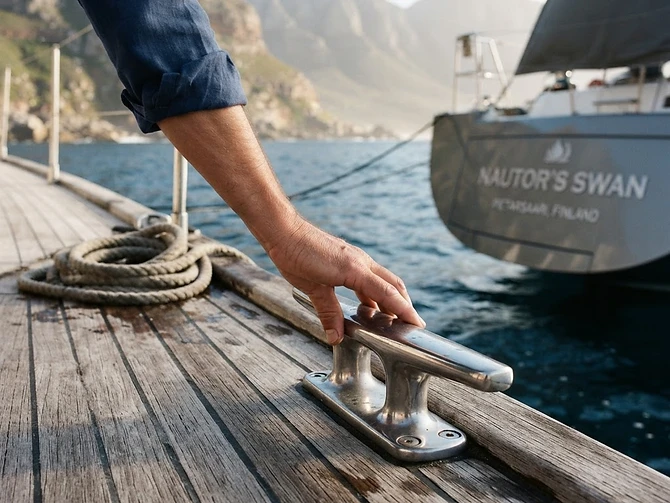
The wind off the Atlantic side of the Cape Peninsula does not merely blow; it conducts the sea against the ancient granite headlands with a percussive force that demands profound respect. On board Elara, a 28-meter Nautor’s Swan, the motion is rhythmic, predictable, and deeply comforting—a testament to the Finnish yard’s singular mastery of blue-water performance. As we rounded the final, jagged spur of the Twelve Apostles range, the hum of the V&A Waterfront’s busy logistics faded, replaced by the deep, cavernous stillness of a hidden cove near Llandudno. The anchor chain rattled out—a sharp, metallic punctuation against the silence—holding us fast in the rocky holding ground as the sun began its long, honeyed descent behind the Sentinel peak.
The Architecture of the Tide
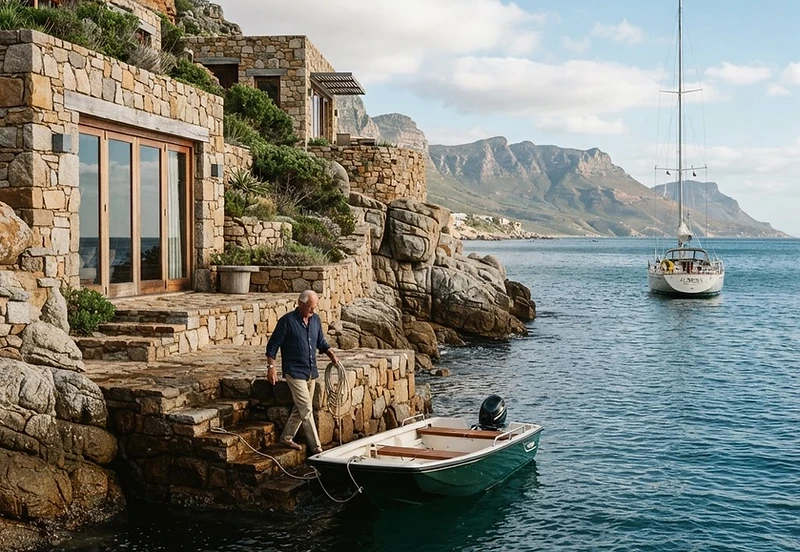
Getting ashore required the tender, a nimble Boston Whaler that cut through the residual swell with surgical precision. Our destination was a retreat carved directly into the cliffside, a structure composed entirely of local, rough-hewn stone that seems to grow out of the rock itself. There is no driveway here, no path from the land; the connection is purely aquatic. The living room opens directly onto a jetty that rises and falls with the rhythmic swells of the South Atlantic, a kinetic architecture that serves as a quiet reminder that, in this corner of the world, we are merely guests of the tide. Walking across the weathered timber of the jetty, the air tasted intensely of ozone and wild, sun-baked kelp.
A Symphony of Salt and Stone
Life in the cove follows the slow, deliberate cadence of the sea rather than the frantic pulse of the city. By noon, the wind had shifted, and we retreated to the shaded terrace for a simple, impeccable lunch prepared on board—seared yellowtail caught just miles offshore, served with nothing more than a squeeze of local citrus and sea salt. The bracing, saline quality of the afternoon breeze felt like a palate cleanser, stripping away the complications of the week. Sitting there, looking back at Elara as she swung gently on her rode, I was struck by the contrast between the yacht’s refined teak decks and the brutalist, unyielding granite of the shoreline. The vessel appeared almost like a migratory bird, elegant and poised, waiting for the precise moment when the currents would favor our departure.
We spent the late afternoon watching the water change color, from a deep, bruised cobalt to an ethereal, translucent turquoise as the sun hit the sandy patches between the reef. There is a particular sensory honesty to this life: the cold grit of sand underfoot, the sudden temperature drop as the shadows stretch, and the way the mast rigging sings a faint, haunting melody when the breeze picks up. As the Southern Cross began to assert itself above the horizon, we pushed off from the jetty, the silence of the cove magnifying every splash of the oars. The return journey to the yacht was a cooling, salt-sprayed transit through waters that still held the day’s residual warmth. Back on the deck of the Swan, with the scent of damp granite and sea kelp lingering on our clothes, the truth of the passage became clear: the most refined retreats are those that remain entirely, beautifully surrendered to the unpredictable mercy of the water.






