
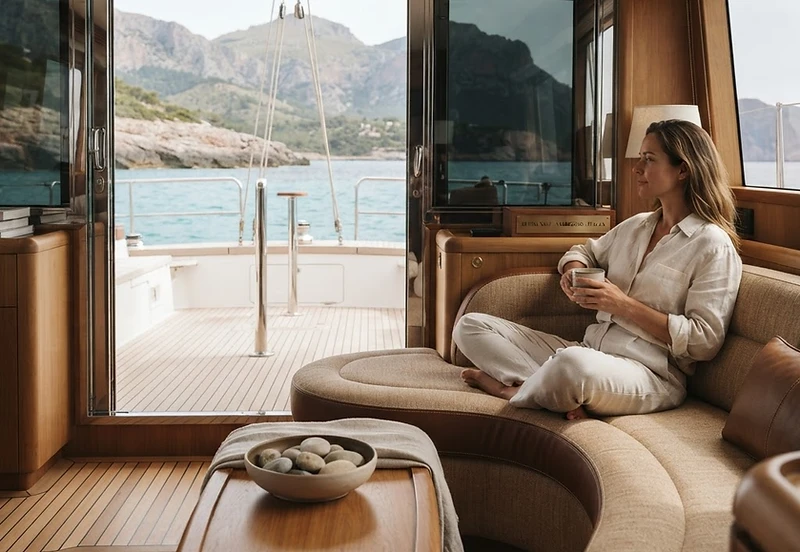
The morning light in the bay of Cala Tuent arrives not with a shock, but with a softening of the limestone cliffs that drop sharply into the Balearic Sea. Aboard a 56-meter Perini Navi, the interior does not attempt to fight the horizon, but rather to distill it. Here, the cabin is an exercise in restraint, a floating architecture where the raw materiality of the land is translated for the water. As the sun begins to climb, the yacht rests in the absolute silence of the anchorage, a stillness broken only by the rhythmic, soft slap of water against the hull—a sound that feels less like noise and more like the respiration of the sea itself.
The Weight of Earth on the Water
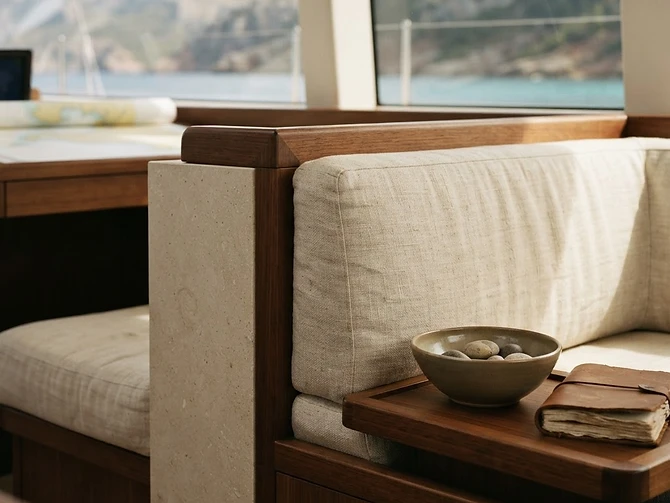
In the main saloon, the floor is laid with a cool, honed limestone, a deliberate nod to the geological bones of the Serra de Tramuntana visible just miles away. To walk barefoot across the stone after an early morning dive is to feel the stability of the island maintained even under a slight, lingering swell. Against this geological rigidity, the walls are paneled in cream-colored linen, a textile choice that breathes with the humidity of the Mediterranean. It is a sensory anchor. When the vessel heels under a steady tramontana, the linen walls dampen the acoustic sharp edges of the rigging, creating a sanctuary that feels as sturdy as a centuries-old villa tucked into the hills of Valldemossa. There is a profound comfort in this juxtaposition; the yacht provides a nomadic life, yet it is grounded in materials that remind the traveler of the earth they have temporarily left behind.
Tactile Navigation and the Art of Passage
Life aboard revolves around the friction of living well, where every touchpoint is a conscious design decision. On the bridge, the captain monitors our progress with the steady, calm focus of a man who knows these waters by heart. The helm is a masterwork of ergonomic utility, wrapped in supple, saddle-stitched tobacco-hued leather that feels cool and inviting under the palm. That same leather lines the library and the master suite’s desk, serving as a subtle narrative device. It is a material that records the passage of time; the deepening patina gathering on the chair armrest tells the unspoken story of seasons spent crossing the wide channels between Palma, Ibiza, and the quieter reaches of Cabrera.
We spent the late afternoon in the shadow of the sails, the canvas tight and singing under the pressure of a building wind. After the tension of the passage, we retreated to the aft deck to enjoy a light repast. The air carried the faint, salt-dusted scent of scrub brush from the nearby cliffs, mingling with the crisp, clean aroma of the sea. As the sun dipped toward the horizon near Formentera, the high-gloss lacquer of the cabinetry inside caught the golden hour, reflecting the moving, indigo surface of the water like a dark, liquid mirror that blurred the line between the interior and the infinite blue outside.
Ultimately, the yacht functions less as a machine and more as a deliberate, moving habitat. Whether we are anchored off the secluded cliffs of Cabrera or navigating the narrow, bustling entrance to Port Andratx, the interplay of these textures—stone, linen, leather, and lacquer—reminds us that life at sea is fundamentally an architectural pursuit. It is about how we sit, how we touch, and how we frame the vast, blue indifference of the water through the curated, quiet geometry of our own design. In this balanced space, one does not merely sail; one exists in harmony with the current.






