
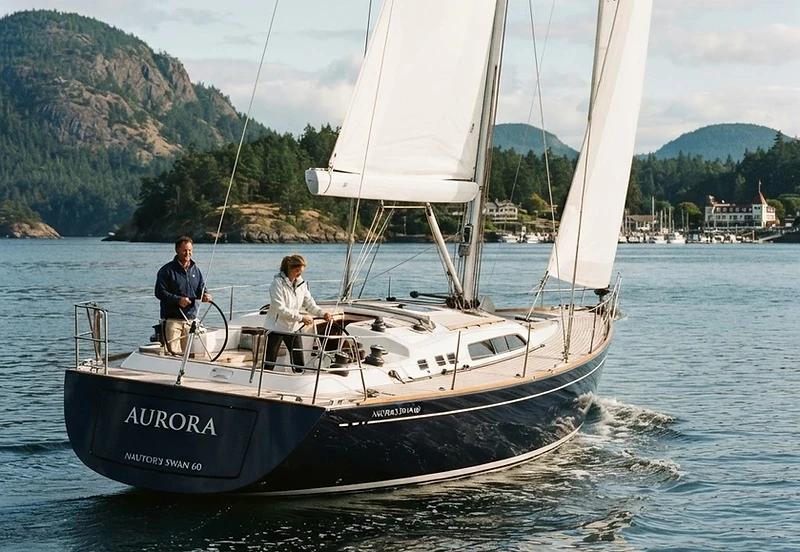
The morning light over the Salish Sea is thin, a pale wash that turns the wake of our Nautor’s Swan 60 into a ribbon of fractured glass. We are running south from Sucia Island, the air sharp with the scent of damp cedar and cold, salt-dusted stone. Behind us, the vessel’s progress is a silent disruption. Every knot of speed feels like an indulgence, a deliberate carving of the water that leaves a trail of white, churning foam—the quiet, unavoidable geography of our transit. In this corner of the world, where the mist clings to the hemlocks like a shroud, our presence is marked with a singular, indelible intensity.
The Weight of the Horizon
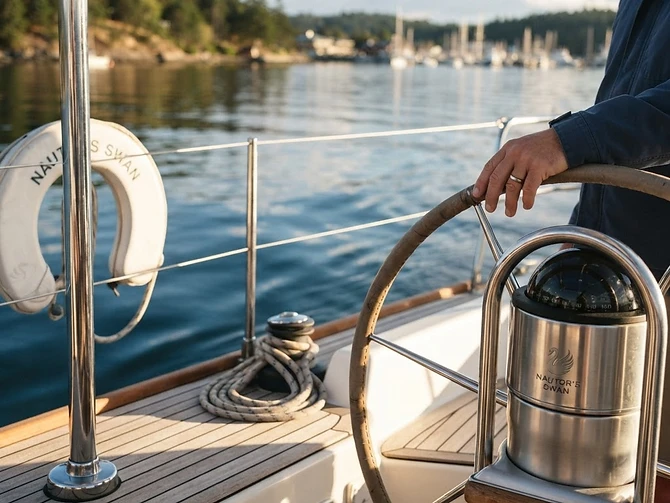
Life aboard a vessel of this caliber is an exercise in intentionality. There is a specific rhythm to the Swan 60 under sail, a tactile dialogue between the helm and the hull that speaks to the engineering brilliance of the Nautor yard. As we prepare to drop anchor in the sheltered depths of Roche Harbor, there is a ritualistic focus to the day. The stewardess places a glass of chilled, crisp water on the cockpit table, droplets of condensation gathering on the glass, a stark, clean contrast to the briny, humid air. We adjust our course, the deck listing gently as we come about, the hardware singing with the tension of the lines. We look toward the shore where the architectural harmony of the harbor—a blend of restored historical cannery buildings and modern, timber-framed residences—echoes the yacht’s own design principles: a marriage of rugged utility and elegant, soft-spoken form. The harbor is a sanctuary, yet even here, one feels the pressure of the modern voyager against the ancient shoreline.
Navigation as a Moral Constant
We are consciously navigating this stretch of the Pacific Northwest with a mind toward our impact. By leaning into the prevailing winds and utilizing the Swan’s balanced hull, we reduce the hours of the diesel engine’s heavy thrum. There is a profound difference between the mechanical roar of a motor and the sudden, atmospheric shift when the sails take the full load of the breeze. It is a moment of liberation, a transition from power to partnership with the elements. Watching the shoreline of San Juan Island slip past, one cannot help but reflect on the fragility of these protected coves. We track our path with the same rigor we apply to the tide charts, yet the visible trail astern remains a haunting reminder of our physical presence. We discuss the regional restoration projects we support, recognizing that the beauty we consume demands a deliberate stewardship. Every decision, from the choice of anchorage to the management of grey water, is a silent negotiation between the desire for exploration and the imperative of preservation.
The Silence of the Anchorage
As the anchor chain finally pays out, dropping with a rhythmic metallic rattle into the depths of the bay, the ship settles. The engine dies, and the sudden, ringing silence of the archipelago rushes back in, absolute and overwhelming. In that quiet, as the sun begins to dip behind the dense canopy of Douglas firs, the lingering anxiety of the transit dissipates. We sit in the cockpit as the temperature drops, pulling on thick wool sweaters, watching the reflection of the masts dance upon the darkening water. It is a humble acknowledgement that even in our pursuit of the sea's beauty, we are merely guests—temporary silhouettes against a landscape that has endured long before our arrival and will persist long after our wake has vanished.






