
The Chemistry of the Crossing
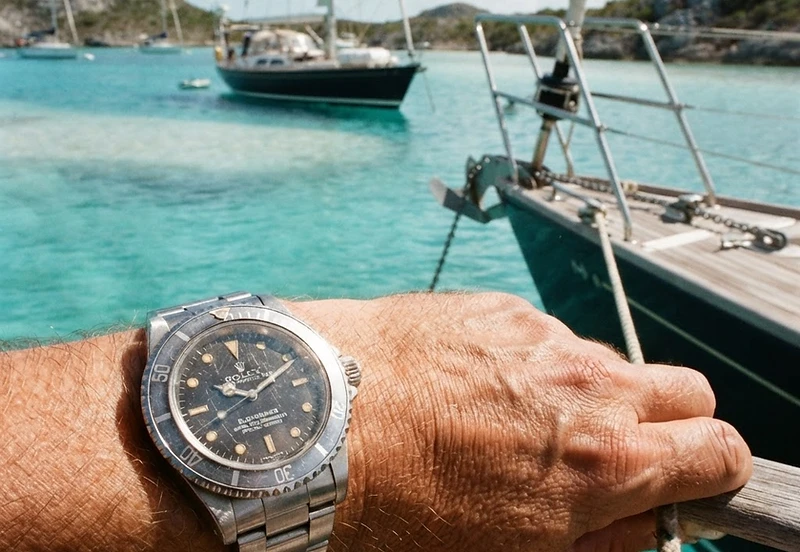
The dawn air in the Exumas carries a specific weight—a mixture of drying salt and the faint, vegetal sweetness of mangrove thickets drifting off the cays. Standing on the teak aft deck of an older Nautor’s Swan, the morning ritual begins not with the frantic unfurling of sails, but with the quiet act of preparation. My Rolex Submariner, a reference from the late seventies, has spent more time submerged in the crystalline shallows of Warderick Wells than it has in the recycled air of an office. The bezel, once a sharp, clinical black, has softened into a ghost-grey, a transition earned through thousands of hours exposed to the unrelenting Bahamian sun and the abrasive, persistent patience of salt crystals.
There is a unique rhythm to these islands that requires a different kind of timekeeping. You don't measure the day by the hour, but by the tide and the depth of the water beneath the keel. As the sun crests the horizon, the light catches the water, turning the Exuma Sound into a pane of hammered silver. I tighten the crown, a habitual click that signals the commencement of the day’s passage, and look out toward the horizon where the sea and sky bleed into a seamless, pale cerulean.
Refractions off the Hull
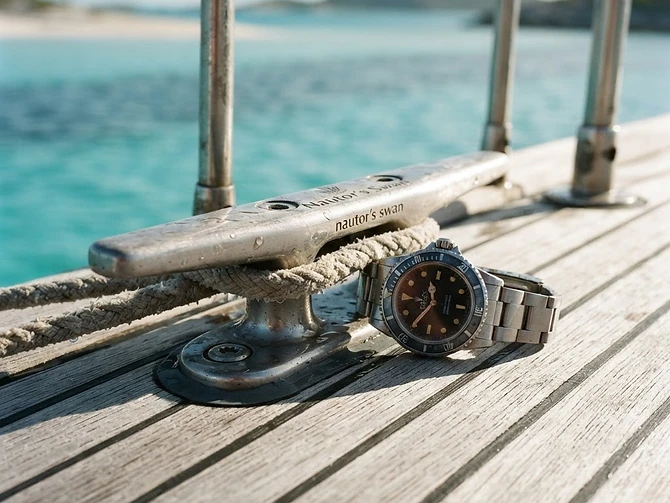
This watch, much like the vessel we sail, is defined entirely by its exposure to the elements. While the naval architects at Nautor’s Swan prioritize the hydrodynamic integrity of the hull and the balance of the mast, the true history of a yacht is written in the fine, spider-webbing scratches along the stainless steel fittings. There is an architectural honesty to this wear. Just as the teak decking of the cockpit has silvered under years of saltwater washings and rhythmic scrubbing, the watch reflects the environment. It is not damaged; it is cured.
We spent the afternoon drifting toward Staniel Cay, the depth sounder reading a constant, anxiety-inducing three meters. The water beneath the keel turned from a deep, oceanic navy to a luminous, impossible turquoise that seems to glow from within. At the helm, the sensation of the wheel—worn smooth by years of navigation—mirrors the tactile comfort of the watch’s bracelet. Every scratch on the casing corresponds to a reef encountered or a mooring line pulled tight in a gale. The yacht is our primary residence, and the watch is our primary witness; both have surrendered their factory-new luster for the character of the open sea.
The Ritual of the Evening Anchorage
As we dropped anchor off the powdery, uninhabited sands of Pipe Creek, the transition from day to evening was marked by the pouring of a crisp glass of Sancerre. The glass beaded with condensation, a sharp, cool contrast to the warm, salt-crusted metal of the watch resting on the cockpit table. The evening wind began to shift, whistling through the standing rigging with a low, mournful tone that signals the coming of the trades. This is the life aboard: a series of measured, deliberate moments that allow for deep reflection on the nature of durability.
The sea does not forgive, but it does leave its mark on those who spend their lives traversing its surface. It is a partnership defined by mutual attrition.
Whether it is the synchronization of a passage across the Exuma Sound or the careful, obsessive maintenance of the brightwork, the goal is always to balance the ephemeral with the permanent. The watch, with its faded dial and softened edges, is a testament to the passage of time at sea—a tool that has ceased to be a mere instrument of measurement and has become, instead, a partner in the navigation of a life lived primarily between the horizon and the reef. As the stars emerge, reflected in the still water of the lagoon, the watch remains a quiet, ticking reminder that while our time in these latitudes is finite, the rhythm of the ocean remains absolute.






